Tata Motors targets doubling revenue and sales by fiscal 2031
Tata Motors sees revenue topping 6 trillion and sales above 1.2 million by FY31, but EV rivals and JLR pressure make the goal a hard test.

Tata Motors Passenger Vehicles is betting it can lift revenue above 6 trillion rupees and annual sales past 1.2 million vehicles by fiscal 2031, a sharp wager on how much farther India’s auto market can expand. The company is also trying to win 20% of the world’s third-largest car market while leaning on both electric vehicles and gas-powered models, even as rival brands press harder on price, product breadth and scale.
Tata Motors laid out the target at its India Investor Day in Mumbai on Tuesday, June 23, after telling investors on May 14 that the event would cover both the India business and Jaguar Land Rover, with presentation material and a recording to follow on its investor site. The plan is backed by heavy spending: Tata said it will invest 330 billion to 350 billion rupees in its passenger and EV businesses between FY26 and FY30, while aiming to reach 1.3 million units of annual capacity within two to three years. The company has also been signaling for months that EVs are central to its strategy, including a dedicated EV business presentation on its corporate investor pages.
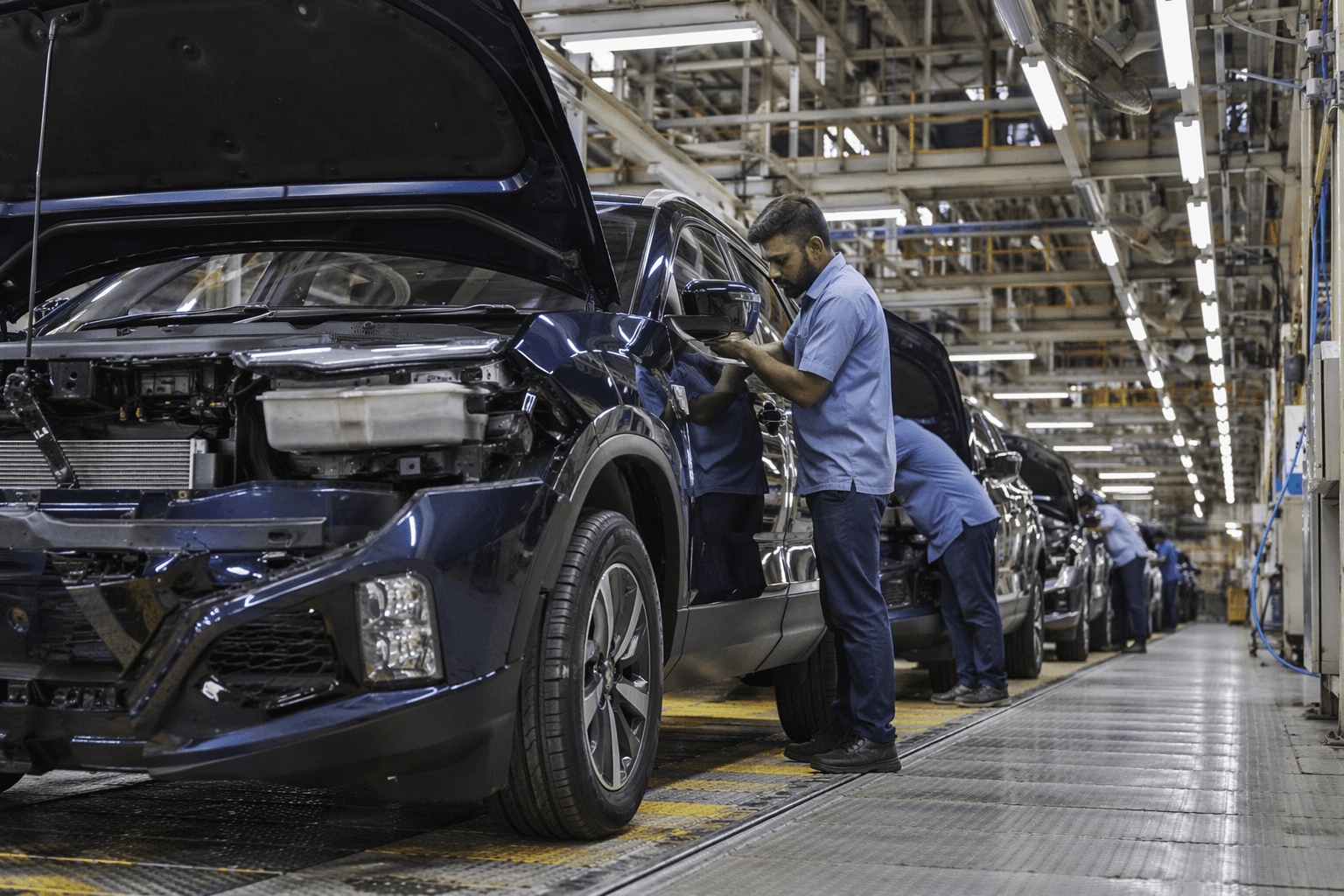
The harder question is whether the demand story is strong enough to support that scale. Tata said EVs make up 14% of total sales, but Mahindra & Mahindra and JSW MG Motor are closing in, a sign that Tata’s electric lineup is no longer facing a vacuum. That competition raises the stakes for new models, upgrades and higher output, and it also tests whether Tata can keep vehicles affordable enough to widen adoption beyond the early EV buyer base. The company’s own goal implies a broader, more mass-market auto economy in India by 2031, not just a stronger premium or urban segment.
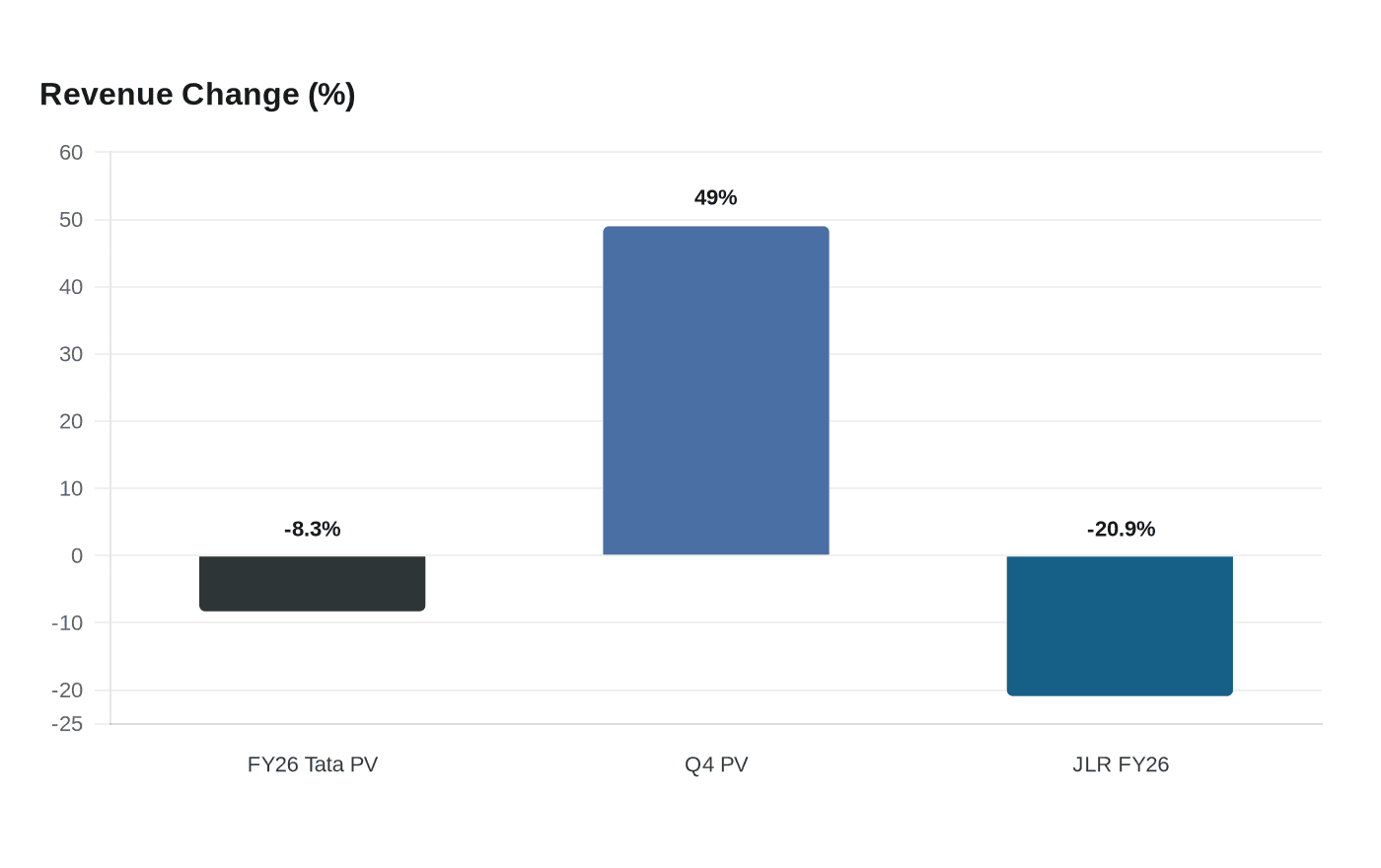
The financial backdrop is mixed. Tata Motors Passenger Vehicles reported FY26 consolidated revenue of 335.6K crore rupees, down 8.3% from a year earlier, even as fourth-quarter PV revenue rose 49% to 18.7K crore rupees on record domestic volumes and a stronger second half after GST 2.0. The parent company has also warned that rising commodity costs, worsened by the Iran war, are squeezing margins.
Jaguar Land Rover remains the biggest wildcard. JLR contributes about 80% of Tata’s revenue, but FY26 results showed revenue of £22.9 billion, down 20.9%, with an EBIT margin of just 0.7%. Tata blamed a cyber incident, tariffs, China luxury tax, VME pressures and adverse commodities, while consolidated net debt stood at 30.7K crore rupees because of production stoppages at JLR. For Tata, the 2031 target is not just a growth ambition; it is a test of whether India’s auto market, EV adoption and export earnings can all mature fast enough to offset the strain already showing in the numbers.
This article was produced by Prism’s automated news system from verified source data, official records, and press releases, then run through automated quality and moderation checks before publishing. The system is built and supervised by the people who set the standards it runs under. Read our full AI policy.
Did this article answer your question?

