Tech Advances Could Help Prevent Missing Persons Cases in Beltrami County
The Bemidji Pioneer published today that new technological advances may help prevent missing person cases similar to that of Ruth Eckholm in Beltrami County.
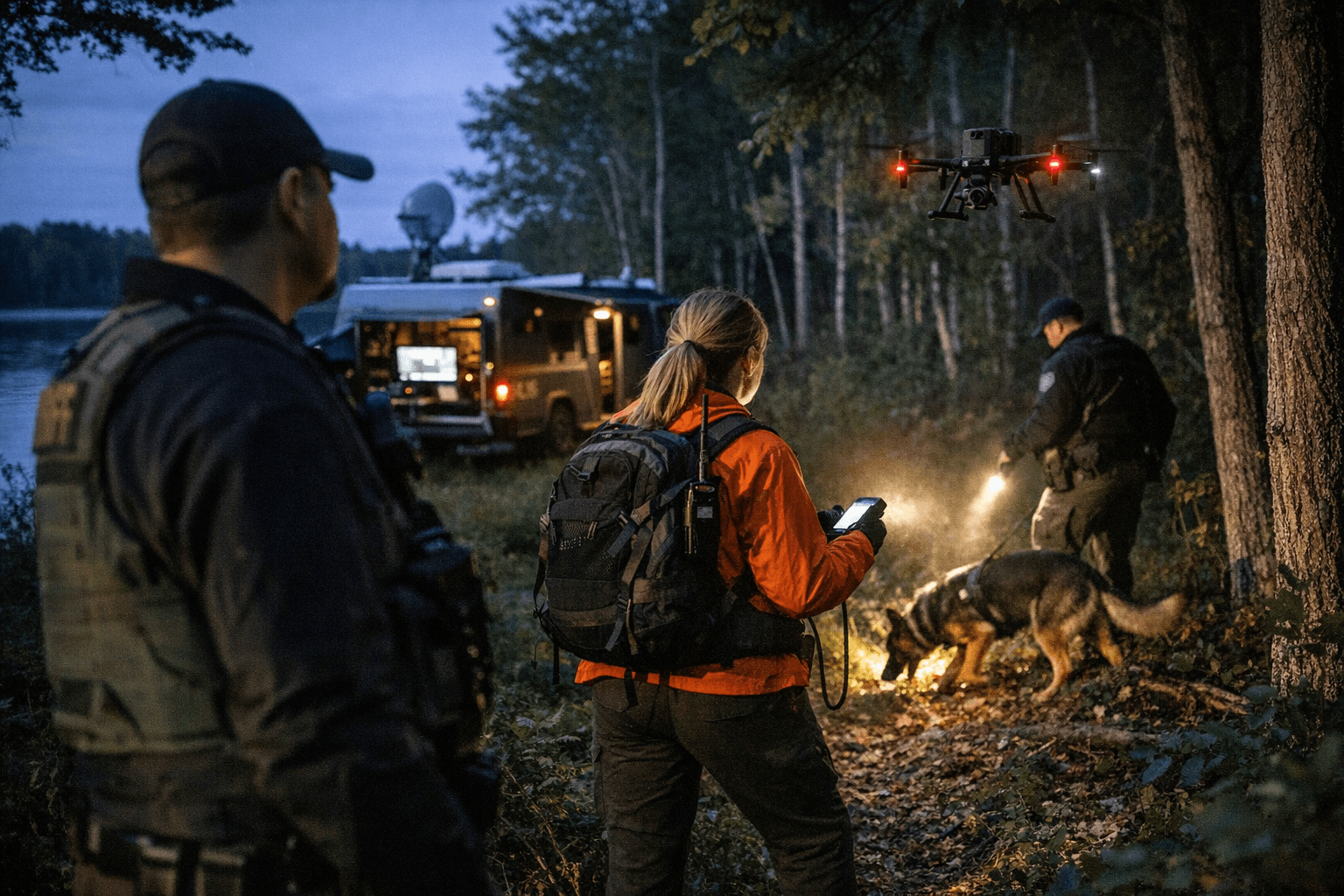
The Bemidji Pioneer published today that "New technological advances may help prevent missing person cases similar to that of Ruth Eckholm in Beltrami County," and the paper "highlights how these innovations could improve outcomes." That local connection places Beltrami County at the center of an industry conversation about AI, data centralization, and new investigative tools.
Industry analysts argue those advances rest first on better data. Prieyes writes that "One of the most significant advancements lies in the digitization and centralization of data" and that "Data analytics has emerged as a game-changer, offering a systematic and analytical approach to missing persons cases." Prieyes adds that "Law enforcement agencies now utilize advanced algorithms to sift through massive amounts of information, facilitating the identification of patterns, connections, and potential leads that might have otherwise gone unnoticed." Prieyes lists contact information for follow-up at 866-PRI-EYES (774-3937).
Vendors describe specific AI capabilities that could be applied to cases like Eckholm’s. Veritone states that "The future of AI in public safety and missing person cases will likely involve collaboration between LEAs and tech companies" and that "By working together, we can develop more effective and efficient AI-driven tools to enhance search and rescue operations, as well as other applicable use cases." Veritone details technical approaches, asserting that "Advancements in AI can analyze large amounts of data, identify patterns, and process facial recognition and human-like objects (HLOs), improving the accuracy and speed of investigations," and that "AI algorithms can analyze large amounts of data from multiple sources (including CCTV, social media, and online platforms) to identify patterns and potential victims as well as build a timeline."
Beyond retrospective analysis, vendors propose preventive applications tied to community risks. Veritone explicitly positions early intervention as a use case, writing that "One potential application is in addressing bullying and preventing disappearances through early identification and intervention strategies using AI-powered monitoring and analysis." The company frames the broader need by saying "[...] There is a strong need for new solutions as the number of missing person cases continues to grow worldwide — fortunately, AI is revolutionizing public safety with each passing day."
Vendors also emphasize the governance trade-offs that will shape any local rollout. Veritone cautions that "As AI becomes more prevalent in law enforcement, balancing privacy concerns and public safety is a critical issue. While AI has the potential to enhance public safety, it can also lead to privacy violations and abuse of power," while also asserting that "Fortunately, this can all be done while maintaining privacy laws and protecting the PII of victims, perpetrators, and witnesses." Prieyes reinforces a collaborative model with the line "The future of missing persons investigations lies in collaborative efforts between law enforcement, technology developers, data analysts, and communities."
For Beltrami County, the question is operational: could centralized data, advanced algorithms, facial-recognition and HLO detection, and predictive models be adopted in ways that materially speed searches without sacrificing legal safeguards? The Bemidji Pioneer piece published today ties those industry claims directly to the Ruth Eckholm case and "highlights how these innovations could improve outcomes," leaving local leaders, law enforcement, and affected families to weigh the potential benefits against the privacy and oversight challenges vendors themselves flag.
Sources:
Know something we missed? Have a correction or additional information?
Submit a Tip