Tech shortage leaves collision repair filling just 42% of demand
Collision repair now fills only 42% of demand, while TechForce says America needs 241,842 new technicians a year and graduates just 101,743.
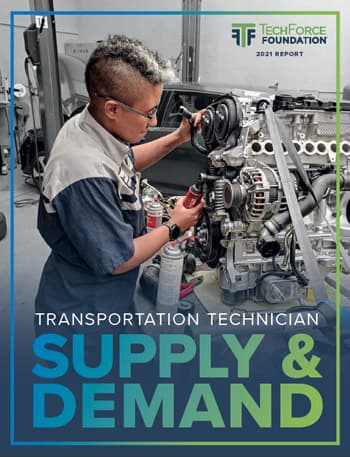
The collision-repair pipeline is filling only 42% of annual demand, a sign of a broader labor problem that is forcing employers to help build the workforce themselves. TechForce Foundation says the United States needs 241,842 new technicians every year but produces only 101,743 graduates, leaving 58% of demand unmet and draining an estimated $7.42 billion in annual economic output.
The shortage is sharpest in collision work, where TechForce puts the gap at 57%, and projects the industry will need 73,354 new entrant collision technicians between 2025 and 2029. Automotive is short by 29%, but the pressure extends well beyond body shops. TechForce’s 2026 Supply & Demand Report says the top shortage areas also include diesel, HVAC, industrial machinery, medical equipment, agricultural and farm equipment, and small engine trades.
There are some signs of progress. TechForce’s 2024 report found that, for the first time in 10 years, postsecondary graduates rose across automotive, collision, diesel and aviation, and employment increased in all four sectors year over year. Even so, the labor pool is still being squeezed by an aging workforce and a thinning pipeline. Industry data show technicians age 55 and older increased about 13% from 2016 to 2021, while the 15-24 and 25-54 cohorts declined. The National Automobile Dealers Association estimates about 39,000 new service technicians graduate each year, versus roughly 76,000 annual replacement-and-growth needs, leaving a shortfall of about 37,000.

The work itself is also changing. As vehicles add advanced electrical systems, driver-assistance technology, hybrid drivetrains and autonomous features, technicians need more digital fluency and electrical knowledge, not just mechanical skills. Repair demand has risen too: products installed by automotive technicians increased more than 25% from 2013 to 2023, even as repair outlets fell 10%.
Electricians face a similar squeeze, but with even more urgency as the economy electrifies. The U.S. Bureau of Labor Statistics says the trade had 818,700 jobs in 2024, paid a median annual wage of $62,350 in May 2024, and is projected to grow 9% from 2024 to 2034, with about 81,000 openings a year on average. Most electricians learn through apprenticeships, and most states require licensing, which makes training capacity central to supply.

That is why major companies are stepping in. Google said it would fund electrician training with a $10 million grant for electrical worker nonprofits and could help raise the pipeline of electrical workers by 70% by the end of the decade. Kenneth Cooper, the international president of the International Brotherhood of Electrical Workers, said the initiative with Google, the National Electrical Contractors Association and the Electrical Training Alliance could bring more than 100,000 electricians into the trade. With data centers potentially tripling U.S. power use over the next three years to 12% of electricity consumption, the stakes go far beyond construction.
Federal programs such as Apprenticeship.gov and the U.S. Department of Labor continue to promote registered apprenticeships, but TechForce says policy attention and workforce investment are now critical. The question is no longer whether employers will pay to train workers. It is whether those programs can fill a labor market that years of four-year-degree bias helped leave behind.
This article was produced by Prism’s automated news system from verified source data, official records, and press releases, then run through automated quality and moderation checks before publishing. The system is built and supervised by the people who set the standards it runs under. Read our full AI policy.
Did this article answer your question?