Ted Sarandos grilled by Senate over Netflix-Warner Bros. megadeal
Netflix co‑CEO Ted Sarandos faced intense Senate questioning over the proposed Warner Bros. acquisition, stoking antitrust, cultural and jobs debates.

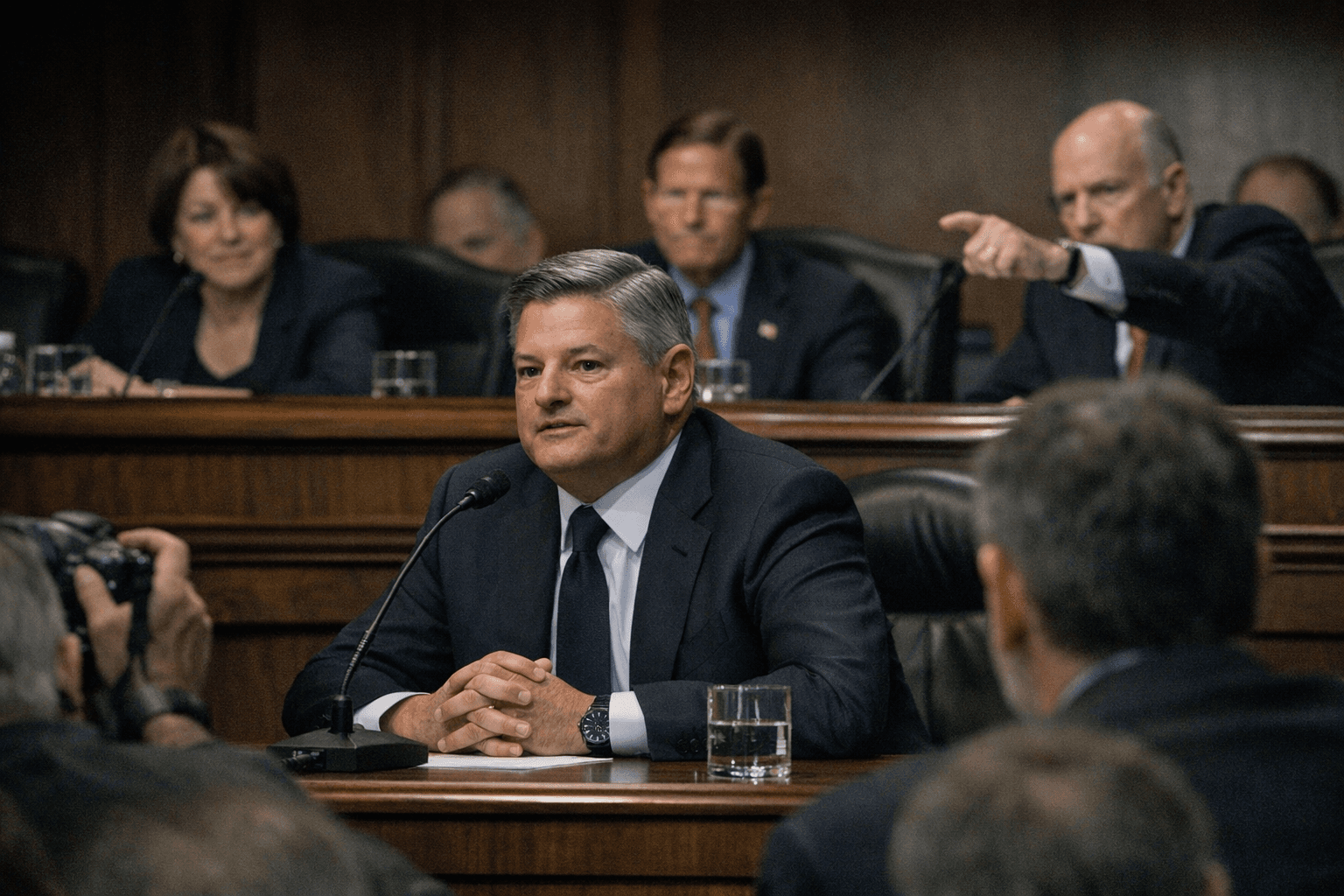
Ted Sarandos, co‑chief executive of Netflix, was sharply questioned by senators Wednesday as lawmakers wrestled with the far‑reaching implications of the streamer’s bid for Warner Bros. Discovery. The hearing before the Senate Judiciary Subcommittee on Antitrust, Competition Policy and Consumer Rights crystallized the political and cultural contest that has followed the deal since it was announced in December.
Senators on both sides of the aisle probed whether the transaction would concentrate too much power in a single platform, threaten jobs across Hollywood and change the economics of theatrical distribution. Committee chair Mike Lee accused Netflix of seeking to become “the one platform to rule them all,” framing antitrust fears around the company’s scale and control of marquee franchises. Democrats warned the deal could reduce consumer choice and imperil entertainment workers, while Republicans turned parts of the hearing into a culture‑war confrontation by assailing Netflix’s programming as ideologically biased, with one senator calling it “overwhelming woke” and another asserting it “promotes a transgender ideology.”
Sarandos defended the company’s motives and content strategy, telling senators, “Netflix has no political agenda of any kind.” He added that the service offers a broad mix of shows, saying Netflix has “a great deal of programming on Netflix for all, left, right and center.” When asked about any role by President Trump in the review process, Sarandos replied, “I don’t know if he’s involved or not.”
The proposed purchase has been reported in the range of roughly $72 billion to $83 billion, with differing headline figures circulating as the deal and financing options evolved. Netflix amended its bid to an all‑cash offer and the company’s co‑CEOs told Warner Bros. Discovery shareholders in a December letter that they were “highly confident that regulators will see this deal for what it is: pro‑consumer, pro‑innovation, pro‑worker, pro‑creator, pro‑growth, and pro‑competition.”
Beyond the political theater, the hearing highlighted practical regulatory battlegrounds. The Department of Justice is reviewing the transaction, and antitrust specialists expect federal enforcers to analyze a narrowly defined market, likely subscription streaming services that charge a monthly fee, rather than broader measures of total television viewing. Netflix pointed to Nielsen data showing that YouTube captures more viewing time on U.S. televisions than individual streaming rivals, an argument meant to broaden the competitive frame, but specialists say the DOJ’s market definition will be decisive.
Industry resistance has been vocal. The Writers Guild, theater‑owner trade groups and documentary and art‑house organizations have lobbied state attorneys general and urged scrutiny, warning the deal could cost jobs, shutter cinemas and shift high‑value films away from theatrical windows. A rival suitor, Paramount Skydance led by David Ellison, has mounted a hostile bid and pursued litigation after Warner Bros. Discovery rebuffed its offers, adding another layer of commercial and legal complexity.
For Washington, the hearing served as a political stress test for Silicon Valley’s entertainment ambitions. While the Senate cannot directly block the acquisition, the spectacle signals heightened scrutiny that could shape the DOJ’s review, influence state lawsuits and affect shareholder sentiment ahead of an expected vote as early as March. Whatever the outcome, the clash exposed how a media merger can become a proxy fight over market power, cultural influence and the future of how Americans watch and pay for entertainment.
This article was produced by Prism’s automated news system from verified source data, official records, and press releases, then run through automated quality and moderation checks before publishing. The system is built and supervised by the people who set the standards it runs under. Read our full AI policy.
Did this article answer your question?