Teens increasingly turn to social media, creators for news, survey finds
Teenagers are reaching for news on creator feeds first, with 81% saying they get it from influencers at least sometimes, far above adults.
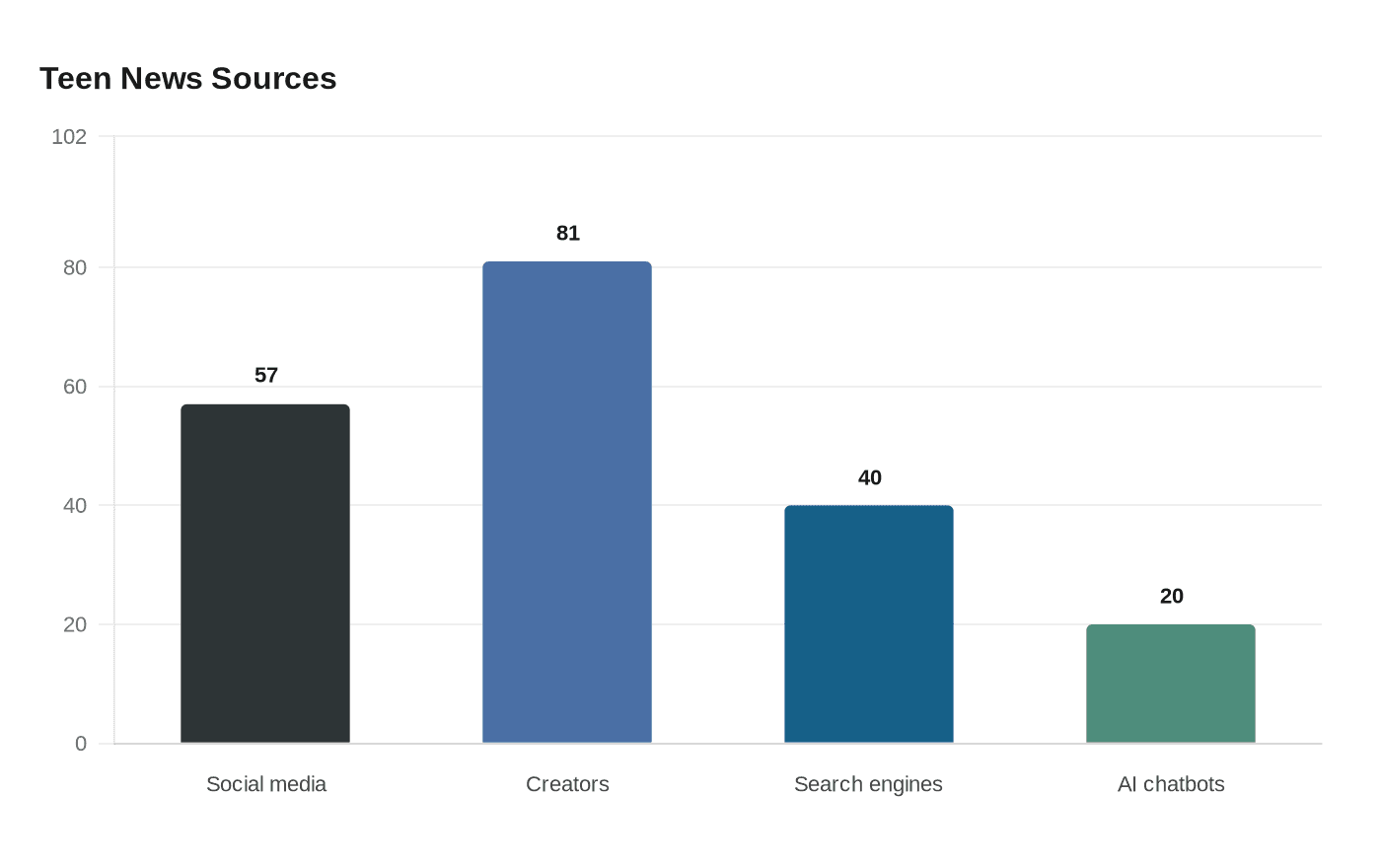
Teenagers are finding news where creators already have their attention, and the gap with adults is wide. The new Media Insight Project survey found that 57% of U.S. adults get news from social media at least once a day, but that share rises to 57% for people ages 13 to 17, while 81% of teens say they get news and information from influencers or independent creators at least sometimes.
That shift is not being described as blind trust. It is a story about access, habit and distribution, with younger audiences building news routines around creators they see as transparent and authentic. The report, The Evolving News Landscape: Comparing Media Habits and Trust Between Teens and Adults, came from the Media Insight Project, a collaboration that AP-NORC says dates to 2014 and was expanded on April 15, 2026, when Northwestern University and the Local News Network at the University of Maryland joined the partnership.
The teen survey interviewed 1,009 respondents ages 13 to 17 from February 2 to 16, 2026, using NORC at the University of Chicago’s AmeriSpeak Teen Omnibus. AP-NORC said the sample included the 50 states and the District of Columbia, was completed with parent or guardian consent, and carried an overall margin of sampling error of plus or minus 4.3 percentage points at the 95% confidence level.
Robyn Tomlin of the American Press Institute said traditional national and local outlets remain trusted sources, but younger audiences are also building relationships with independent creators, a development she described as carrying enormous implications for the future of news. The concern for newsrooms is not simply competition for attention, but competition for the first place teens look when something happens.
The same survey suggests the media diet is becoming more layered, not less. About four in 10 teens say they get news daily from search engines, and about two in 10 say the same of AI chatbots. Even so, television still matters: about four in 10 adults and a similar share of teenagers said they get news from TV daily, and a comparable share used digital news sites and apps.
Tom Rosenstiel of the University of Maryland said the idea that television is going away is a misapprehension. The broader finding is that young people are blending journalism, creator content and algorithmic discovery, while local news remains the anchor of trust, with 76% of Americans ages 13 and older saying they get local news information from local sources often or sometimes.
That trust sits against a more skeptical national mood. In the misinformation section, 66% blamed politicians a great deal or quite a bit for spreading falsehoods, 55% blamed social media companies and 54% blamed social media users. Only about 1 in 10 said news gives them a hopeful view of the world, underscoring the strain on institutions trying to keep credibility while meeting young audiences where they already are.
This article was produced by Prism’s automated news system from verified source data, official records, and press releases, then run through automated quality and moderation checks before publishing. The system is built and supervised by the people who set the standards it runs under. Read our full AI policy.
Did this article answer your question?

