Tehran Residents Report Heavy Bombardment Hitting Iran's Capital Friday
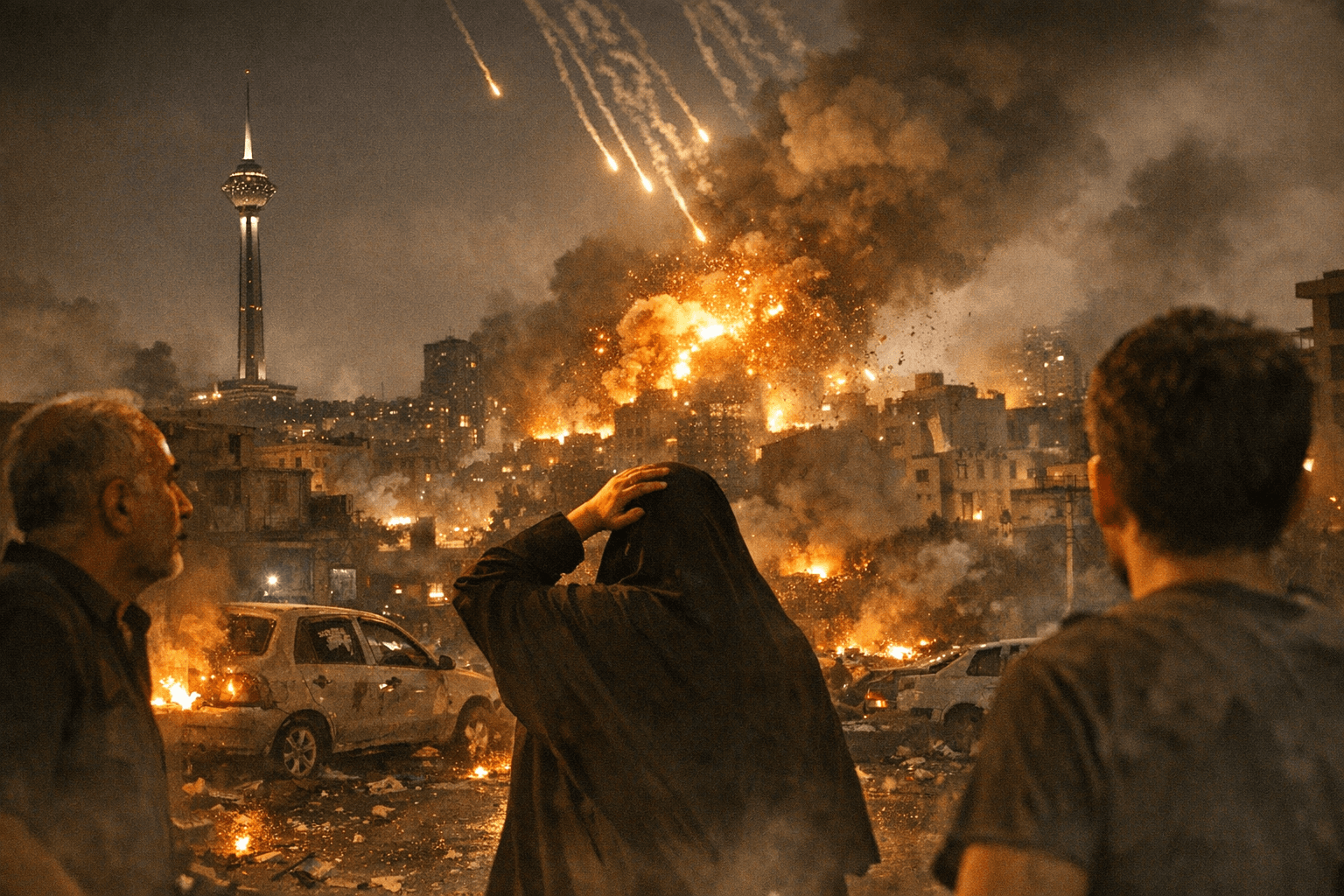
Fifteen Tehran residents, reached by phone and text, described sustained heavy bombardment hitting the Iranian capital Friday as the US-Israeli campaign entered its fifth week.
Fifteen residents of Tehran, reached by telephone and text message, described sustained heavy bombardment hitting the Iranian capital Friday, adding to a weeks-long toll on one of the Middle East's most populous cities.
The accounts came as American and Israeli airstrikes continued to hit Iran, with the war nearing the end of its fifth week. Activists reported strikes around Tehran and the central city of Isfahan on Friday, though it was not immediately clear what was hit. The bombardment followed a Thursday assault on the B1 bridge connecting Tehran and Karaj, a major bridge still under construction when it was hit, killing eight people.
More than 1,900 people have been killed in Iran since the war began on February 28 with US and Israeli strikes. Israeli military operations in the capital have struck official and military infrastructure including weapons manufacturing sites and security headquarters. Civilian areas have also been repeatedly hit. An Israeli airstrike on March 9 in the Resalat neighborhood of Tehran destroyed a Basij-affiliated building as well as three residential buildings, resulting in 40 to 50 deaths.
The historic Pasteur Institute of Iran in Tehran was severely damaged in US-Israeli bombardment, leaving it unable to continue delivering health services, according to the WHO. Founded in 1920 after the First World War, it is the country's oldest medical facility. Iran reports damage to at least 120 historical sites by US-Israeli strikes.
Despite the ongoing bombardment, families gathered in Tehran's Melat Park, with men smoking water pipes and children playing to mark the 13th day after Nowruz, the Persian New Year, when people traditionally picnic outdoors. A resident said checkpoints manned by the Revolutionary Guards had increased across the city.
The war started more than a month ago with US-Israeli strikes on Iran, triggering retaliation that has spread the conflict throughout the Middle East, convulsing the global economy and impacting millions of people worldwide. Iran fired on targets across the Middle East on Friday, damaging a desalination plant and setting a refinery ablaze in Kuwait.
The near-total halt of traffic through the Strait of Hormuz, the key waterway through which about a fifth of the world's oil and liquefied natural gas typically passes, has created a catastrophic disruption in oil markets. Crude oil prices have risen around 45 percent since the war began, topping $110 per barrel. With Trump publicly warning that the assault on Iranian infrastructure had not yet reached its full scale, Friday's bombardment appeared to signal further escalation ahead.
This article was produced by Prism’s automated news system from verified source data, official records, and press releases, then run through automated quality and moderation checks before publishing. The system is built and supervised by the people who set the standards it runs under. Read our full AI policy.
Did this article answer your question?


