Tell City River-Rail Terminal Anchors Perry County Jobs and Industry Growth
Tell City’s river-rail terminal links the Ohio River and Hoosier Southern rail, supporting Perry County jobs and strengthening supply-chain connections for local industry.
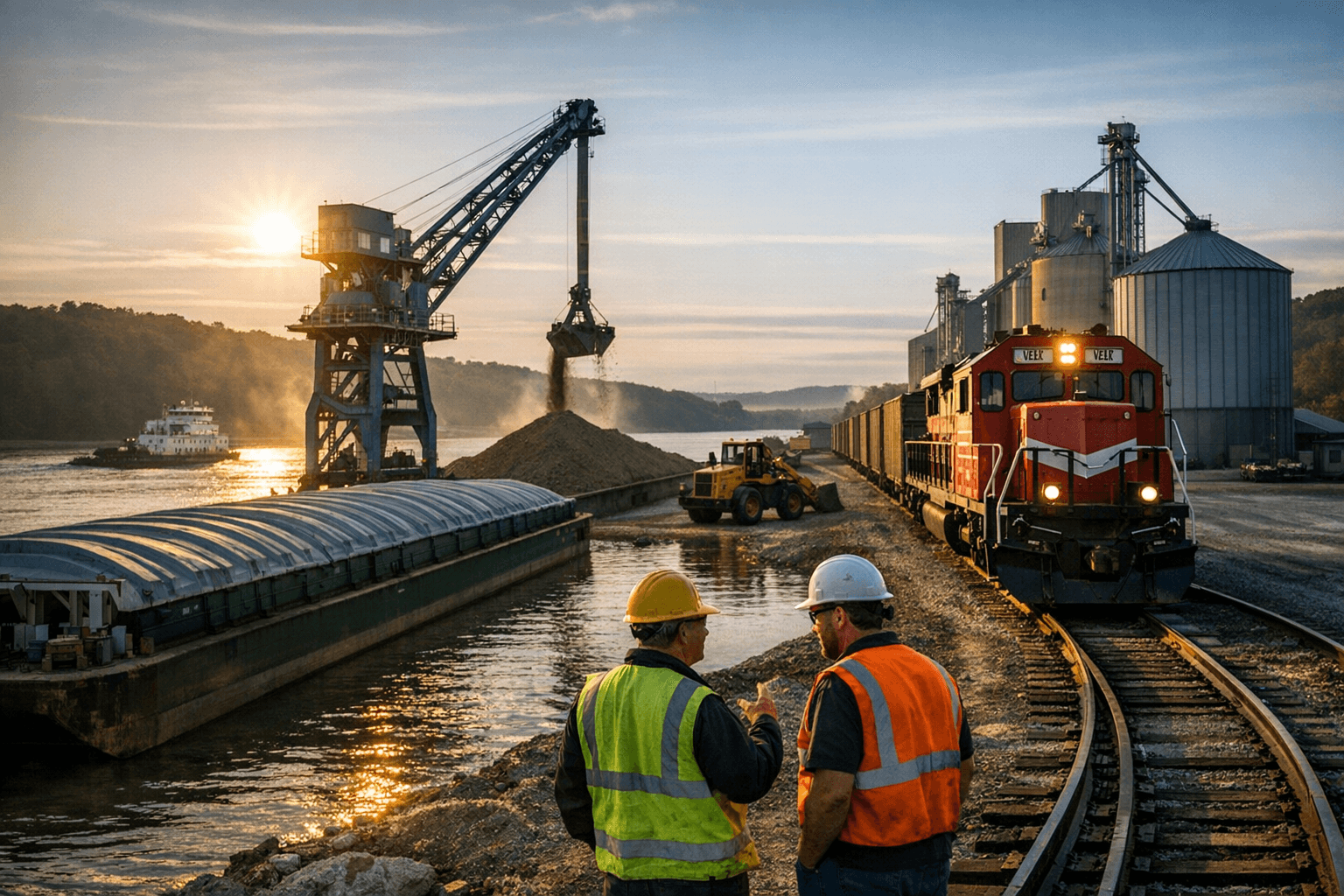
Tell City’s river-rail terminal functions as a central logistics hub for Perry County, linking the Ohio River at approximately mile marker 727 with the Hoosier Southern short-line rail and the national rail network. Operated by the Perry County Port Authority, the public river terminal and intermodal yard provide bulk cargo handling, intermodal transfer, and railcar storage that local manufacturers and agricultural shippers rely on.
The facility’s ability to accept river carriers and stage freight for rail movement means regional goods can move from barge to rail without long truck hauls, lowering transportation friction for producers across southern Indiana. The Hoosier Southern short-line connection is the linchpin that transforms river shipments into national rail shipments, keeping Perry County manufacturers plugged into broader supply chains and markets.
For local workers and businesses, the terminal is more than infrastructure; it is an economic anchor. The port authority’s services support existing industrial employers by offering competitive logistics options and create a platform for attracting new firms that need river access, rail service, or railcar storage. These functions help stabilize employment in industries sensitive to shipping costs, including bulk commodity exporters and manufacturers that depend on heavy inbound materials.
From a market perspective, the presence of a public river terminal and intermodal yard strengthens Perry County’s proposition for industrial development. Companies that can switch between barge and rail modes can reduce per-unit transport costs, improve scheduling flexibility, and expand their customer reach. For agricultural shippers, access to both river and rail opens routes to distant markets that depend on cost-efficient bulk transport.
Policy-wise, the terminal represents municipal assets that Perry County elected officials and economic development planners can leverage. Maintaining competitive berth and yard capacity, ensuring reliable short-line connections, and coordinating with river carriers that call the port are practical levers for preserving and expanding industrial activity. Investments in transloading equipment, rail siding capacity, or coordinated land-use planning near the terminal would reinforce the county’s logistics advantages.
For residents, the terminal’s role translates into local job support, greater tax-base stability, and the potential for new industrial investment in Tell City and surrounding townships. As supply-chain strategies continue to favor multimodal flexibility, Perry County’s river-rail capability positions the community to keep commerce afloat and on track. The next steps for local leaders and business owners include monitoring carrier schedules, assessing yard capacity needs, and aligning workforce development with the skills required by terminal-dependent employers.
Sources:
Know something we missed? Have a correction or additional information?
Submit a Tip