Temporary hotel shelter in Gallup offers lifesaving refuge during freeze
A converted conference-room shelter at the Howard Johnson housed people during single-digit cold, offering a warm, safer alternative to sleeping outdoors.
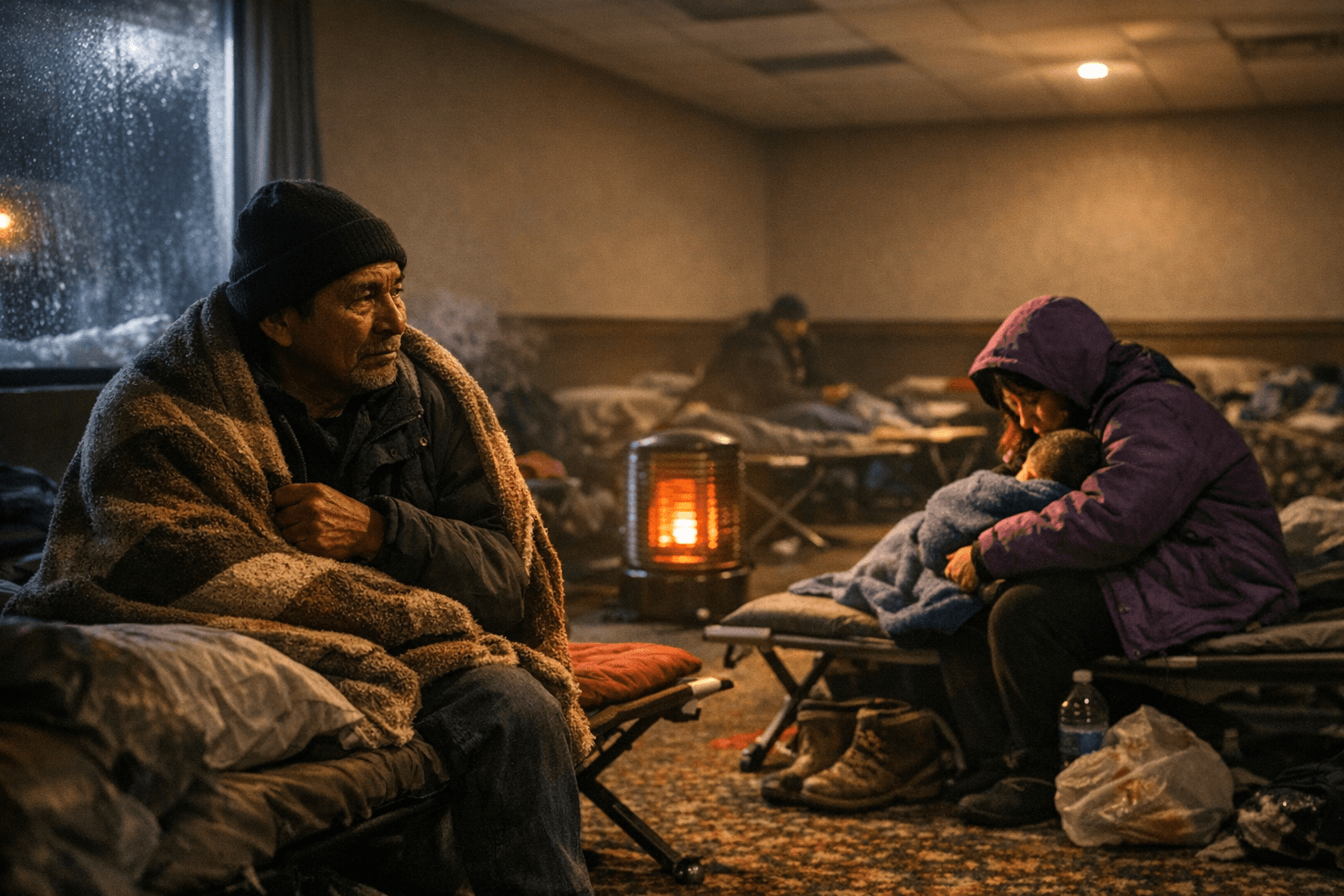
As temperatures in McKinley County plunged into the single digits on Jan. 15, a conference room at the Howard Johnson on Gallup’s west side was transformed into a nightly refuge for people who otherwise would have slept outdoors. The ballroom was laid out with cots and mats in rows, blankets stacked nearby, and a simple system of signs to help people find and keep their spots through the bitter overnight hours.
The shelter provided basic, immediate protection from deadly winter conditions for people who lack stable housing. Several residents used the space that night; reporting identified those individuals by first name only, and described routines and needs that highlighted the human stakes behind the emergency response. For many, the converted hotel room was not just warmth but a place to preserve dignity and safety until morning.
Organizers adapted a nontraditional space into a functioning overnight shelter, emphasizing low-barrier access: daylight-style sleeping arrangements, clear signage for assigning and maintaining sleeping spots, and an orderly layout to maximize capacity while allowing movement. Community members and volunteers supported the operation, supplying blankets and helping orient newcomers to the temporary system. The effort underscored a local capacity to mobilize in extreme weather even when permanent infrastructure is lacking.
From a public health perspective, such ad hoc shelters reduce immediate risks of hypothermia and frostbite and can prevent deaths during short-term temperature emergencies. They also create opportunities for outreach by health and social services to connect people with medical care, substance use treatment, and housing resources. But stopgap measures do not substitute for sustained systems to address homelessness, mental health needs, and chronic housing shortages that leave residents exposed when winter storms arrive.
The scenes in the Howard Johnson ballroom point to larger policy gaps for McKinley County. Emergency convening of hotel conference rooms reflects a limited shelter stock and the need for durable solutions: more year-round low-barrier shelter beds, coordinated warming centers, outreach teams linked to medical and behavioral health services, and predictable funding streams so nights like Jan. 15 do not rely solely on ad hoc conversions and volunteer labor.
For neighbors on the west side and across Gallup, the converted shelter offered immediate relief and a reminder of community resilience. The next steps will be whether local leaders translate that urgency into sustained investments so that future cold snaps bring planned capacity rather than improvised refuges. In the meantime, nights like that one show how small acts of organization and care can keep people off the cold concrete and alive until longer-term solutions arrive.
Sources:
Know something we missed? Have a correction or additional information?
Submit a Tip