Tennessee Republicans approve middecade redistricting to target Memphis seat
Tennessee Republicans rewrote the rules midstream, moving to split Memphis three ways and put Steve Cohen’s seat in play. The GOP says one more district could help protect its House majority.
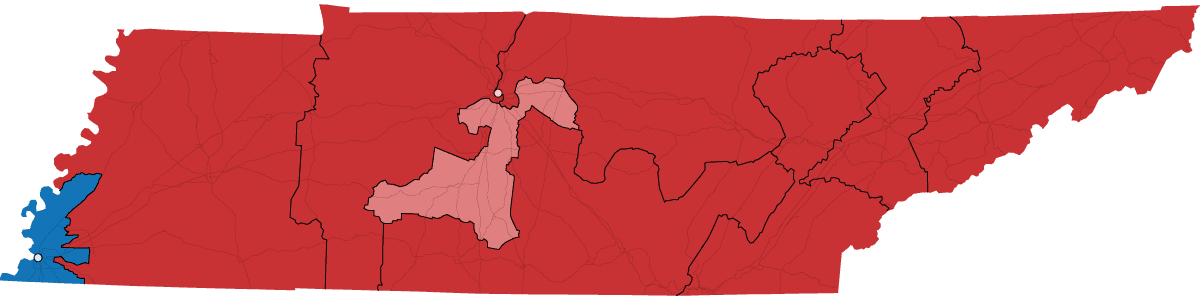
Tennessee Republicans approved a middecade redistricting push on Thursday that would scrap a state ban in place since 1972 and redraw the state’s congressional map around Memphis, a rare move nationally and a direct bid to improve Republican odds in the 2026 House elections.
Gov. Bill Lee called the special session after pressure from President Donald Trump, who said he had spoken with Lee about correcting “the unconstitutional flaw in the Congressional Maps of the Great State of Tennessee” and argued the change should give Republicans “one extra seat.” Tennessee already has nine U.S. House districts, and Republicans held eight of them before the new map advanced.
The centerpiece of the plan is Memphis. The approved map would split the city into three congressional districts and break up Tennessee’s 9th District, the state’s only majority-Black congressional seat. That district is now represented by Democratic Rep. Steve Cohen and covers most of Memphis and much of Shelby County. By carving up that seat, Republicans are aiming at the last Democratic holdout in a state where they already control nearly the entire congressional delegation.
The legislative vote also overturned a rule that had constrained lawmakers for more than five decades. Tennessee’s statute, adopted in Acts 1972, chapter 740, said congressional districts “may not be changed between apportionments.” GOP lawmakers moved to repeal that prohibition during the same special session, making it possible to redraw the map without waiting for the next census cycle.
The timing mattered. Republican leaders in Tennessee and other states have pointed to the U.S. Supreme Court’s April 29 decision in Louisiana v. Callais as opening the door to new mapmaking efforts outside the normal cycle. In Tennessee, the move has already drawn warnings from civil rights and Democratic figures that it could weaken Black voting power in Memphis and make district lines a more frequent partisan weapon.
Local experts have said redistricting outside the census cycle could become more common and could confuse voters who are forced to track changing boundaries more often. Tennessee’s recent history adds another layer: past redistricting in Nashville was widely seen as diluting Democratic strength there. Now the state’s Republican majority has chosen to change the rules midstream, not just to protect its current advantage, but to try to lock in one more seat before the 2026 midterm battle.
Know something we missed? Have a correction or additional information?
Submit a Tip