Tennessee Republicans Push New Map to Target Memphis Democratic House Seat
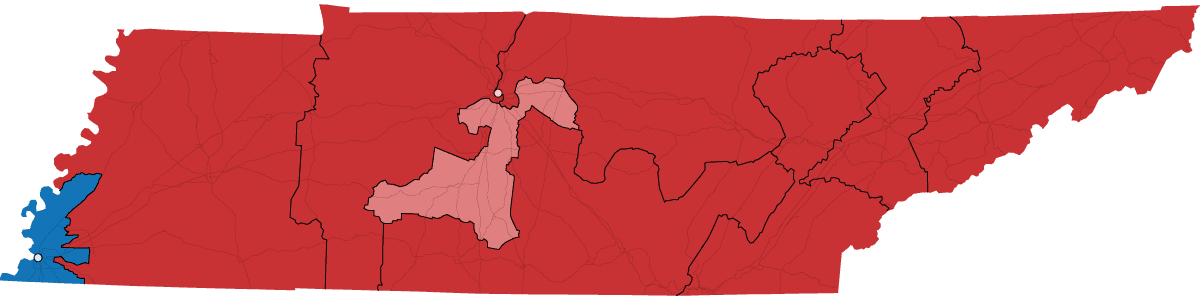
Tennessee Republicans moved to split Memphis into three districts, a redraw that could turn the state’s 8-1 House split into a 9-0 GOP sweep.

Tennessee Republicans accelerated a redistricting push that could erase the state’s lone Democratic House seat and lock in a 9-0 Republican delegation, moving quickly after the Supreme Court’s April 29 ruling in Louisiana v. Callais narrowed the Voting Rights Act’s reach.
Gov. Bill Lee called lawmakers back for a special session on May 5 and said the legislature had a responsibility to review the map and keep it “fair, legal, and defensible.” The proposed plan would split majority-Black Shelby County into three congressional districts and carve up Memphis, targeting the 9th District held by Rep. Steve Cohen.
Cohen has represented the district since January 3, 2007, and he called the redraw a direct attack on Black political power in a state where Black residents make up about 16% of the population. He said the plan would dilute the Black vote and called it a “transparent effort” to create a seat for a Trump-aligned Republican.
The timing sharpened the stakes. Tennessee’s congressional primaries are set for August 6, and the qualifying deadline had already passed when Republicans pushed the redraw, leaving candidates who had already started campaigning vulnerable to sudden changes in district lines. Republicans currently hold an 8-1 edge in Tennessee’s House delegation, and the new map could convert that into a clean sweep.

The fight lands in the immediate wake of Louisiana v. Callais, the case that held Louisiana did not need to create an additional majority-minority congressional district. That decision weakened one of the legal tools that had forced states, including Tennessee, to protect minority voting strength in redistricting. Before the ruling, Tennessee had been expected to draw at least one of its nine congressional districts as majority-minority.
Cohen said he has been consulting voting-rights lawyers and other experts and plans to challenge the map politically and legally. Democratic lawmakers and voting-rights advocates have already protested the move, warning that the redraw is not just another boundary dispute but an effort to turn a Supreme Court ruling into immediate partisan advantage. If Republicans succeed, Tennessee would become a test case for how far states can go in using the new legal landscape to redraw power, not merely districts.
Know something we missed? Have a correction or additional information?
Submit a Tip