Tens of Thousands of Agency Workers Go Unpaid Despite Funding Lapse
More than 60,000 TSA workers received back pay after a presidential memo, but FEMA, Coast Guard, and CISA employees remain unpaid six weeks into the DHS funding lapse.
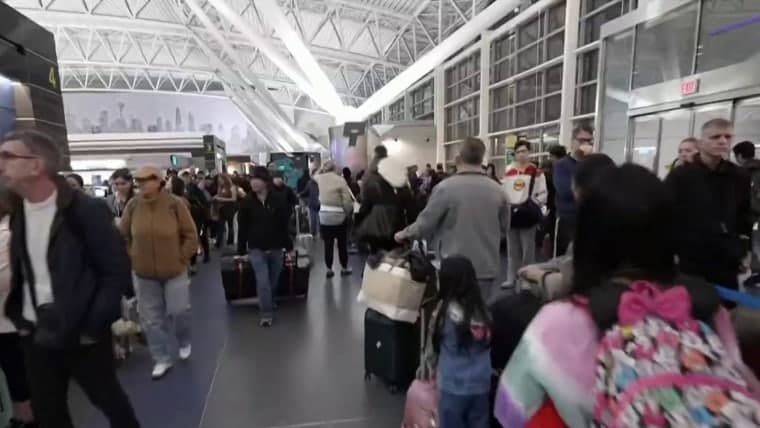
Six weeks into a partial government shutdown triggered by a February 14 funding lapse, the Department of Homeland Security's 272,000-person workforce has split into two sharply unequal groups: those whose paychecks kept coming throughout the impasse, and those who have watched two full pay periods come and go without a dollar deposited.
Nearly 92% of DHS employees continued reporting to work during the shutdown, which began February 14 after Congress failed to fund the agency for the remainder of the fiscal year. But working and getting paid are not the same thing. DHS officials said approximately 38% of the department's roughly 260,000 employees had missed a full paycheck since the shutdown began in February.
The agencies at the center of the political fight, Customs and Border Protection and Immigration and Customs Enforcement, felt the least financial pain. Trump's tax and spending bill passed by Republicans last year provided ICE with about $75 billion and CBP with about $65 billion, shielding their law enforcement operations from the appropriations standoff. That is the source of the at least 120,000 law enforcement officers within the department who continued to collect paychecks throughout the lapse.
The starkest rupture played out in the nation's airports. Roughly 61,000 TSA employees, including approximately 50,000 transportation security officers who perform security functions at domestic airports, worked without pay since the funding lapse began. TSA workers missed more than $1 billion in pay, making it difficult for many to afford food, gas, housing, child care and other essentials. Nearly 500 transportation security officers quit their positions, and thousands more began calling out sick at record rates, producing security screening delays at airports across the country.
President Trump on March 27 issued an executive action directing TSA employees be paid immediately, with DHS instructing the agency to use "funds that have a reasonable and logical nexus to TSA operations" for the payments. The agency sent messages to TSA officers informing them they should "expect most of their backpay in their direct deposit starting on Monday, March 30." Most TSA agents who received a retroactive paycheck on March 30 received at least two full paychecks.
The relief did not extend to the rest of DHS. Thousands of DHS staffers, including FEMA workers, civilians in the U.S. Coast Guard, and Cybersecurity and Infrastructure Security Agency employees, remained working unpaid. AFGE national president Everett Kelley stated plainly: "Though TSA officers will be paid, FEMA workers, Coast Guard, CISA, and other DHS employees are waiting on their back pay."
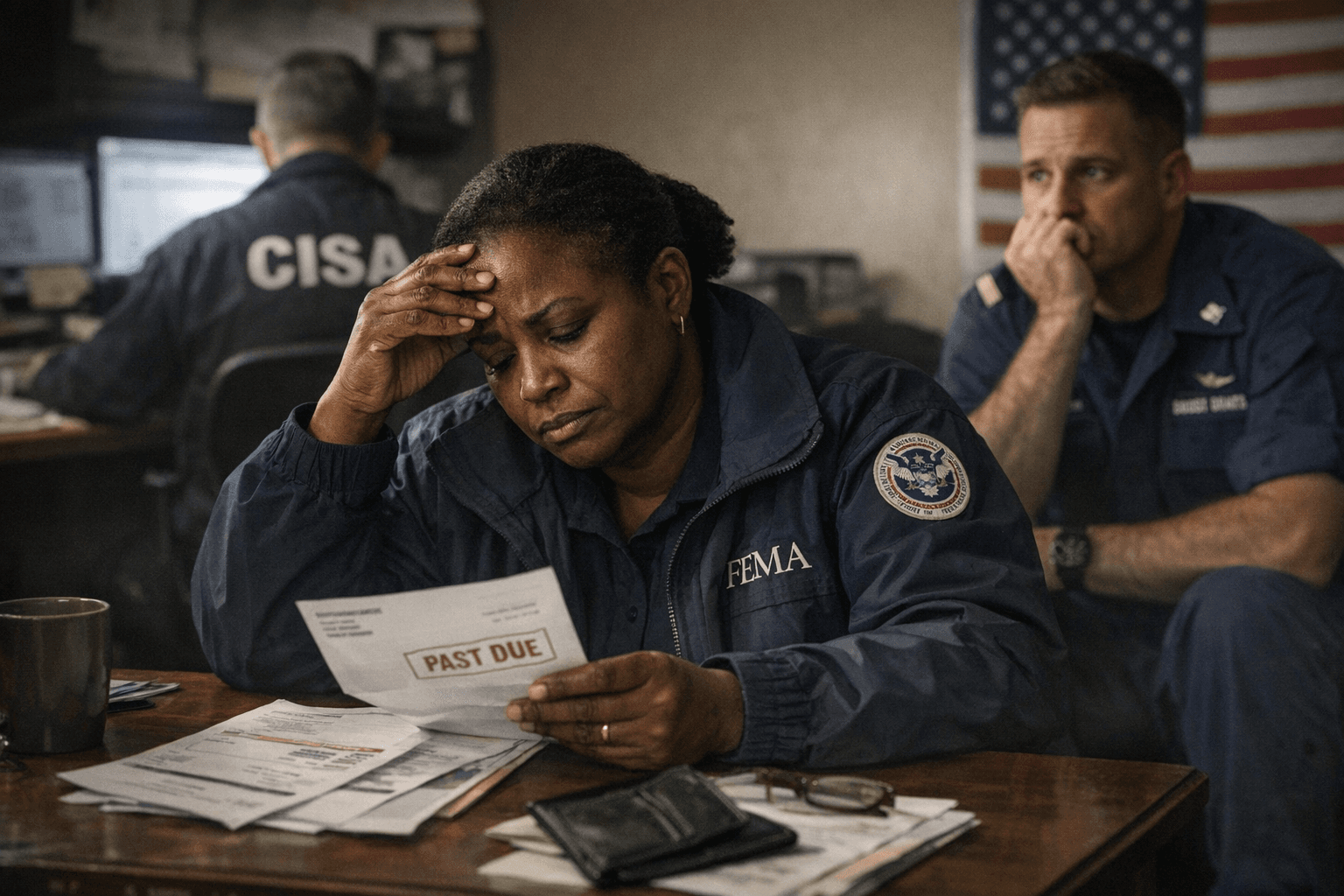
The operational consequences extend beyond individual finances. At FEMA, the shutdown disrupted the agency's ability to reimburse states for disaster relief costs, and training for first responders at the National Disaster and Emergency Management University in Maryland was suspended. FEMA officials warned that if a catastrophic disaster occurred, the Disaster Relief Fund would be seriously strained. At CISA, 888 of 2,341 employees were designated as excepted workers required to work without pay, while the rest were furloughed, and this came on top of roughly 1,000 staff members, about one-third of its workforce, already lost under the Trump administration's workforce reduction programs.
Federal law provides a floor for workers in both categories. Under a 2019 law, all excepted and furloughed federal employees are guaranteed back pay once congressional appropriations are restored. Health coverage continues uninterrupted, though the employee share of FEHB premiums will accumulate and be withheld from pay once the lapse ends, meaning the first post-shutdown paychecks will be smaller than usual.
The calculus is different for furloughed workers and contractors. Furloughed federal employees may file for Unemployment Compensation for Federal Employees, but they are required to repay those benefits after the shutdown ends and they receive retroactive pay, effectively making UI a short-term loan rather than relief. Excepted employees, who are working without pay, are not eligible for UI at all. Federal contractors carry the sharpest exposure: they have no statutory guarantee of back pay and must rely on state unemployment systems entirely.
Some DHS workers received no-interest loans from Coast Guard Mutual Assistance during last year's 43-day funding lapse, and the program is available again. One Coast Guard employee who used that resource said at the time they "wouldn't have been able to make it" without it, and still had multiple payments remaining on the loan when the current shutdown began.
Congress remained split, with lawmakers on a roughly two-week Easter and Passover recess after the Senate and House passed conflicting funding plans. The House approved a stopgap measure to fund DHS through May 22, but the two chambers have yet to reconcile the competing bills. Until they do, tens of thousands of the department's workers face another pay period with nothing arriving in their accounts, a guarantee of back pay on paper but a mounting financial crisis in practice.
Know something we missed? Have a correction or additional information?
Submit a Tip

