Tesla Bets Its Future on Cybercab and Optimus Robot Production
Tesla retired its Model S and X flagships to make room for the Cybercab robotaxi, but federal safety rules and scaling risks cloud the pivot.

Tesla's most consequential reinvention took concrete shape this week as the company began Cybercab production at Gigafactory Texas and simultaneously retired the two vehicles that built its reputation: the Model S and Model X. The moves, long anticipated on Wall Street but jarring in their simultaneity, mark CEO Elon Musk's clearest signal yet that Tesla no longer sees itself primarily as a carmaker.
On his Q4 2025 earnings call in late January, Musk gave the flagship sedans and SUVs what he called an "honorable discharge," announcing production would wind down in Q2 2026. On March 27, Tesla sent emails to U.S. customers confirming the end, opening with the note that the two models "marked the beginning of the world's transition to electric transportation." The Model S had been on the market since 2012, the Model X since 2015. Tesla stopped breaking out their sales separately in 2023, folding them into an "other models" category alongside the Cybertruck and Semi, which effectively obscured a prolonged decline in demand for both vehicles.
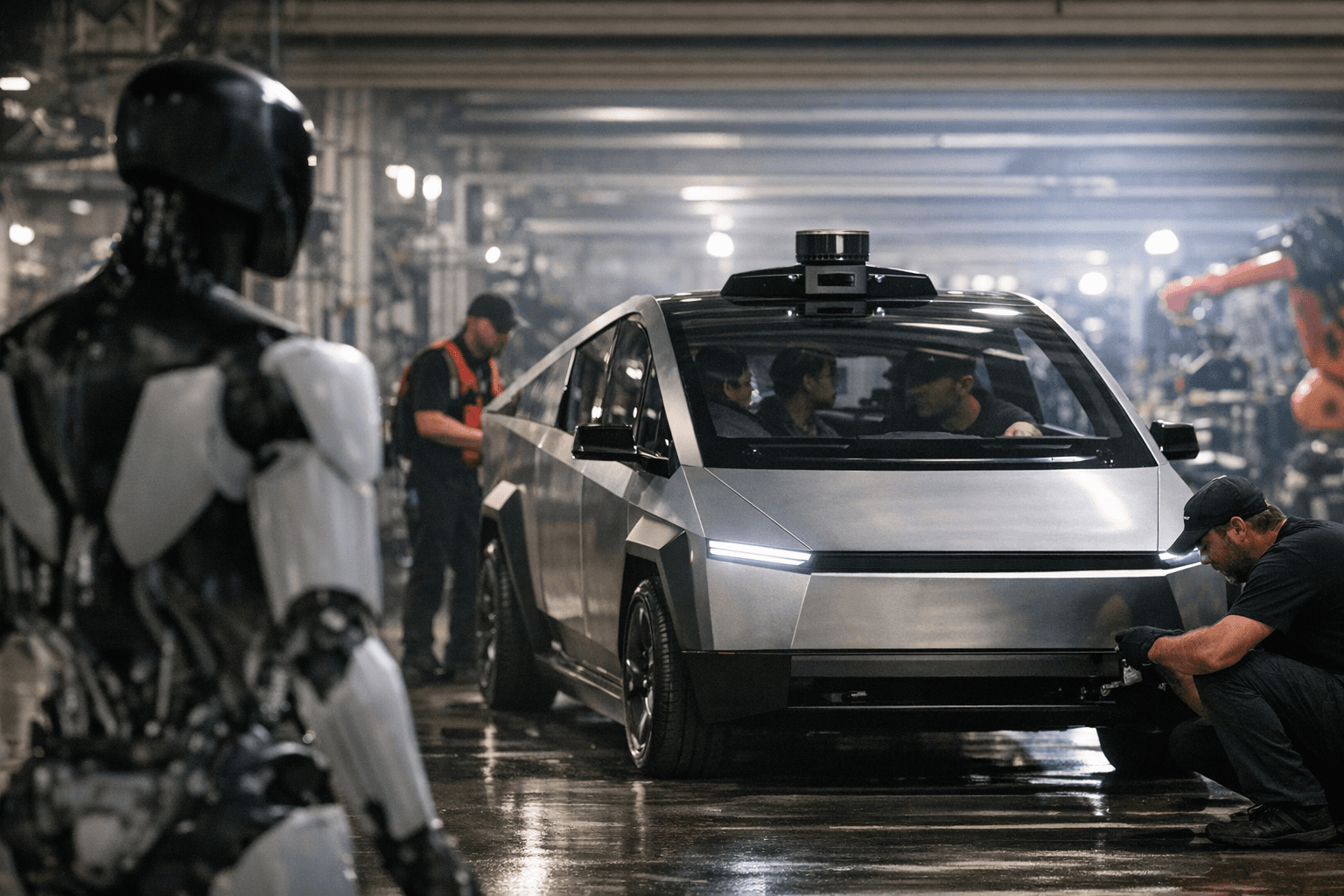
The freed floor space at the Fremont, California plant is being converted directly to Optimus robot production, which began ramping there in January 2026. Tesla is targeting between 50,000 and 100,000 Optimus units this year alone, with plans for a dedicated manufacturing facility at Gigafactory Texas capable of producing 10 million robots annually by 2027. Engineers working on the program's third-generation hardware have described its dexterity as "getting very close to human functionality and form factor," with the finished robot expected to look like "a human in a superhero suit" rather than a conventional industrial machine.
The Cybercab, a two-passenger vehicle with no steering wheel and no pedals, produced its first unit at Gigafactory Texas in February 2026 before production formally began this month. Musk has outlined an annual production target of 2 million Cybercabs once multiple factories reach full design capacity, with hundreds of units per week rolling out of Austin in the near term. The vehicle is central to Musk's stated goal of transforming Tesla from an automaker into an AI and robotics company, one that earns revenue from a driverless ride-hailing network rather than from vehicle sales alone.
The regulatory landscape, however, remains the most immediate obstacle. Federal Motor Vehicle Safety Standards explicitly require vehicles sold in the U.S. to include manual controls, meaning the Cybercab needs specific exemptions from the National Highway Traffic Safety Administration before it can be commercially deployed at scale. Tesla has not publicly confirmed which jurisdictions have granted those exemptions. Texas, home to Gigafactory Texas and more permissive on autonomous vehicle rules, is the natural proving ground; Tesla has already been running driverless test rides in Austin using Model Y vehicles. But a national rollout of a vehicle with no override capability will require federal clearance that remains outstanding.
The pivot also carries implications for the roughly 100,000 Model S and X owners in the U.S. whose vehicles will no longer have a production line behind them. While Tesla typically continues servicing discontinued models for years, the absence of ongoing manufacturing volume tends to pressure resale values and can lead to longer parts lead times as supply chains consolidate. Owners of higher-trim Plaid variants, in particular, represent a premium segment that Tesla is walking away from without a clear direct replacement in the lineup.
Wedbush analyst Dan Ives has argued that Tesla's self-driving capabilities, if they scale, could add a trillion dollars to the company's overall valuation, a figure that underscores why management is willing to absorb the near-term margin compression that comes with standing down profitable legacy products. Whether the Cybercab's economics actually materialize depends on resolving the regulatory, safety, and scaling questions that production launch alone cannot answer.
This article was produced by Prism’s automated news system from verified source data, official records, and press releases, then run through automated quality and moderation checks before publishing. The system is built and supervised by the people who set the standards it runs under. Read our full AI policy.
Did this article answer your question?