Tesla Registers Voice Assistant in Shanghai as China Tightens AI Oversight
Tesla’s Shanghai filing shows its voice assistant is now part of China’s AI approval maze, where software access can shape EV sales as much as hardware.
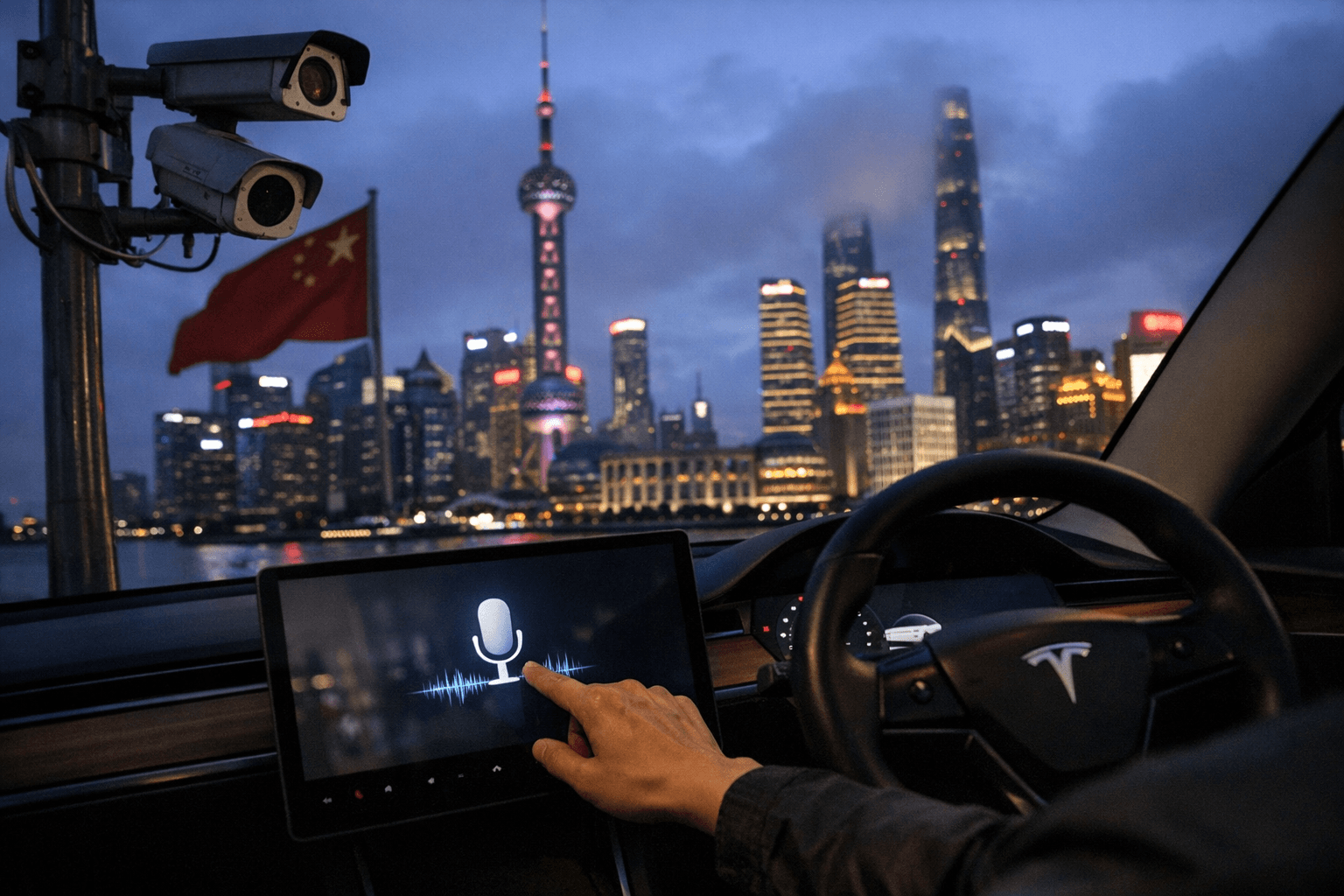
Tesla has registered its voice assistant with Shanghai’s cyberspace regulator, a small-looking filing that carries larger weight in China’s electric-vehicle battle. The feature is powered by generative artificial intelligence, and Shanghai authorities said it is one of 158 AI-enabled applications and functions to complete the city’s local filing process.
The move matters because Tesla is not only selling cars in China, it is trying to keep its software stack competitive under a regime that links innovation to oversight. China’s national internet regulator has kept expanding filing and registration requirements for generative AI services and applications, and Shanghai has built its own framework to push AI adoption while tightening control over how it is used.
Shanghai’s rules say the municipality should promote AI development and application while ensuring security and supervising use under the law. The city’s 2025 plan for AI in government services goes further, calling for deeper use of AI in public services and digital administration. In practice, that means companies entering the market must clear regulatory gates that affect not just what their products can do, but when they can be sold and how they can be updated.
For Tesla, the pressure is immediate. China remains the world’s largest auto market, and domestic and foreign automakers are racing to add AI-inflected features to vehicles and in-car software. Tesla has been trying to defend its share in a crowded field, even as its Full Self-Driving system has not yet been approved for delivery in China. Elon Musk had previously said Tesla expected full approval for FSD in early 2026.
That gap has made software a competitive issue, not just a technical one. Voice assistants, driver-assistance tools and other connected features now sit at the intersection of product design, data controls and approval processes. In China, those rules can shape how a vehicle is perceived by buyers just as much as horsepower or range.
Tesla’s Shanghai filing is another sign that foreign tech companies must adapt to China’s regulatory terms if they want access to its market. It also shows how AI has become central to the country’s auto competition, where compliance is part of the product and where every new software function can carry strategic value.
This article was produced by Prism’s automated news system from verified source data, official records, and press releases, then run through automated quality and moderation checks before publishing. The system is built and supervised by the people who set the standards it runs under. Read our full AI policy.
Did this article answer your question?


