Texas Collector Preserves 40,000 Pieces of McDonald’s History
One Austin collector’s 40,000-piece archive shows how McDonald’s became part of American life, from childhood toys to the design of everyday consumer culture.
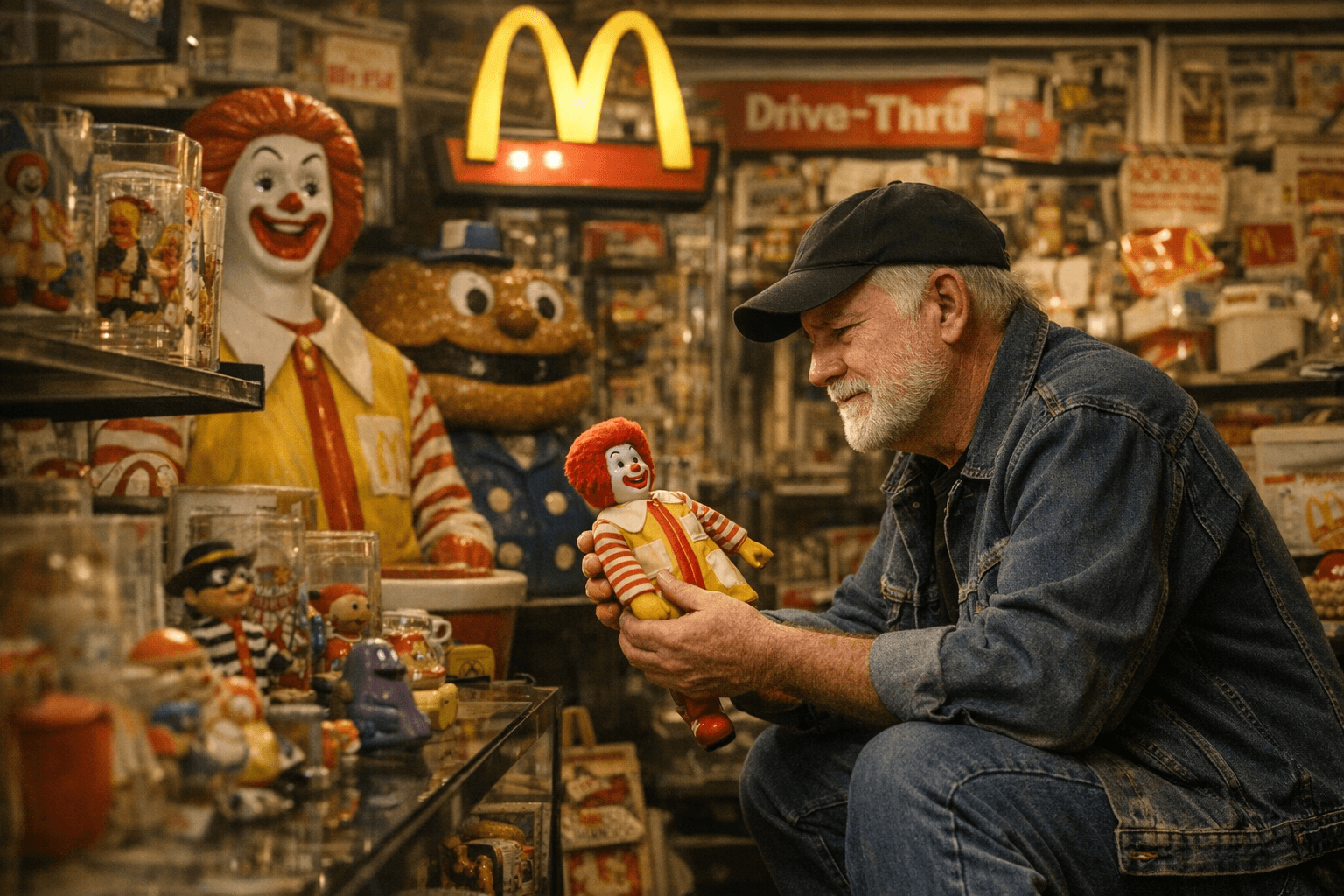
A private archive of American life
Bobby Beauchesne has turned McDonald’s leftovers into social history. From his home in Austin, Texas, he has assembled more than 40,000 pieces of memorabilia, building one of the country’s largest collections of the chain’s ads, photos, toys, signage, and menu-era ephemera.
What makes the archive matter is not just its size. Through his Consumer Time Capsule brand, Beauchesne preserves the visual language of a company that helped define how Americans encountered branding, convenience, and childhood. The collection reads like a record of how a fast-food chain moved from restaurant to cultural shorthand.
From the McDonald brothers to a national system
The story begins in 1940, when Maurice and Richard McDonald founded the company in San Bernardino, California. Their original operation was later transformed by Ray Kroc, who opened the first McDonald’s restaurant for McDonald’s System, Inc. in Des Plaines, Illinois, on April 15, 1955.
That date marks the moment McDonald’s began to spread as a scalable national brand. In 1961, McDonald’s acquired the rights to the brothers’ company for $2.7 million, a deal that helped turn a regional concept into one of the world’s most recognized fast-food chains. The company’s rise is inseparable from American consumer history because it standardized not just food, but the look and feel of eating on the go.
Why the memorabilia matters
Beauchesne’s collection matters because it preserves objects that were never meant to last. Ads, tray liners, toys, signs, and promotional materials were made to move quickly through daily life, then disappear. Saving them gives researchers a way to study how the brand spoke to families, children, commuters, and neighborhood regulars across different eras.
That is why fast-food memorabilia resonates as more than nostalgia. It captures how a corporation taught people to recognize itself through color, mascot, packaging, and promise. For historians of branding and food culture, these objects show how McDonald’s became a shared reference point across generations, shaping what many Americans expected from speed, consistency, and convenience.
A brand that mirrors changing childhood and design
The items Beauchesne documents also trace changing ideas about childhood. McDonald’s promotions and toys turned eating into an experience aimed at kids as much as adults, folding play into commerce in ways that became central to the company’s identity. Over time, the chain’s marketing reflected broader shifts in family life, media, and the way companies courted younger consumers.
The design story is equally important. Packaging, signage, and advertisements reveal how McDonald’s adapted its look while keeping the brand instantly recognizable. That tension between reinvention and sameness is part of what made the chain so durable, and it helps explain why old cups, posters, and menu boards now feel like artifacts of a vanished consumer world.
Consumer culture in a box
Beauchesne’s archive works because it shows how ordinary objects can hold a national story. A toy from a Happy Meal era, a photograph of a storefront, or a vintage ad can reveal how a brand positioned itself inside family routines, roadside travel, and neighborhood life. Each piece documents a moment when corporate identity moved from a restaurant counter into the broader American imagination.
McDonald’s is now one of the most recognizable names in fast food, and that familiarity is precisely what makes the archive important. When a company becomes that embedded in everyday life, its ephemera becomes evidence of how people lived, what they were sold, and how they learned to see themselves as consumers.
A record of the American experience
Beauchesne has described McDonald’s as “part of the American experience that’s irreplaceable,” and that framing gets to the heart of why his work resonates. The chain’s memorabilia is not valuable only because it is old. It is valuable because it reflects the changing habits, aesthetics, and aspirations of the country that produced it.
By preserving more than 40,000 pieces, Beauchesne is doing something larger than collecting. He is safeguarding the paper, plastic, and printed surfaces through which Americans encountered one of the most powerful brands in modern life. In that sense, his collection is a reminder that corporate culture leaves a trail, and that trail can tell the story of a nation as clearly as any textbook.
This article was produced by Prism’s automated news system from verified source data, official records, and press releases, then run through automated quality and moderation checks before publishing. The system is built and supervised by the people who set the standards it runs under. Read our full AI policy.
Did this article answer your question?

