Texas grid tests fail data centers, raising summer outage fears
Four big data-center and crypto projects failed Texas grid voltage tests, exposing how fast AI demand is outrunning ERCOT’s stability safeguards. The loss was big enough to rival a city the size of Boston.

Texas is finding out what happens when AI growth collides with a grid built for a different era: four unnamed groups of data centers and crypto facilities failed key voltage ride-through tests, a sign that some of the state’s newest power-hungry customers may not stay online when the system is jolted.
The Electric Reliability Council of Texas said the failed tests involved how these large loads behave during voltage disturbances, the kind of moment when transmission faults can briefly knock power quality off course. In practice, voltage ride-through measures whether a facility can keep operating through a grid disturbance instead of instantly disconnecting to protect sensitive equipment. When a project fails, it may need redesign work, stronger controls or a slower path to interconnection before it can come online at full scale.
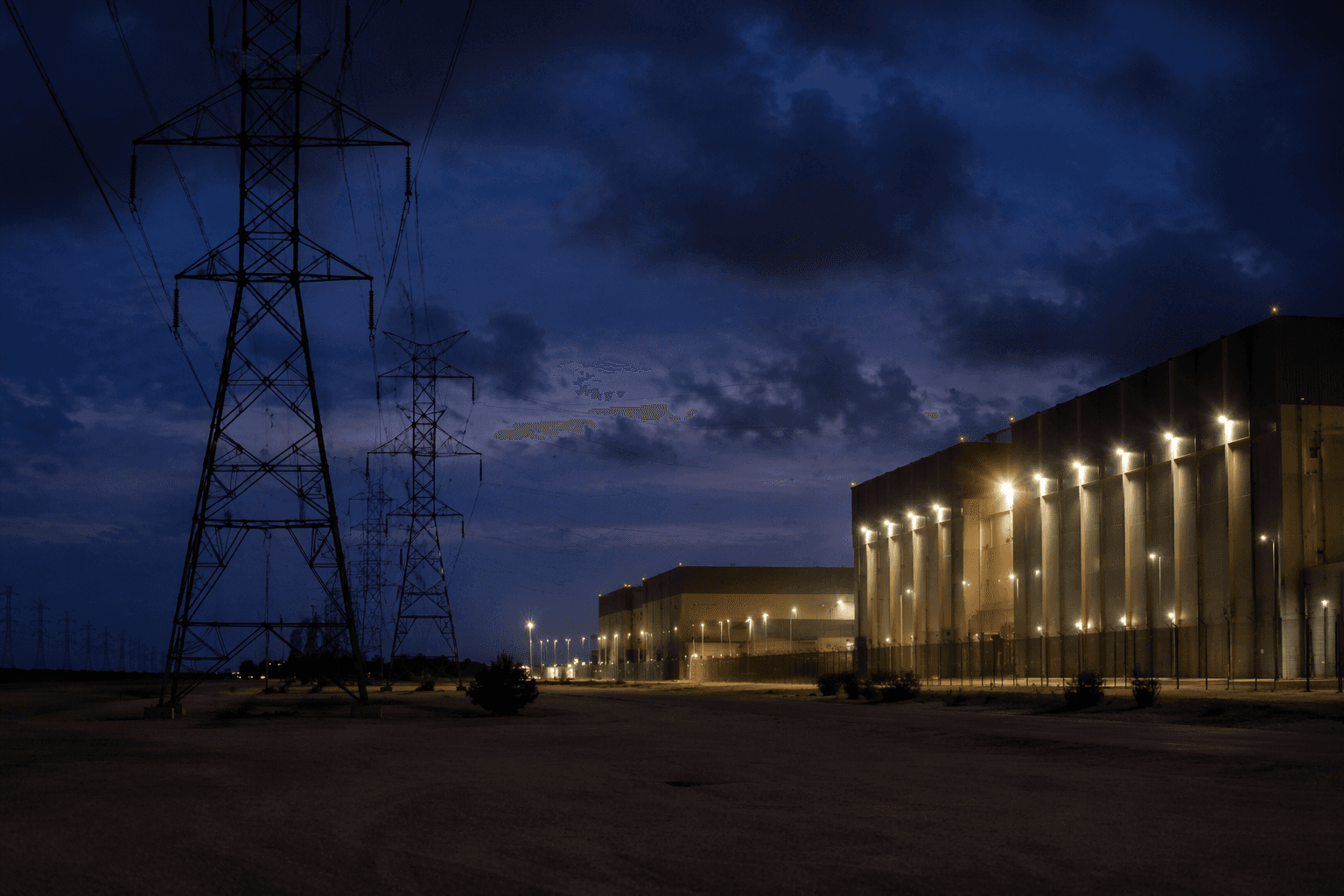
That matters because these customers are not ordinary factories. Server farms, cloud-computing clusters and crypto mines can draw huge amounts of electricity, then drop off suddenly if their protection systems trip. ERCOT has warned for years that those abrupt losses can knock the grid off balance. In a June 23, 2025 notice, the operator said it was asking data-center and crypto-mining customers of 75 MW or larger to report voltage ride-through capabilities, and said its studies found about 2,600 MW was the maximum load loss the system could sustain under certain conditions without pushing frequency below the post-contingency limit.
The warning did not come out of nowhere. ERCOT said in June 2023 that five smaller events in west Texas since October 2022 involved large loads, including data centers and oil and gas customers, failing to ride through faults. It said that behavior was not represented in its dynamic simulations, leaving planners without a full model of how fast-growing demand would react during trouble. By June 2025, ERCOT had scheduled a workshop on ride-through concerns after observing the simultaneous loss of multiple large loads following transmission faults.
The latest failures raise the same question on a bigger scale: how much AI and crypto demand can Texas add before the grid starts paying the price? ERCOT has already identified at least 26 abrupt disconnection events since 2023 involving data centers or crypto miners, and the operator has moved toward a Batch Zero process to study large-load requests in groups rather than one by one. That shift is meant to separate serious projects from speculative ones, but it also shows how quickly the interconnection pipeline is being tested.
For consumers, the risk runs in two directions. If ERCOT tightens ride-through standards, requires better modeling or delays some projects, developers may face higher costs and slower hookups. If it does not, the grid could absorb more sudden load losses just as summer demand peaks, putting reliability, and eventually bills, under greater strain.
This article was produced by Prism’s automated news system from verified source data, official records, and press releases, then run through automated quality and moderation checks before publishing. The system is built and supervised by the people who set the standards it runs under. Read our full AI policy.
Know something we missed? Have a correction or additional information?
Submit a Tip