Texas Panhandle wildfires rage as firefighters battle deadly wind-driven blazes
Deadly winds drove the Smokehouse Creek Fire past 1 million acres, making it Texas’s largest wildfire and exposing weak power and evacuation protections.
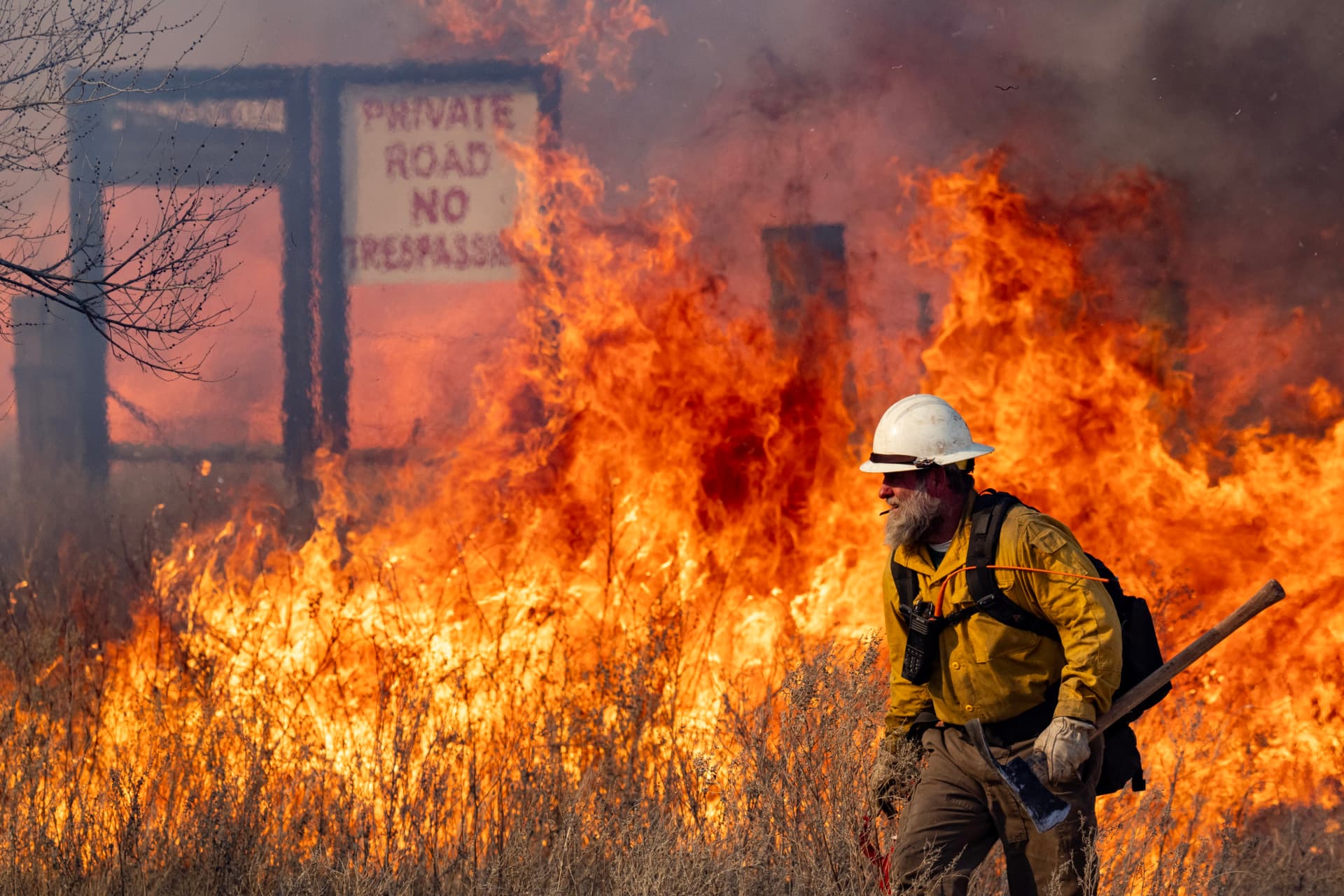
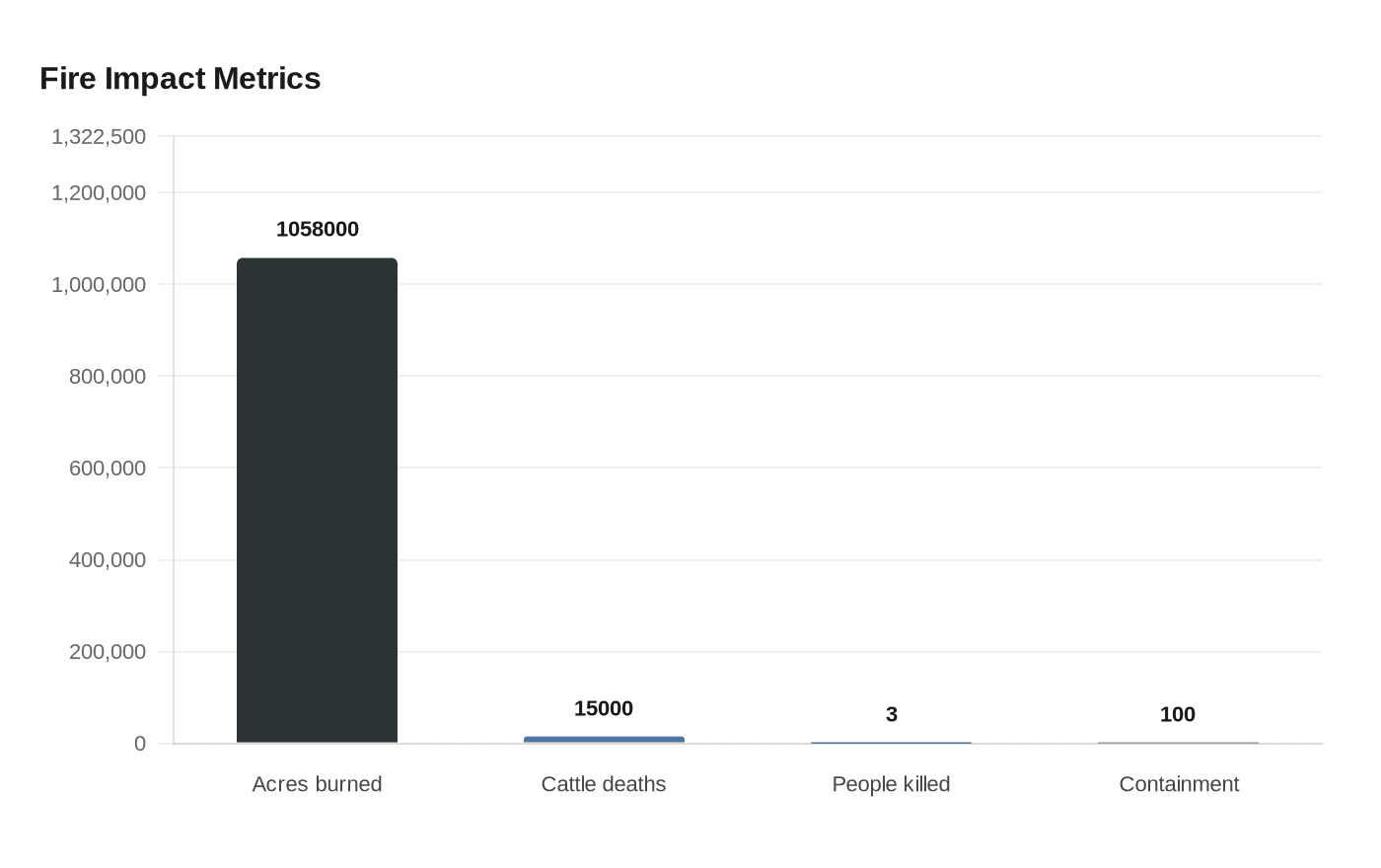
A wall of wind turned the Smokehouse Creek Fire into a runaway disaster across the Texas Panhandle, pushing flames from Hutchinson County near Stinnett into Hemphill and Roberts counties and setting off one of the state’s most destructive wildfire outbreaks on record. The blaze started on Feb. 26, 2024, and by March 7 it had burned more than 1,058,000 acres, an area larger than Rhode Island, before crews finally reached 100% containment on March 16 after nearly three weeks of nonstop firefighting.
The fire became the largest wildfire in Texas history, and the human toll was severe. At least two people were killed, with later reports putting the death toll at three. Hundreds of homes and other structures were destroyed, and state and later investigative reports estimated that more than 15,000 cattle died, a crushing blow to ranching communities that depend on livestock, fencing, wells and working power lines to stay afloat.
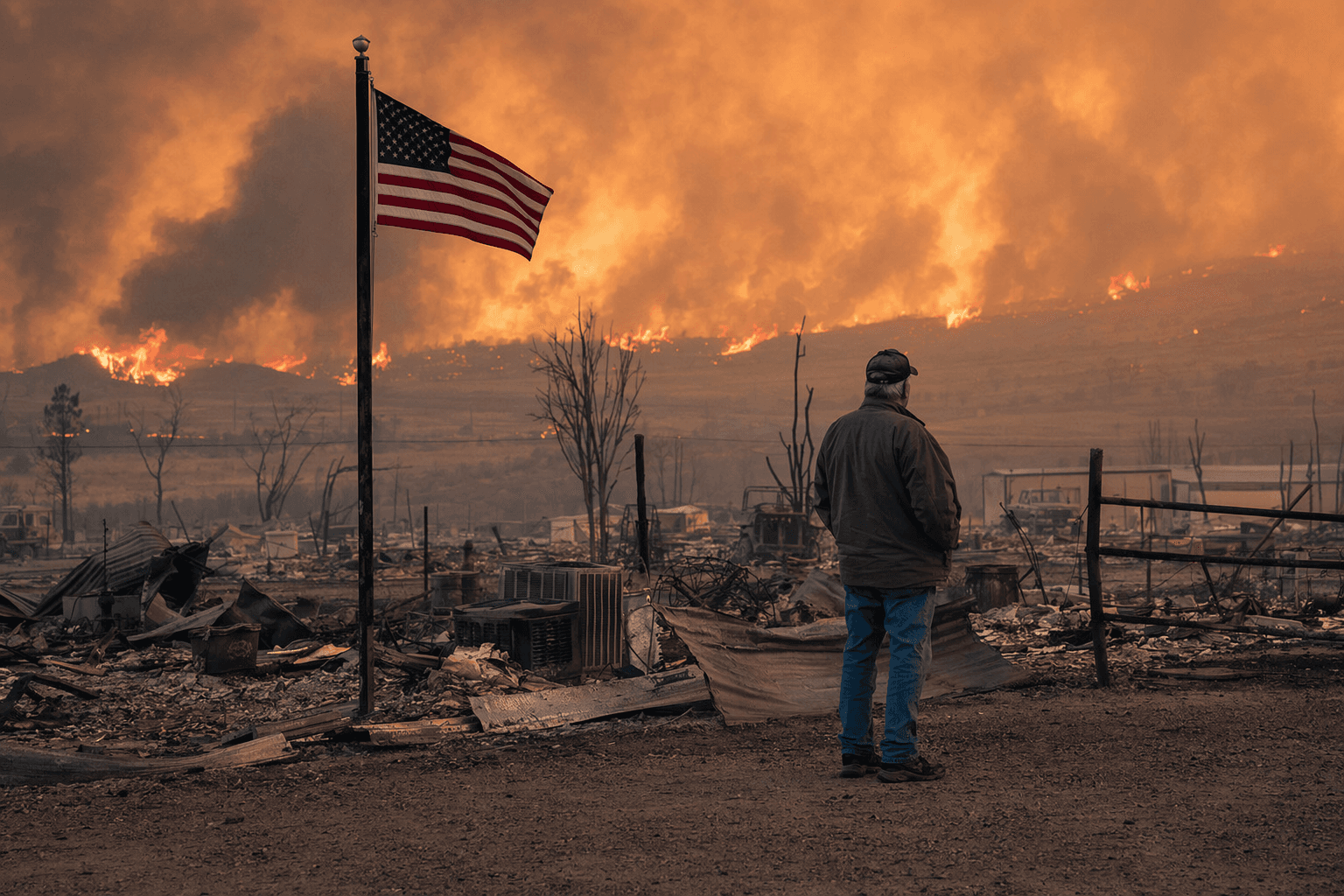
Investigators later said the fire was sparked by power lines from a decayed, broken utility pole, a finding that sharpened concerns about aging infrastructure in one of the state’s most exposed rural regions. The Texas House Investigative Committee said the fires scorched more than 1 million acres and damaged key systems including water wells and utility lines, deepening the losses for families already fighting to keep operations running in the Panhandle’s hard-hit counties.
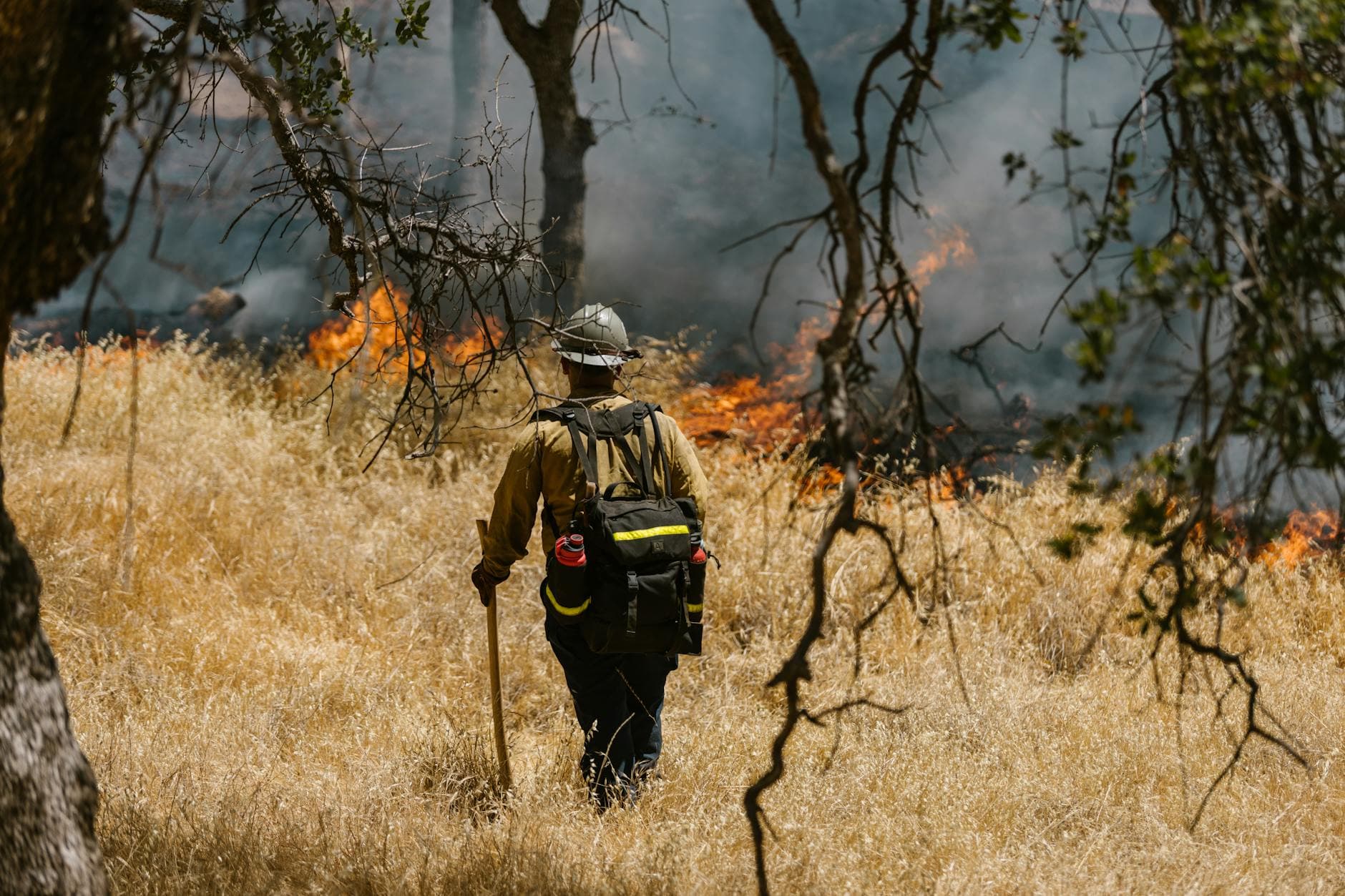
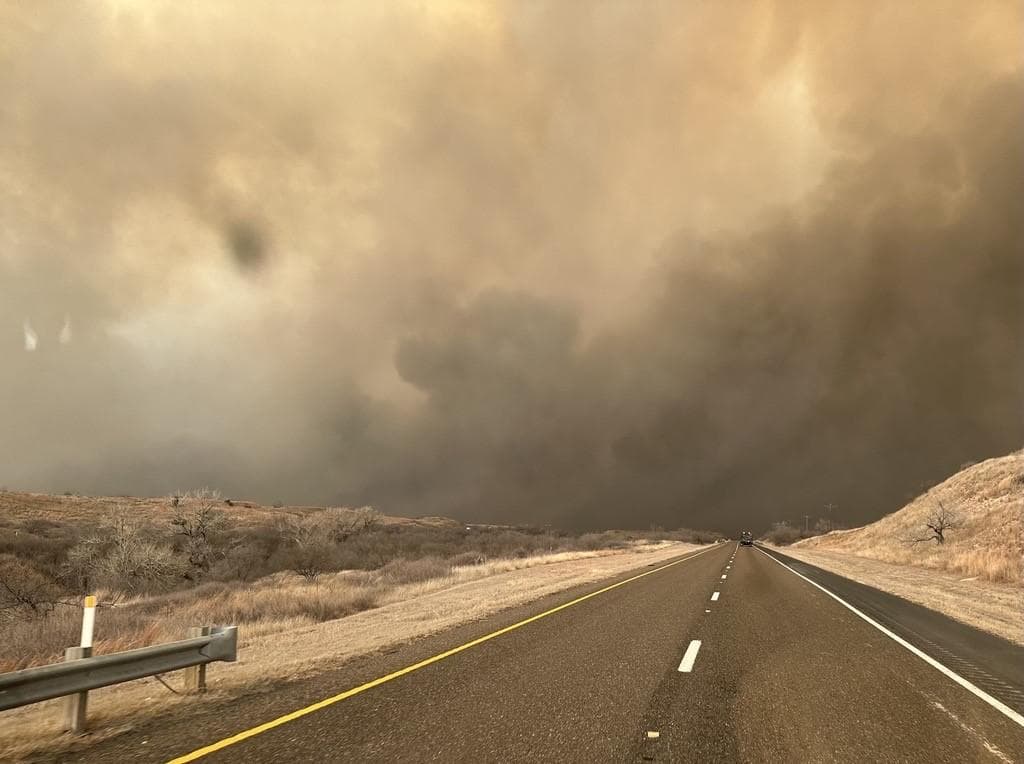
The danger did not stop at the fire line. As the blaze moved north and northeast, Armstrong County officials reported no immediate evacuations, even as the National Weather Service in Amarillo warned that conditions were ripe for “extremely critical” wildfire activity across parts of New Mexico, Oklahoma and Texas. On Friday, forecasters also said smoke from the wildfire created its own thunderstorm with 1-inch hail, a sign of how violently the fire interacted with the atmosphere around it.
FEMA lists the Smokehouse Creek incident period as Feb. 27 through March 16, underscoring how quickly the emergency escalated and how long crews had to fight it. With Texas A&M Forest Service and the Texas Interagency Coordination Center tracking the spread and response, the Panhandle fires exposed a hard reality for rural West Texas: when drought, high winds, fragile power infrastructure and limited evacuation margins line up, a single ignition can become a regional disaster in a matter of hours.
This article was produced by Prism’s automated news system from verified source data, official records, and press releases, then run through automated quality and moderation checks before publishing. The system is built and supervised by the people who set the standards it runs under. Read our full AI policy.
Did this article answer your question?