Texas school-choice boom favors families already ready to move
Maria Contreras wanted a Catholic school seat for her 7-year-old son, but the voucher maze showed how fast the best-positioned families can move.

Maria Contreras walked a Catholic school campus in Fort Worth and felt pulled toward enrolling her 7-year-old son, Ian. The visit also laid bare the uneven reality behind Texas’ school-choice push: taxpayer-backed aid is now available for private schooling, but the families most able to use it are often those already equipped to navigate admissions, paperwork and the extra costs that come with switching schools.
Texas formally entered the statewide private-school-choice movement when Gov. Greg Abbott signed Senate Bill 2 on May 3, 2025. The program is set to launch in the 2026-27 school year with a $1 billion initial investment, and state officials finalized the rules in November 2025 before applications opened on Feb. 4, 2026. Texas will give participating families about $10,000 to help pay private-school tuition, but being awarded money does not guarantee a seat at a participating school.
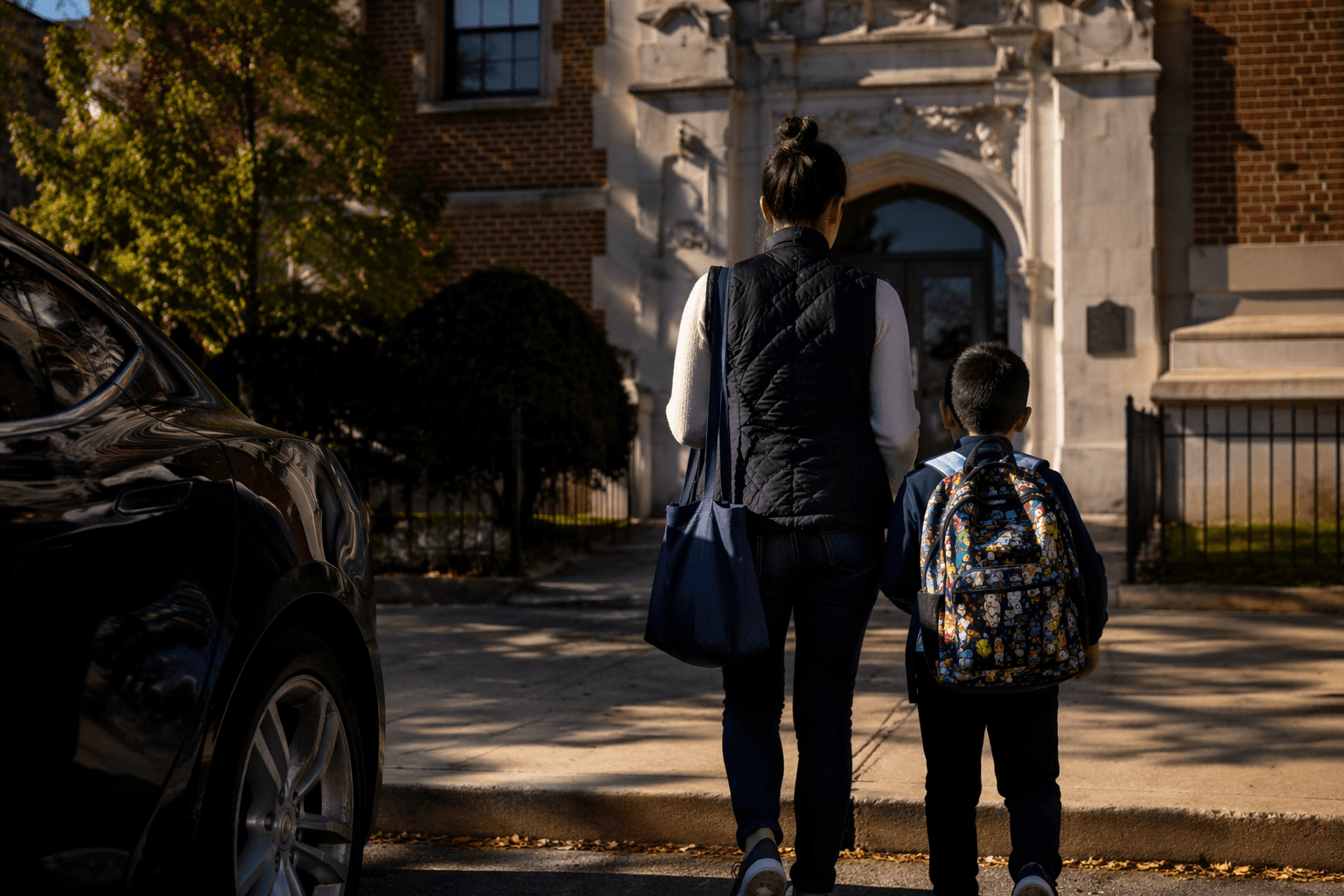
That gap between an award and an actual classroom spot is central to how the program works in practice. More than 102,000 students had been accepted into Texas Education Freedom Accounts by early to mid-June 2026, and nearly 70% were expected to attend private school in the fall using public dollars. Yet the strongest odds of benefiting still tilt toward students already in private school or home school, while many public-school families are slowed by transportation problems, lack of information and uncertainty about whether their children will fit a more demanding environment.
For Contreras, the obstacles were not abstract. She told the principal about Ian’s focus problems, his tendency not to listen and the risk that he could be expelled. Ian was reading far below grade level, but she did not realize she had the right to request a disability evaluation. Texas Education Agency guidance says parents can ask for an initial special-education evaluation and that schools must assess children in all suspected areas of disability with parental consent. Texas law and advocacy materials also say parents have rights under the federal IDEA Child Find process to request a comprehensive evaluation at any time.
At Ian’s elementary school, where almost all students are economically disadvantaged and most are learning English, only 4% qualified for special education, far below the districtwide rate of 14%. That kind of mismatch helps explain why the school-choice debate is not just about tuition assistance, but about who has the time, knowledge and confidence to make use of it. The promise of choice may be expanding quickly across Texas, but the families most likely to benefit are still the ones already best positioned to move.
This article was produced by Prism’s automated news system from verified source data, official records, and press releases, then run through automated quality and moderation checks before publishing. The system is built and supervised by the people who set the standards it runs under. Read our full AI policy.
Did this article answer your question?