Thailand plans to cut visa-free stays for foreign tourists to 30 days
Thailand moved to halve visa-free stays to 30 days, targeting abuse of the 93-country entry rule just as long-stay tourists and remote workers had adapted to it.
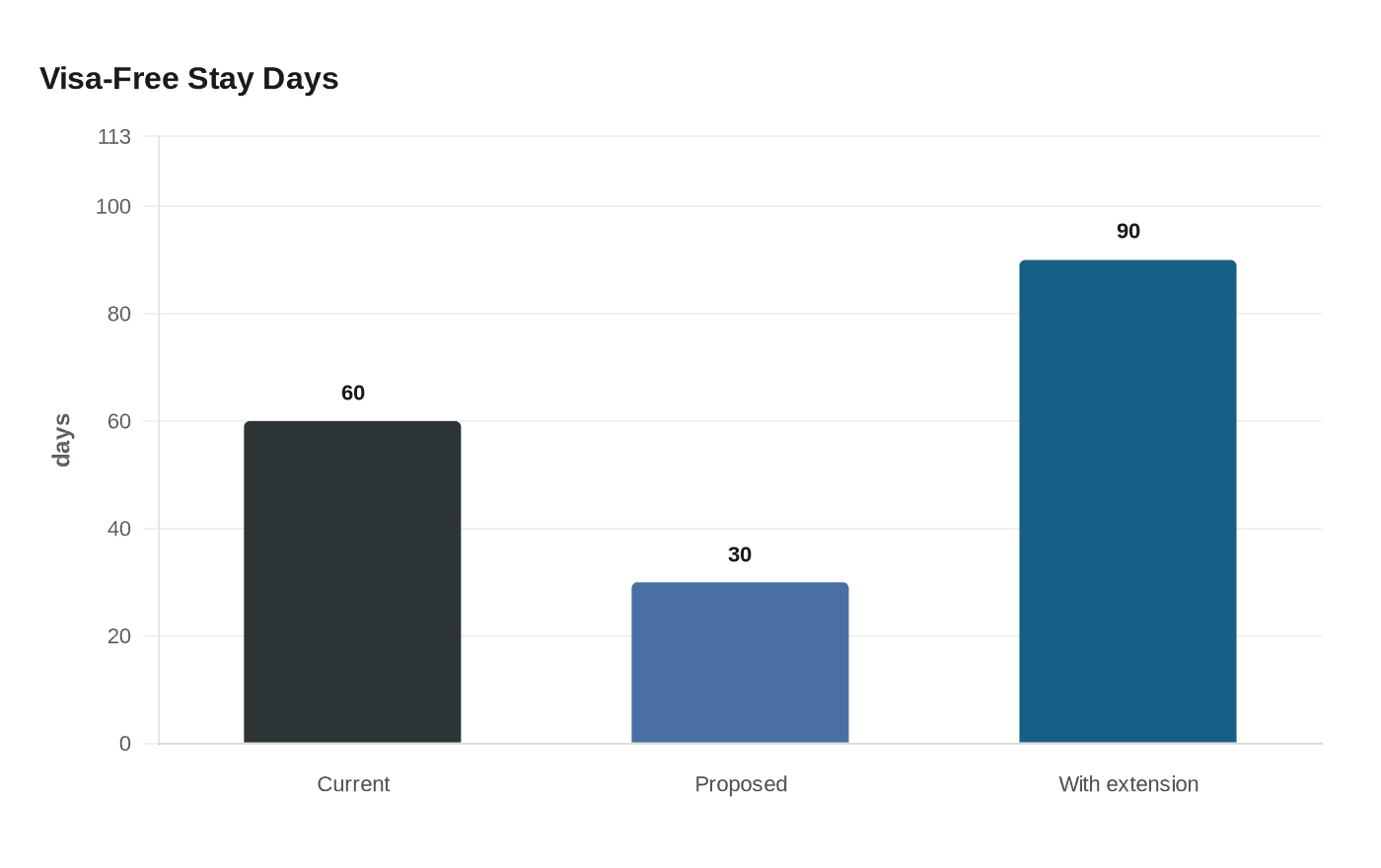
Thailand moved to halve visa-free stays for tourists from 93 countries, cutting the limit from 60 days to 30 days as officials said they were trying to curb criminal activity and abuse of the entry system that had helped drive the country’s tourism rebound.
Foreign Minister Sihasak Phuangketkaeow said the Ministry of Foreign Affairs of Thailand would submit the proposal to the Cabinet of Thailand for approval, but he did not give a date for when any change would take effect. The review came after Thailand’s 60-day visa exemption for those 93 countries took effect on July 15, 2024, with an option to extend the stay by another 30 days, allowing some visitors to remain for up to 90 days in total.
The tighter rule would fall hardest on the travelers who built longer stays around the easier entry window: long-stay holidaymakers, remote workers, digital nomads and budget travelers who used the extra time to avoid repeated visa applications or border runs. Thailand’s tourism authorities had credited the 93-country exemption and the removal of TM.6 immigration forms at 16 border crossings as key reasons the country welcomed more than 35.54 million foreign tourists in 2024 and generated about 1.67 trillion baht in international tourism revenue. For 2025, the Tourism Authority of Thailand targeted 36 million to 39 million arrivals and up to 2.23 trillion baht in tourism receipts.
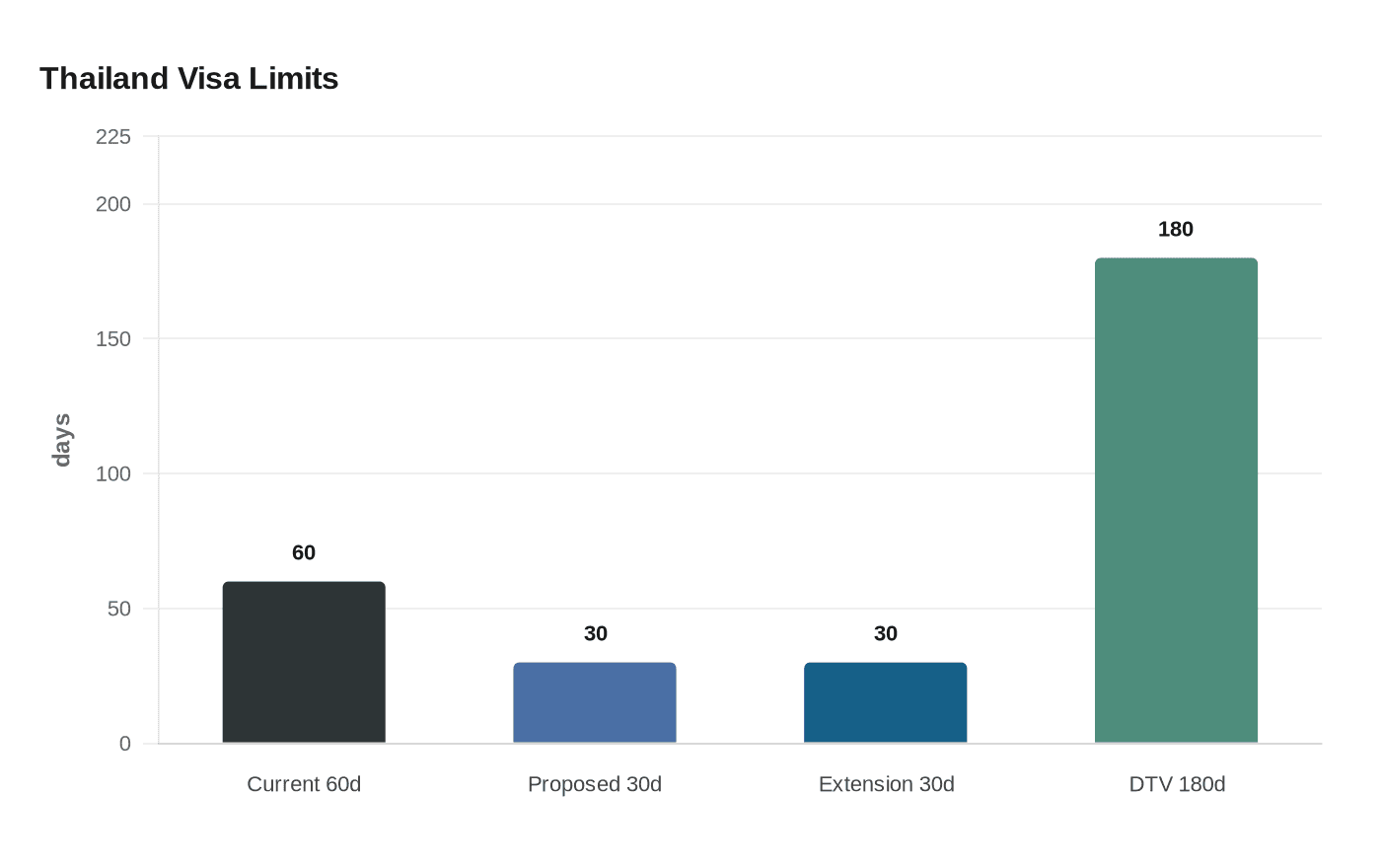
Officials said the shorter limit matched how most visitors actually travel. Data cited by Thai officials suggested around 90% of tourists stay in Thailand for no more than 30 days. For people who need longer stays, Thailand already offers a separate path: the Destination Thailand Visa, which allows eligible remote workers and other long-stay visitors up to 180 days per entry and is valid for five years. That makes the policy shift less about closing Thailand off than about sorting short-term tourists from people who need a more formal long-stay route.
The proposal also reflected a broader regional pullback from pandemic-era openness, as governments reassessed visa rules where they believed loopholes had been used for unauthorized work, repeat border runs or other illegal activity. Sihasak also stressed that the review was not aimed at any one country. Khaosod English reported that he discussed the matter with Prime Minister Paetongtarn Shinawatra on May 11, 2026, and that the plan had first been prepared during the first term of the Anutin-led administration before being delayed by the election period.
This article was produced by Prism’s automated news system from verified source data, official records, and press releases, then run through automated quality and moderation checks before publishing. The system is built and supervised by the people who set the standards it runs under. Read our full AI policy.
Did this article answer your question?