The Awe of a Moon Launch in an Age of Trump, Turmoil and Tribal Divisions
Artemis II sent four astronauts toward the Moon on Wednesday, but even 8.8 million pounds of thrust couldn't fully silence America's political wars.
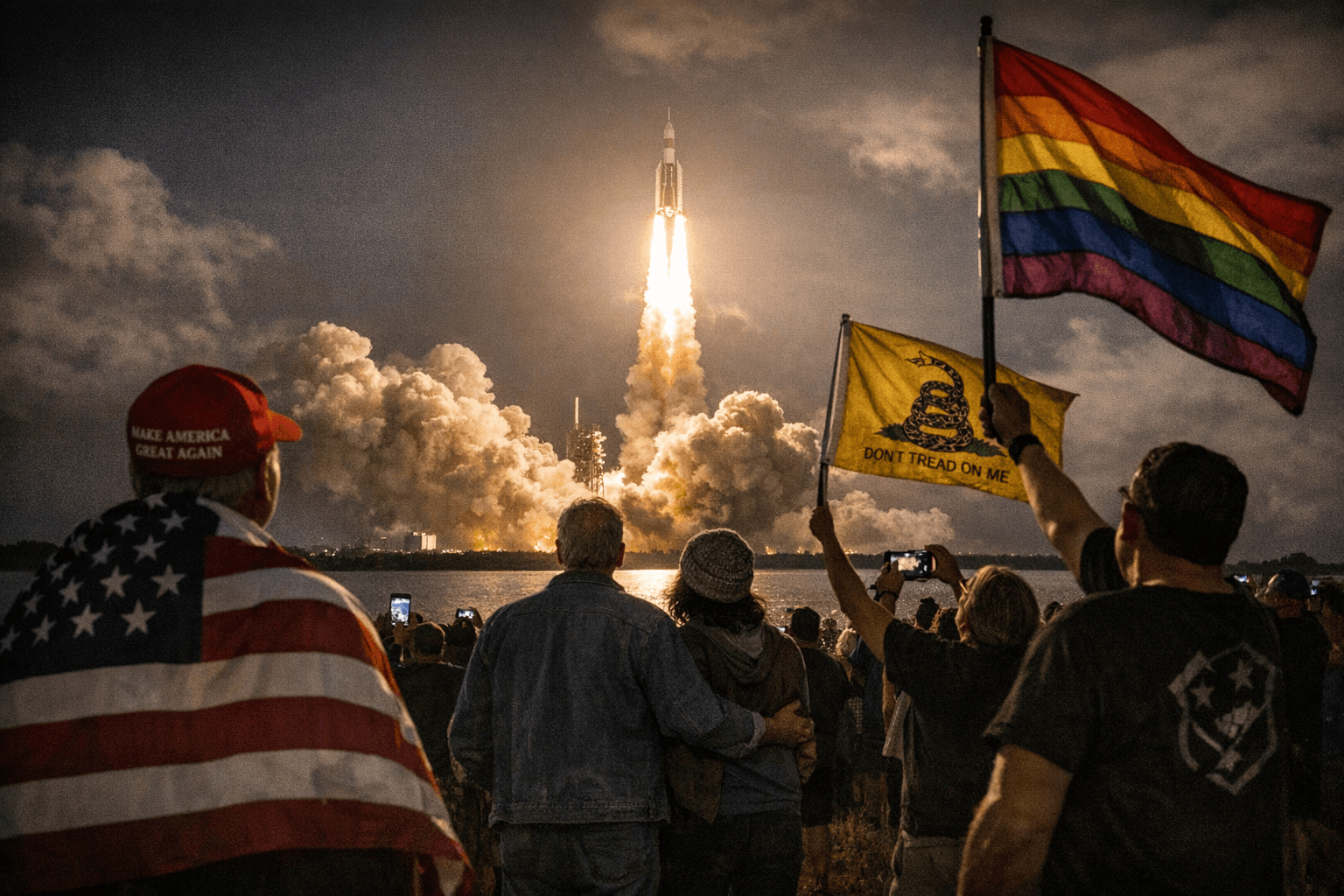
Eight-point-eight million pounds of thrust erupted from Launch Pad 39B at Kennedy Space Center on Wednesday evening, vaulting the Space Launch System skyward at 6:35 p.m. EDT and sending four astronauts on the first crewed lunar mission in more than half a century. The ground shook along Florida's Space Coast. For a moment, so did the politics.
The Artemis II crew is a tableau that would have been unimaginable during the Apollo era. Commander Reid Wiseman, Pilot Victor Glover, Mission Specialist Christina Koch, and Canadian Space Agency Mission Specialist Jeremy Hansen are bound for a 10-day lunar flyby that will carry them around the Moon and back without landing. Glover became the first person of color to travel around the Moon, Koch the first woman, Wiseman the oldest person, and Hansen, whose participation stems from a 2020 bilateral treaty between the U.S. and Canada, the first non-American. Their trajectory could push them farther from Earth than any human in history, surpassing the Apollo 13 record of 248,655 miles set in 1970.
The politics trailing this launch are as layered as the mission itself. The Artemis program was formally established by President Trump's Space Policy Directive 1 in December 2017, and his first administration sought $25.2 billion for NASA in its 2021 budget request to accelerate the lunar return. Yet by launch day, the program had already survived a near-death encounter with Trump's second-term budget, which proposed slashing NASA funding by roughly 25 percent. Bipartisan congressional opposition blocked the deepest cuts, and Congress passed a $24.4 billion NASA budget. Three weeks before liftoff, the administration cancelled the Lunar Gateway, a planned Moon-orbiting outpost central to the long-term Artemis architecture.
None of that stopped the launch-day maneuvering. Hours after Trump posted his own celebration of the mission on social media, California Governor Gavin Newsom fired back on X: "While Trump gloats about NASA today and this historic endeavor, reminder that his budget tried to cut NASA by ~25% and was only saved because of bipartisan pushback to such a backwards looking effort." The exchange compressed the contradictions of the moment into a single thread: a program the president once sought to gut, now claimed as a triumph by the same White House.
Crowds gathered in Los Angeles, Houston, and Seattle to watch the launch. Observers described the liftoff as "a rare moment of unity and American pride" in a country that "seems to become more polarized by the day." Local stations circulated a poll that posed a question both simple and revealing: does the U.S. space program make you more or less proud to be an American?
The awe rests on an industrial foundation that spans many congressional districts. The SLS core stage was assembled at the Michoud Assembly Facility in New Orleans. Workers at NASA's Marshall Space Flight Center in Huntsville, Alabama, built the Launch Vehicle Stage Adapter and the Orion Stage Adapter. That geographic spread, threading through red states and swing states alike, gave Artemis its unusual resilience in the appropriations wars.
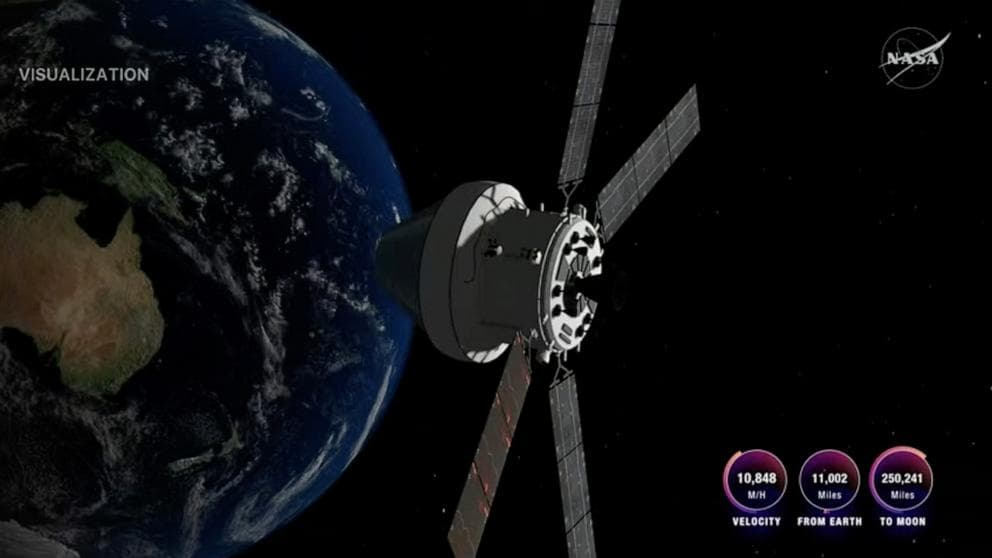
The mission itself will test whether years of development and billions of dollars in deep-space architecture hold up with human lives aboard. Artemis I launched in November 2022 but revealed unexpected heat shield erosion on the Orion capsule, pushing the crewed follow-up years into the future. On Wednesday, shortly after liftoff, flight controllers in Houston confirmed that Orion's four solar array wings had fully deployed, a key early milestone on a journey that could take the crew farther from Earth than anyone has ever traveled.
Whether Artemis survives the next appropriations cycle will determine if Wednesday's launch was the beginning of something durable, or just the most expensive political football ever thrown skyward.
Sources:
Know something we missed? Have a correction or additional information?
Submit a Tip