Thousands rally in Alabama for Black voting rights amid court fight
Thousands filled Montgomery as Alabama’s voting-rights fight moved from courtrooms to the streets, with Black representation on the line in congressional maps.
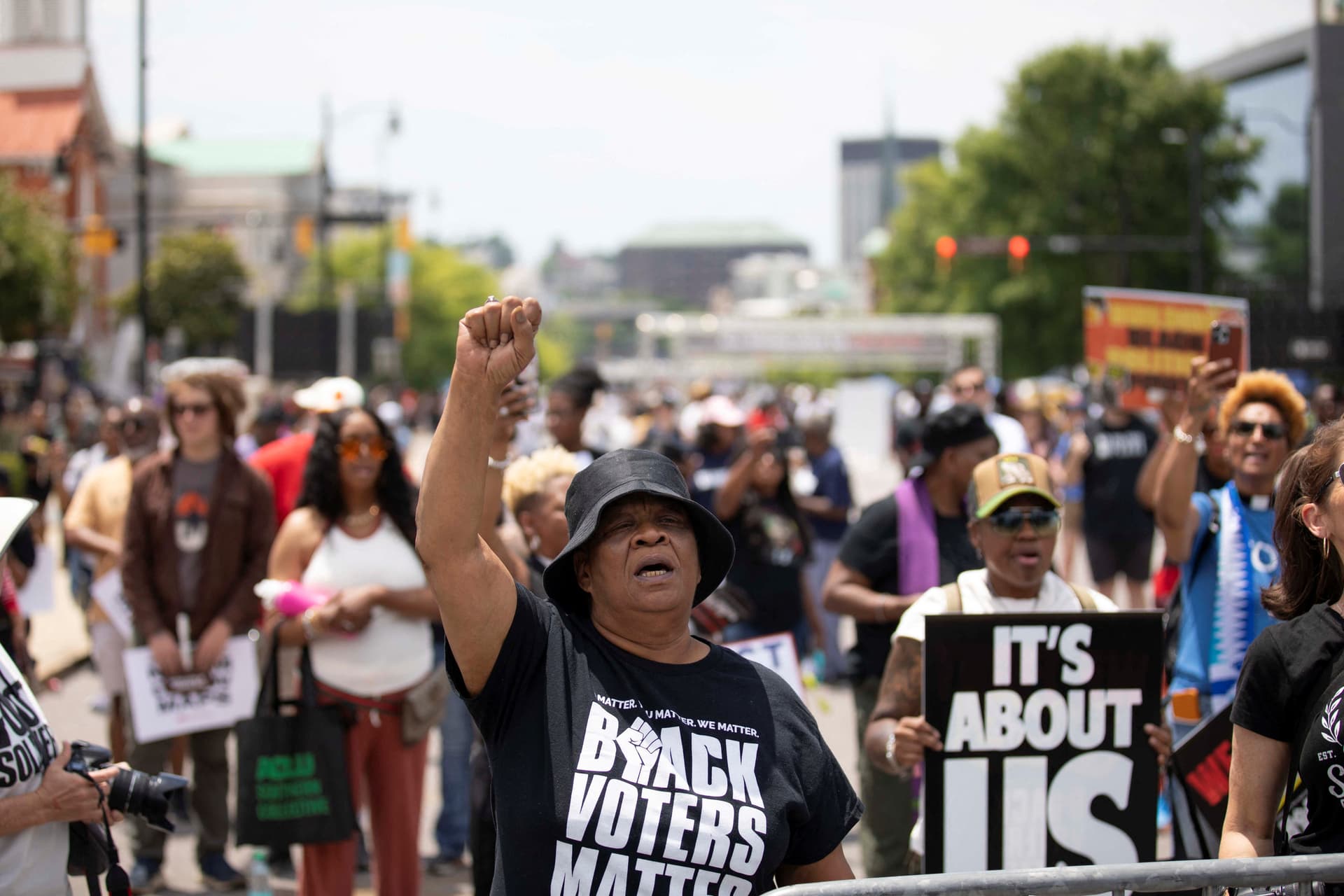
Thousands gathered in Montgomery and tied their chants to a legal battle that has made Alabama a testing ground for Black voting power in the South. Organizers framed the National Day of Action as both a street-level demonstration and a warning: if the courts do not force fair maps, the promise of federal voting-rights protection will keep thinning in the region where that law was born.
The action landed in a city steeped in the history of the Selma-to-Montgomery march and the violence of Bloody Sunday on the Edmund Pettus Bridge. Civil-rights organizers pointed back to a hard number that still defines the urgency of that history: before the Selma campaign, only 1% of voting-age Black residents were registered to vote. The march, along U.S. 80 into Montgomery, helped galvanize passage of the Voting Rights Act of 1965 and made the Black Belt a national symbol of the struggle for political power.
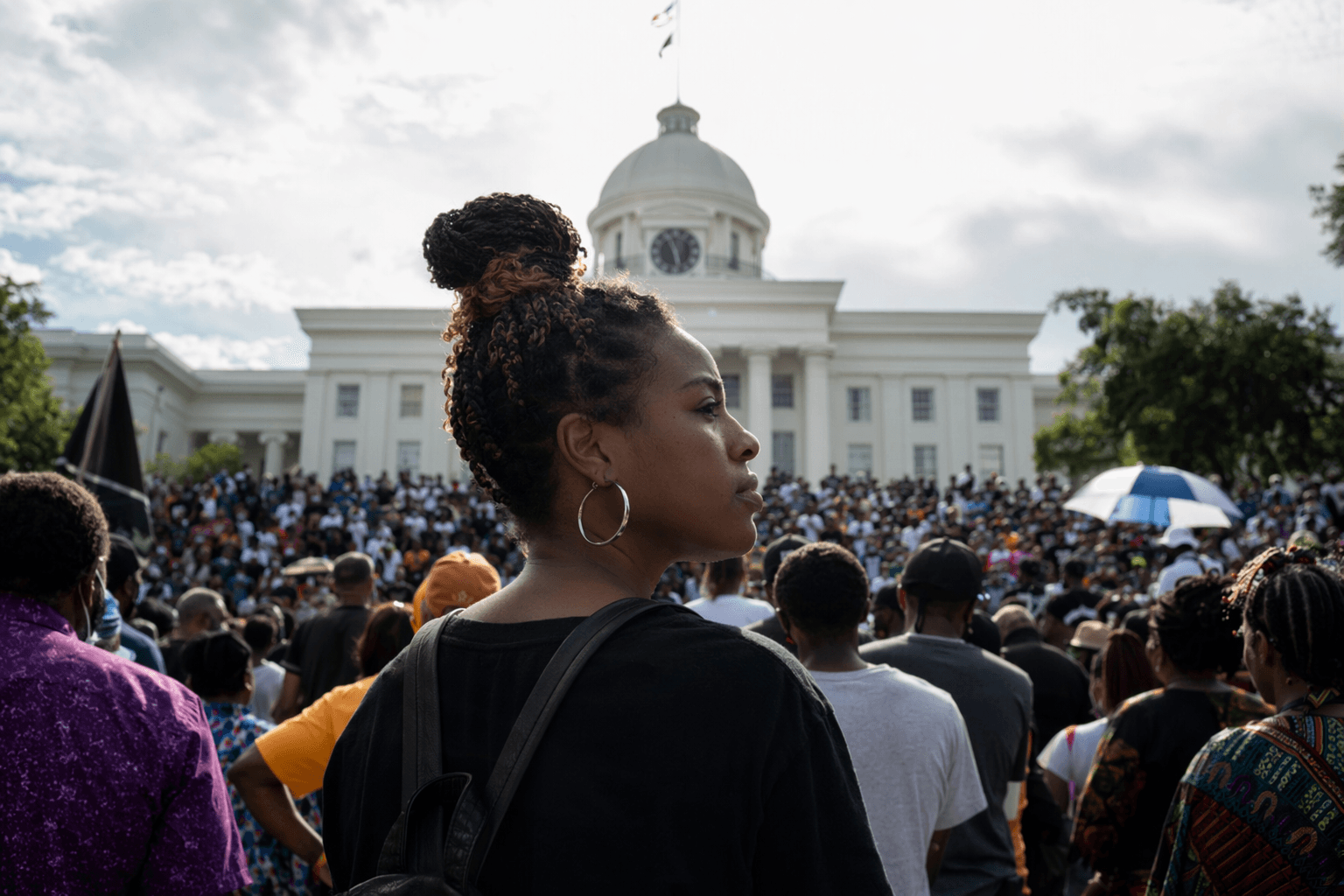
That same struggle has now returned in court. Alabama’s congressional map has been at the center of Allen v. Milligan, the Supreme Court case that upheld a challenge under Section 2 of the Voting Rights Act. A later federal ruling said Alabama’s revised map still failed to fix the dilution of Black political power and required two districts where Black voters could elect candidates of their choice. In practical terms, the dispute is about whether Black voters in Alabama will have a fair chance to translate population into representation, or whether district lines will keep muting their influence.
The Montgomery rally, scheduled for Saturday, May 16, 2026, was presented as the opening move in a broader summer program of voter mobilization, civic education, economic pressure, legal advocacy and direct action. Rev. Dr. Bernice A. King was announced as a participant, underscoring the event’s civil-rights lineage from Dr. Martin Luther King Jr. and Coretta Scott King to the present-day fight over maps and power.
The message in Montgomery was not only about protest. It was about whether federal voting-rights protections still have practical force in the South, and whether Alabama’s leaders will face growing pressure for a state-level answer such as the proposed Alabama Voting Rights Act. For organizers, the courtroom and the courthouse steps were part of the same campaign.
This article was produced by Prism’s automated news system from verified source data, official records, and press releases, then run through automated quality and moderation checks before publishing. The system is built and supervised by the people who set the standards it runs under. Read our full AI policy.
Did this article answer your question?

