Thousands return to New Delhi protests over India's education crisis
Thousands returned to central New Delhi after police used batons and tear gas, keeping pressure on India’s government over exam scandals and a broken education pipeline.
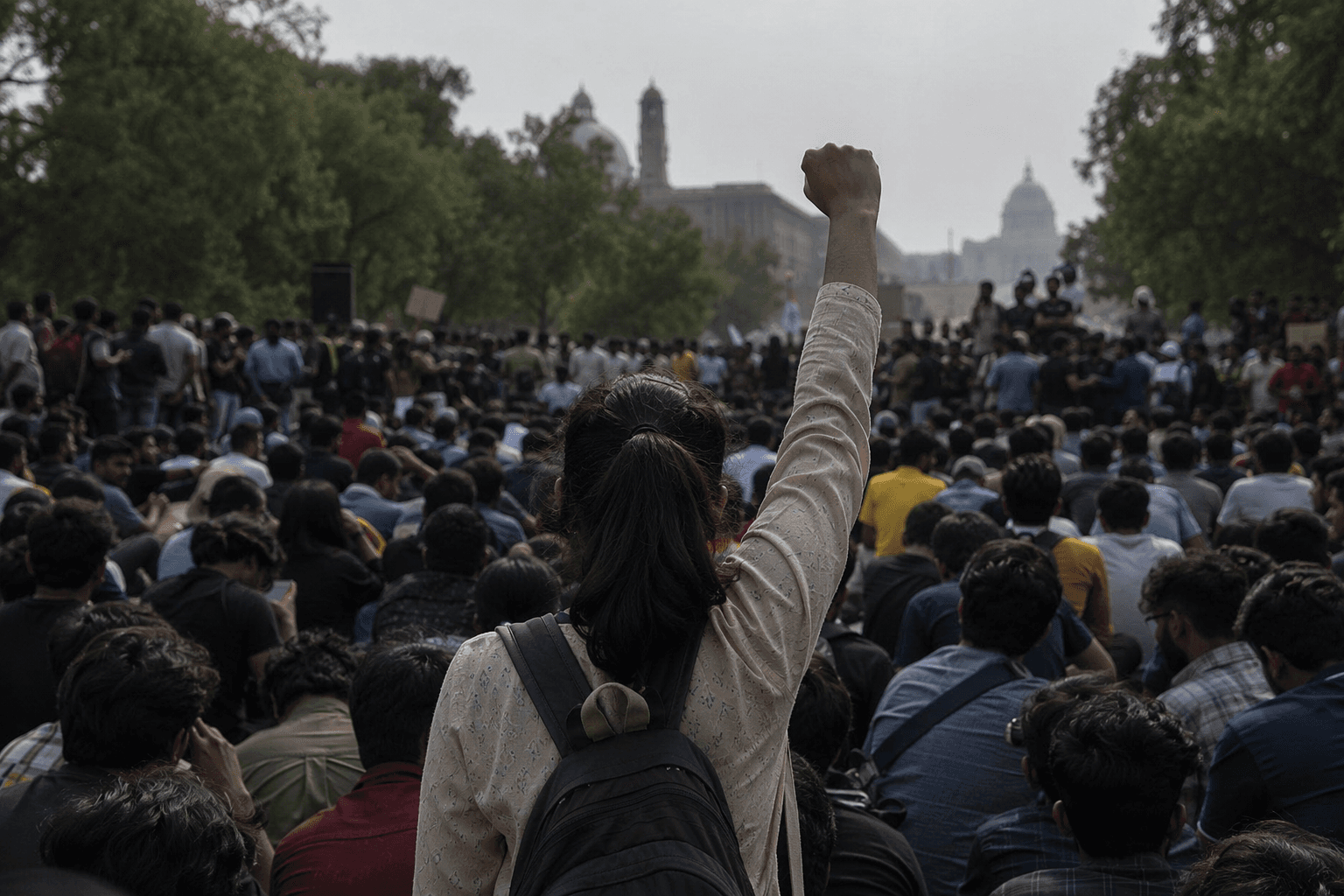
Thousands of students and supporters returned to the protest site in New Delhi a day after police forcibly broke up demonstrations, keeping pressure on India’s government over exam scandals, school failures and demands for education reform. The march had been aimed at Parliament, where protesters wanted accountability from the Education Ministry and the resignation of Education Minister Dharmendra Pradhan.
Police used batons and tear gas against the crowd on July 20, and Reuters said more than 100 students were injured. Another Reuters count put the number of injured at 180. Despite the crackdown, the next day’s gathering showed the movement had not been dispersed, only sharpened.
The protests have centered on alleged irregularities in major tests, including NEET-UG, and on broader anger over the state of public education. The youth-led Cockroach movement, also called the Cockroach Janta Party, began online as satire before spilling into the streets, turning a joke into a direct challenge to Prime Minister Narendra Modi’s government. CNN described it as a case of something that started online as a joke and then moved onto the streets of India’s capital.
The education grievances carry a hard economic edge. A later source cited in search results said 3.2 lakh, or 320,150, Delhi government school students who failed Class 9 over five years were moved into the National Institute of Open Schooling. Careers360 said 71,124 of those students were admitted to NIOS. The figures fed anger over how a large state school system is pushing underperforming students out of the regular pipeline instead of fixing the underlying problems.
The demonstrations also became politically sensitive because they gave India’s opposition a rare opening against Modi. Reuters said the student protests created that opening at a moment when the government was under pressure to answer not just exam complaints but wider frustrations over opportunity and mobility for young people.
Amnesty International USA said the crackdown on peaceful protesters in New Delhi raised serious human rights concerns. For the students who returned to the site after the police action, the issue was no longer only an exam scandal. It had become a test of how far the state would go to respond to young people demanding a credible education system and a path upward.
This article was produced by Prism’s automated news system from verified source data, official records, and press releases, then run through automated quality and moderation checks before publishing. The system is built and supervised by the people who set the standards it runs under. Read our full AI policy.
Did this article answer your question?