Three Chinese astronauts return after record-setting seven-month space mission
Three Chinese astronauts came home after 210 days in orbit, setting a new national endurance record. The mission strengthens Beijing’s push toward a crewed lunar landing by 2030.

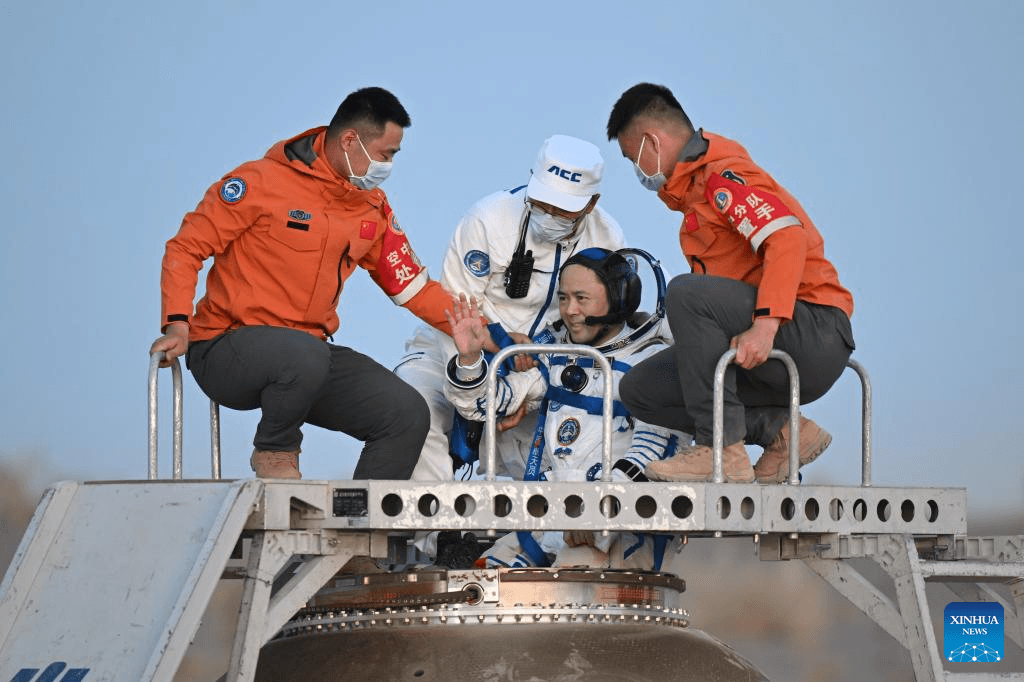
Three Chinese astronauts returned to Earth with a record attached to their names: 210 days in orbit, the longest single-crew mission ever completed by China’s space program. The Shenzhou-21 crew of Zhang Lu, Wu Fei and Zhang Hongzhang landed at the Dongfeng site in Inner Mongolia on Friday evening, closing a mission that has become a marker of how far Beijing has pushed its human spaceflight program.
The flight began from the Jiuquan Satellite Launch Center on Oct. 31, 2025, when a Long March-2F rocket sent the Shenzhou-21 crew toward the Tiangong space station. The mission was originally planned as a roughly six-month rotation, but the crew ended up staying longer and ultimately completed a handover with another team earlier this week, showing that China is now operating Tiangong with the kind of crew cycling and continuity that sustained space stations require.

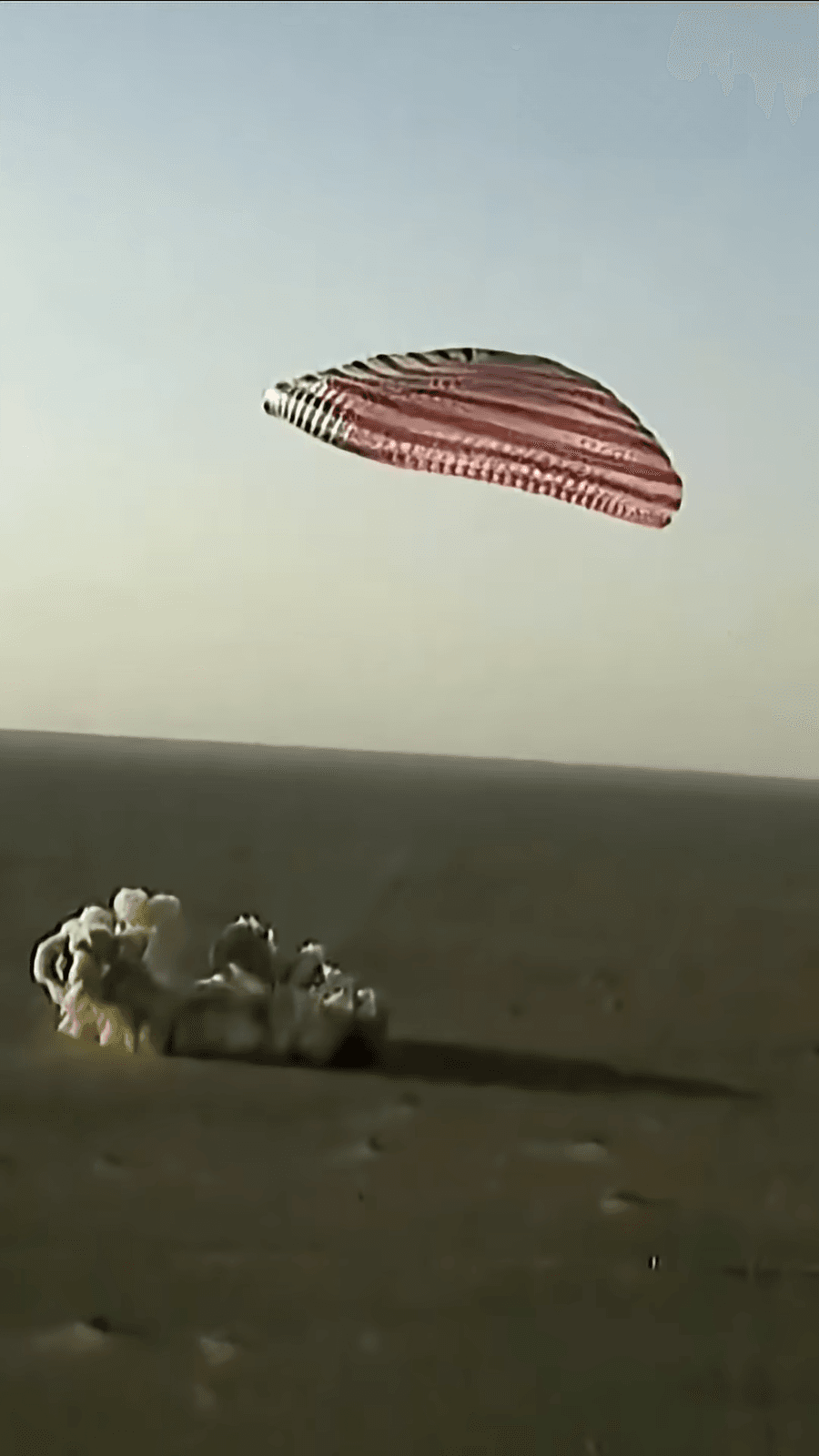
China Daily reported that the reentry capsule touched down at 8:11 p.m. after more than five hours on the Earth-bound journey. Chinese state media said the astronauts exited in good health, and the China Manned Space Agency said the crew were in good condition after landing. Xinhua reported that the trio returned aboard the Shenzhou-22 crewed spaceship rather than their original Shenzhou-21 craft, a detail that underscores the logistics China now has to manage for long-duration station operations.
The larger significance reaches beyond a safe landing. Tiangong has been continuously occupied since June 2022, and Shenzhou-21 was the station’s tenth crew rotation and China’s 16th crewed spaceflight overall. Each long mission adds experience with life support, resupply, scientific work and crew transfer procedures, all of which matter as Beijing moves toward its stated goal of a first crewed lunar landing by 2030. In that sense, the 210-day Shenzhou-21 flight is less a routine return than another step in China’s effort to build the operational depth needed for longer stays in orbit and, eventually, for missions far beyond it.
This article was produced by Prism’s automated news system from verified source data, official records, and press releases, then run through automated quality and moderation checks before publishing. The system is built and supervised by the people who set the standards it runs under. Read our full AI policy.
Did this article answer your question?