Tick season starts early, CDC warns of rising bite risk
Weekly ER visits for tick bites hit their highest level since at least 2017, and CDC says many bites start in yards, not deep woods.
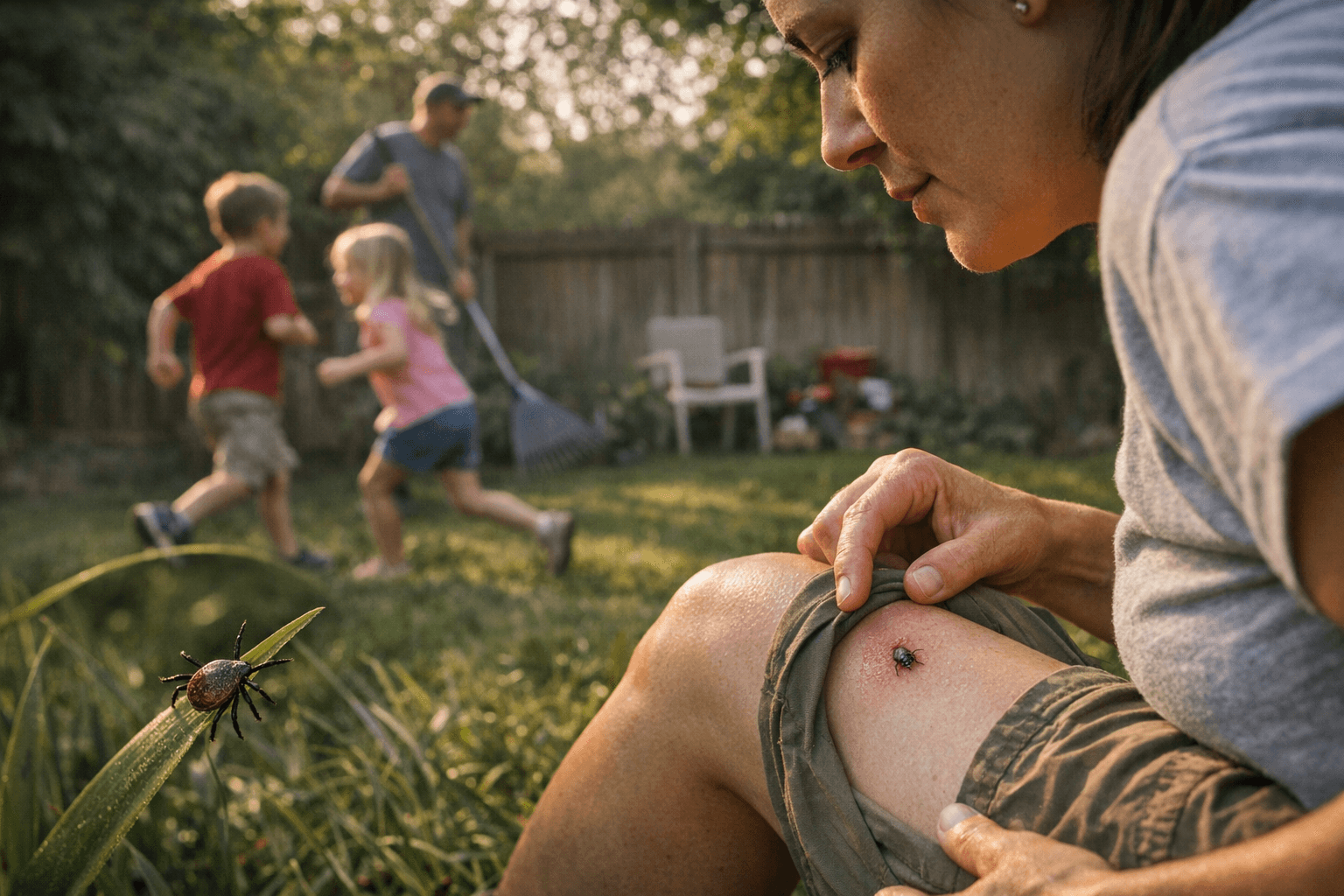
Ticks are showing up earlier and sending more people to emergency rooms, a warning sign that the season is already moving fast in parts of the United States. CDC data show weekly ER visits for tick bites reached the highest level seen since at least 2017, with the most recent week at 71 per 100,000 ER visits.
That rise matters because the risk is not confined to hikes or camping trips. The CDC says many people get ticks in their own yard or neighborhood, and blacklegged ticks can stay active any time winter temperatures are above freezing. In other words, a mild stretch can be enough to keep the season going before many households have even started thinking about prevention.
The practical response starts with the yard itself. CDC guidance recommends keeping grass mowed, removing leaf litter, and clearing tall grasses and brush. It also calls for a 3-foot-wide barrier of wood chips or gravel between lawns and wooded areas, a simple buffer that helps separate places where people play from places where ticks are more likely to wait for a host.
Harvard University’s Lyme guidance says ticks prefer moist, shady areas, which is why yard design matters as much as seasonal spraying. Shorter grass, less leaf litter, and more sun exposure around seating areas can make the property less attractive to ticks. Cornell IPM adds another useful step: tick monitoring with a tick drag can show whether questing ticks are present and which species are on site, giving households a better sense of the risk around them.
The stakes are high because Lyme disease is already widespread. CDC says more than 89,000 Lyme disease cases were reported to the agency by state health departments and the District of Columbia in 2023, and it estimates about 476,000 Americans are diagnosed and treated for Lyme disease each year. Johns Hopkins’ Lyme and Tickborne Diseases Dashboard says positive tests have been observed in all 50 states, underlining that this is not just a Northeast problem, even if the Northeast and Midwest have often posted the highest bite rates.
Any tick bite deserves attention, especially if a rash, fever, headache, fatigue or flu-like illness follows in the days after exposure. As spring stretches warmer in more regions, the safest assumption is that the risk is already at the doorstep, and the front line is the yard itself.
Sources:
Know something we missed? Have a correction or additional information?
Submit a Tip