Timberdoodles Charm Parkgoers With Bopping, Shimmying Moves During Spring Migration
Timberdoodles have returned to Bryant Park's 9.6 acres in midtown Manhattan, their rhythmic earthworm-hunting dance drawing crowds as their eastern flyway population has dropped over 55% in 40 years.
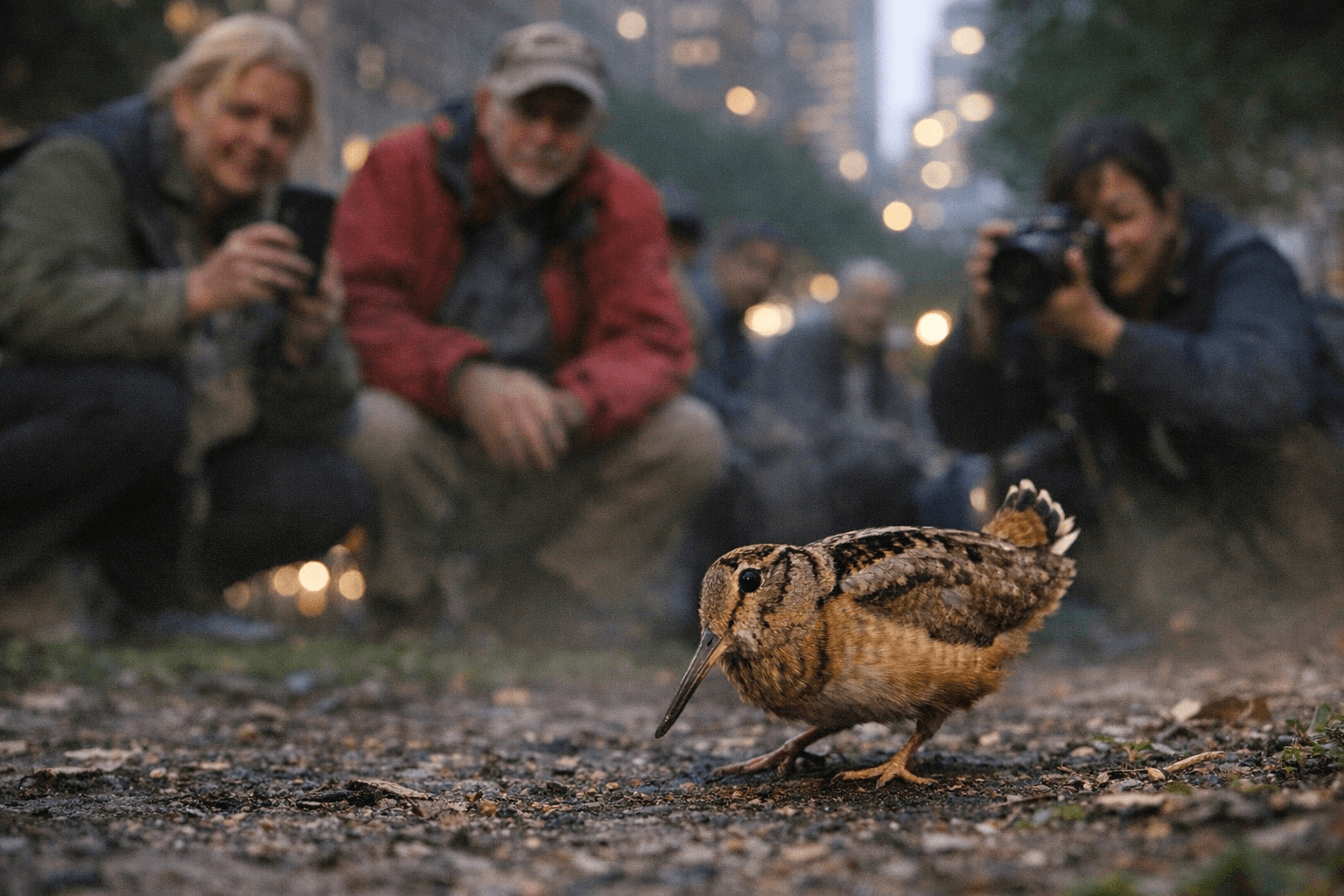
Every spring, a plump, rust-brown shorebird with a bill like a skewer descends on Bryant Park in the heart of midtown Manhattan, bobs and rocks across the grass, and reminds New Yorkers that even nine acres of green space in one of the world's densest cities can serve as a lifeline for wildlife.
American woodcocks, also known as timberdoodles, returned to Bryant Park for the 2026 spring migration, with sightings concentrated around the northwest corner of the park and the Benito Juarez statue. In late March, the birds were seen pulling earthworms from the ground, rocking in a rhythmic motion and preening on the grass, drawing crowds of birders and curious office workers alike.
The spectacle is charming, but the science behind it is sobering. The population of the American woodcock has fallen by an average of slightly more than 1% annually since the 1960s, with most authorities attributing this decline to habitat loss caused by forest maturation and urban development. In New York specifically, the numbers are starker: annual spring surveys of breeding grounds show that woodcock numbers in the eastern flyway and in New York have been falling by about 2% since the 1960s, a loss of over 55% in the last 40 years.
That long attrition is precisely why the scene unfolding in Bryant Park carries weight beyond its novelty. Urban birders sometimes spot these chunky, sword-billed oddballs hunkered down in city parks, resting on their voyages between their wintering grounds in the southern United States and their breeding areas in young-growth forests throughout the East and into Atlantic Canada. As those intermediate habitats shrink, compact urban green spaces have quietly become critical stopovers along the flyway.
Gabriel Willow, a naturalist and guide for Bryant Park, notes that the birds' legendary camouflage makes them easy to miss even when they're right underfoot. "They are exactly the color of these dead London Plane tree leaves. They are kind of cinnamon brown, which is just the color of leaf litter, which is where they live," Willow said. Their biology is equally disorienting for anyone expecting a conventional shorebird. "It's a very unusual bird — it's in the sandpiper family but it doesn't live on beaches, it lives in the woods and it eats earthworms and it looks a little bit like a kiwi," Willow explained.
Increased volatility in weather patterns due to climate change may be disrupting migration timing, and habitat fragmentation is known to shift generational flight patterns. The Eastern Woodcock Migration Research Cooperative, coordinated by the University of Maine, has been using GPS and satellite technology to track the birds' movements, seeking to understand how the conditions woodcocks experience during migration may be influencing population declines across eastern North America.
Bryant Park is a 9.603-acre square of land located between Fifth and Sixth Avenues and between 40th and 42nd Streets, making it one of the smallest major birding hotspots in the country. The most productive areas for birding tend to be the perennial borders surrounding the lawn, where careful searching may reveal American Woodcocks feeding or sleeping under shrubs. NYC Bird Alliance leads seasonal birding tours departing from the park's 42nd Street and Sixth Avenue entrance, with no pre-registration required.
The timberdoodle's annual return to Manhattan is a moment of genuine delight. It is also a measure of how much ground, literally and ecologically, a declining species has already lost.
This article was produced by Prism’s automated news system from verified source data, official records, and press releases, then run through automated quality and moderation checks before publishing. The system is built and supervised by the people who set the standards it runs under. Read our full AI policy.
Did this article answer your question?