Timeless Family Reunion Themes for 2026 That Photograph and Scale Beautifully
The right reunion theme does double duty: it photographs beautifully and scales from a backyard to a banquet hall without losing its soul.
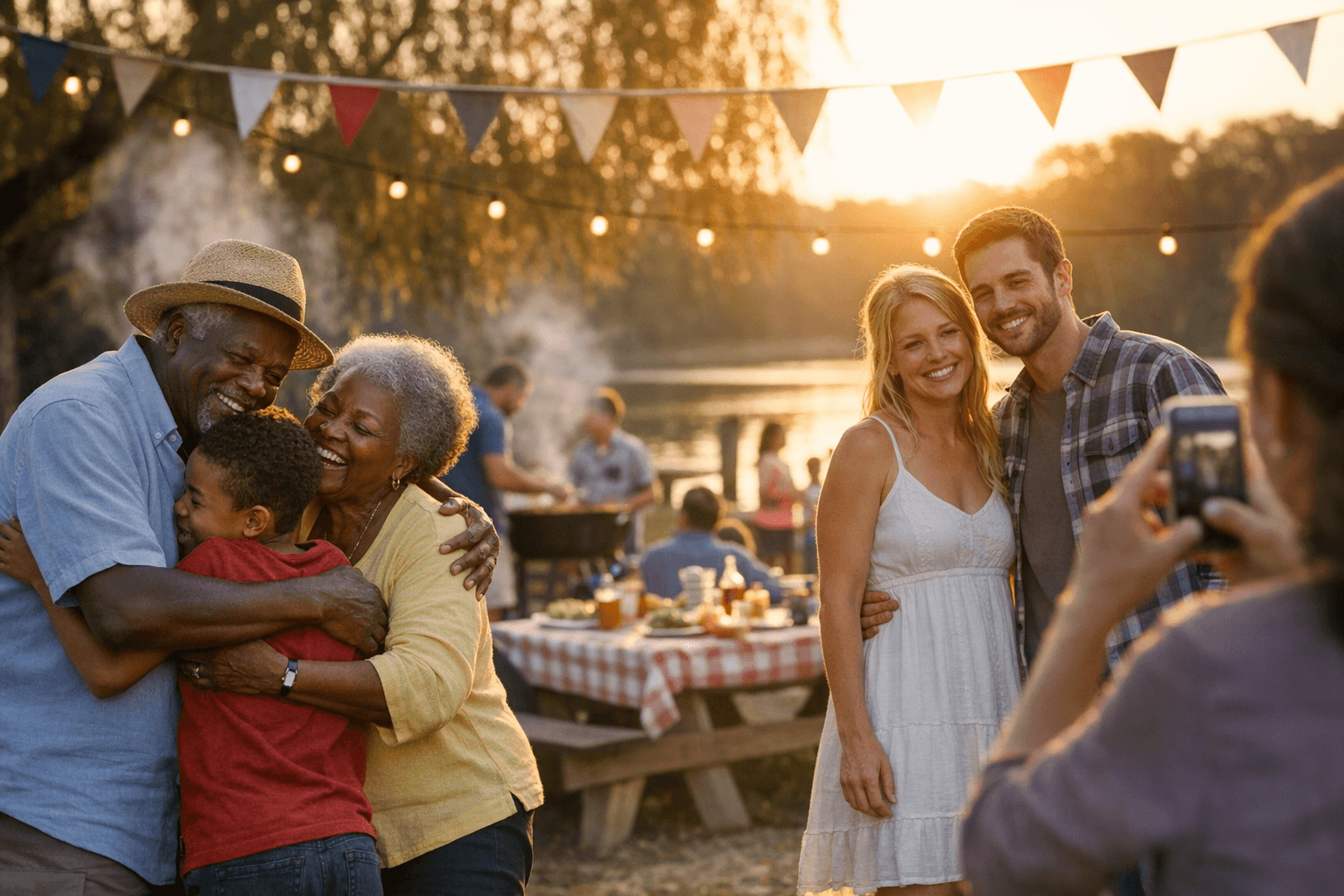
Planning a family reunion that holds up in photos ten years from now requires more than picking a color palette off Pinterest. The themes that actually work — across a rented community hall, a sprawling backyard, or a private restaurant buyout — share a few specific qualities: they translate to natural light photography, they don't demand a florist's budget to execute at scale, and they feel rooted in something real rather than chasing whatever was trending on social media six months ago.
Kin Unplugged, which organizes 2026's trending reunion themes by vibe rather than by aesthetic category alone, offers a useful framework for thinking through these choices before you commit to a deposit on decorations.
Why "vibe-first" planning changes everything
Most reunion hosts start with a visual: they see a mood board and work backward. The problem is that a theme built around a visual can collapse the moment the venue doesn't cooperate. A linen-and-eucalyptus tablescape that looks stunning in a bright greenhouse looks flat and gray in a fluorescent-lit community hall. Starting with vibe — the feeling you want guests to carry home — forces you to choose elements that survive context changes.
For 2026, the themes gaining traction aren't novelty concepts. They're rooted in warmth, legibility in photographs, and adaptability. Think: natural textures over synthetic ones, earth tones that don't blow out in direct sunlight, and structural focal points (a single long table, an archway, a designated portrait wall) that give photographers something to work with regardless of the ambient light.
Themes that photograph well at any scale
The single biggest mistake reunion planners make is choosing a theme that requires density to read correctly. Fifty balloons in a small restaurant look lush; the same fifty balloons spread across a community center gymnasium look sparse and sad. The themes that scale beautifully are the ones built around a few strong visual anchors rather than volume.
Heritage and roots themes are particularly strong in 2026 for exactly this reason. A display of old family photographs, maps of ancestral hometowns, and handwritten recipe cards creates visual interest at an intimate dinner for twenty and at a reunion of two hundred. The elements are modular — you add more panels, more frames, more cards — and they photograph with genuine emotional weight because they're actually meaningful to the people in the room.
Neutral botanical themes are another high-performer. Dried grasses, preserved leaves, terracotta pots, and wooden serving boards hold color consistently across lighting conditions that would destroy pastels. A photographer working with natural light outdoors or mixed artificial light indoors gets the same warm, earthy palette either way. The cost per table also stays manageable because you're working with materials that don't require refrigeration or last-minute sourcing.
Scaling from backyard to banquet hall
The practical question every host faces is whether the theme they've chosen will survive a venue change. Family reunions are notoriously subject to last-minute pivots: a forecasted rainstorm moves the event indoors, a venue cancels, the headcount doubles after the original RSVPs come in. A theme with a rigid spatial logic — one that only works in an open-air setting with string lights, for instance — puts you in a difficult position.
The most scalable 2026 themes share a few structural characteristics:
- Centerpieces that work on both round banquet tables and long farmhouse-style tables
- A color story that reads in both natural and artificial light (warm whites, terracotta, deep green, and natural wood tones are reliable)
- A single statement installation, like a photo backdrop or a floral arch, that travels from venue to venue and serves as the primary photography focal point
- Signage and printed materials that carry the theme into spaces where decor density is low
That last point matters more than most planners realize. A beautifully designed welcome sign, menu cards, and name tags can establish a theme even in a stripped-down venue. When the walls are bare and the budget ran out before the centerpieces were finished, the paper goods are doing the heavy lifting.
What "timeless" actually means in practice
Timeless doesn't mean boring. It means the photos from your 2026 reunion won't look dated by 2031. Themes built around hyper-specific trends — a particular shade of millennial pink, a very specific font trend, a cultural moment that's already peaked — age badly in photographs in a way that nothing else quite does.
The themes Kin Unplugged highlights for 2026 lean into elements with longer visual half-lives: natural materials, family-specific personalization, classic typography, and warm lighting. These are the reunions that look like they happened in a specific, real moment rather than at a generic party supply store.
One practical test: look at reunion photos from five years ago and identify which ones still look intentional. Almost universally, they're the ones anchored in personal meaning — the handmade quilt displayed as a backdrop, the grandmother's china used as serving pieces, the family crest incorporated into the signage. Personal artifacts outlast every trend.
For photographers working reunion events
If you're the photographer rather than the host, your job is easier when the theme has been chosen with visual logic in mind. Push your clients toward themes with a defined color story and at least one strong architectural focal point. A heritage display wall gives you a location for formal portraits. A botanical table arrangement gives you macro detail shots. A well-lit welcome sign gives you an establishing image for the gallery.
The themes trending for 2026 are, on balance, more photographer-friendly than what was circulating a few years ago: less reliance on artificial lighting rigs, more natural texture, and a general move away from the high-gloss, high-contrast aesthetic that required significant post-processing to look intentional. Shoot in the golden hour if you're outdoors. If you're indoors, find the windows.
Making the choice
The framework is straightforward. Pick a vibe, not just a visual. Choose elements that scale with headcount and survive venue changes. Prioritize personal meaning over trend-chasing. And build in one strong focal point that a photographer can use regardless of what the rest of the space looks like.
The reunions that people talk about years later aren't the ones with the biggest budgets. They're the ones where the theme felt true to the family — where the photos look like that specific group of people, in that specific moment, celebrating something that actually mattered to them.
Sources:
Know something we missed? Have a correction or additional information?
Submit a Tip