Tiny Congo Fish Climb 50-Foot Waterfall, Stunning Scientists With Athletic Feats
A fish barely the length of a French fry was documented scaling a 50-foot waterfall in the DRC, gripping wet rock with microscopic hooks across a nearly 10-hour ascent.
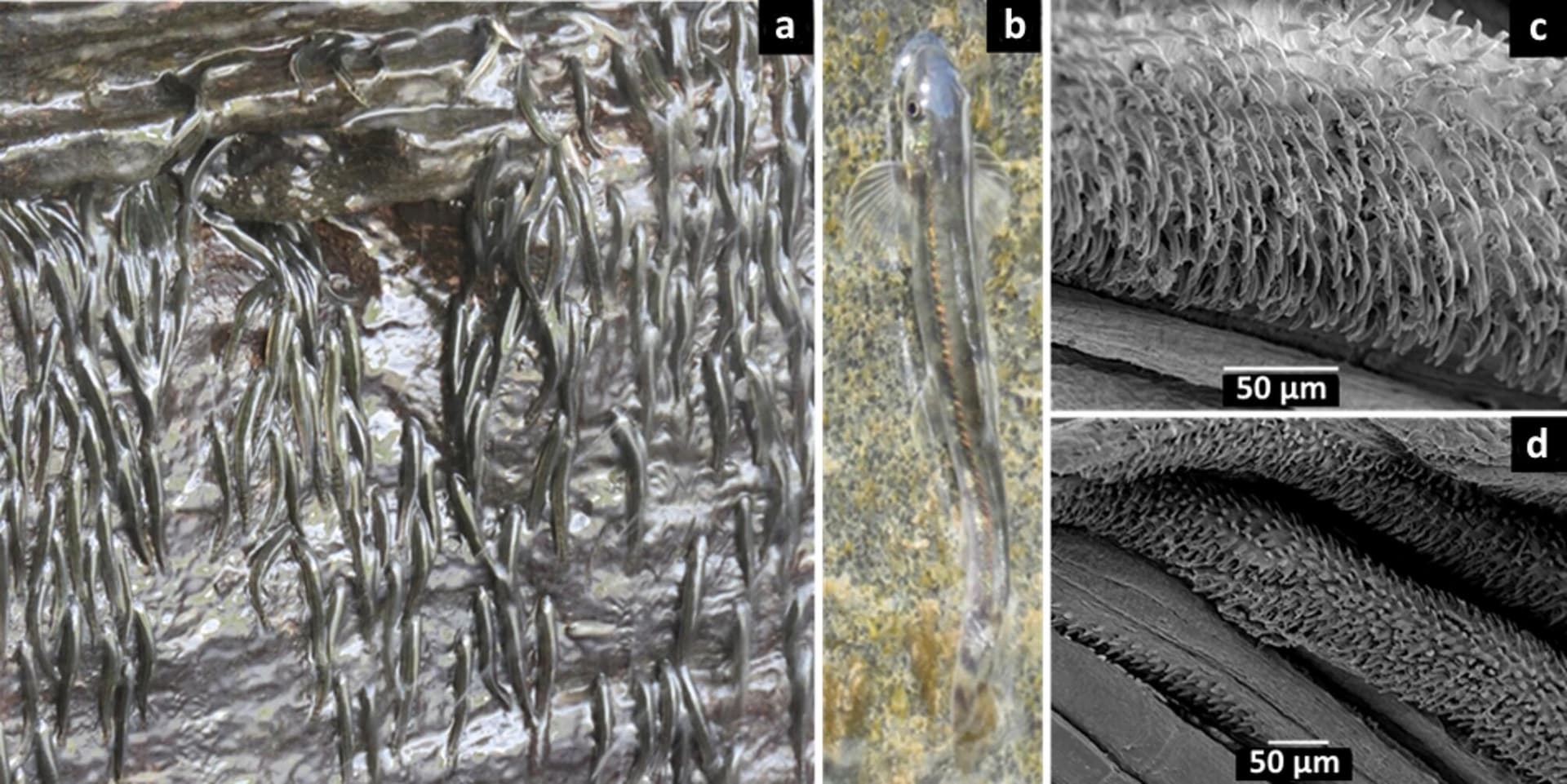
A fish barely the length of a French fry has been documented scaling a 50-foot waterfall in the Democratic Republic of Congo, completing a nearly 10-hour vertical climb using microscopic hooks embedded in its fins — a feat that eluded scientific confirmation for more than half a century.
The species is the shellear (Parakneria thysi), a small freshwater fish native to the upper Congo Basin. Thousands of shellears converge annually at Luvilombo Falls on the Luvilombo River inside Upemba National Park in southern DRC, pressing their bodies against the 15-meter rock face and hauling themselves to the top. The behavior, published April 2 in the journal Scientific Reports, marks the first documented case of waterfall climbing by any fish species on the African continent.
Only the smallest individuals make the ascent. Shellears between 37 and 48 millimeters in length, roughly 1.4 to 1.9 inches, can maintain grip on the sheer rock face. Larger fish, which can reach up to 96 mm, appear too heavy to hold on. The climbers do so using microscopic single-celled projections called unculi on the pads of their pectoral and pelvic fins, which act as friction enhancers against wet stone. A reinforced arch of bone called the pectoral girdle supports the musculature behind each push. To move upward, the fish press these hooks into the rock and propel themselves with rapid side-to-side tail swings — effectively swimming vertically.
"It's as if the fish is swimming but in vertical," said lead researcher Pacifique Kiwele Mutambala, a PhD student at the Université de Lubumbashi. "It's beyond imagination."
The average ascent takes 9 hours and 45 minutes, but little of that time involves actual movement. Researchers calculated roughly 15 minutes of active climbing, 30 minutes of short pauses lasting 2 to 8 minutes each, and nine rest stops of approximately one hour apiece. Maximum recorded climbing speed is about 3.0 centimeters per second. Some fish fall during the attempt and must begin again from the base.
The migrations occur in massive numbers during April and May, at the end of the rainy season, when major flood events drive the fish toward the falls. Scientists believe the behavior represents a size-related partial migration, with leading hypotheses pointing to a return upstream after being swept downstream by floods, escape from predators such as the silver butter catfish (Schilbe intermedius), and reduced competition for food.
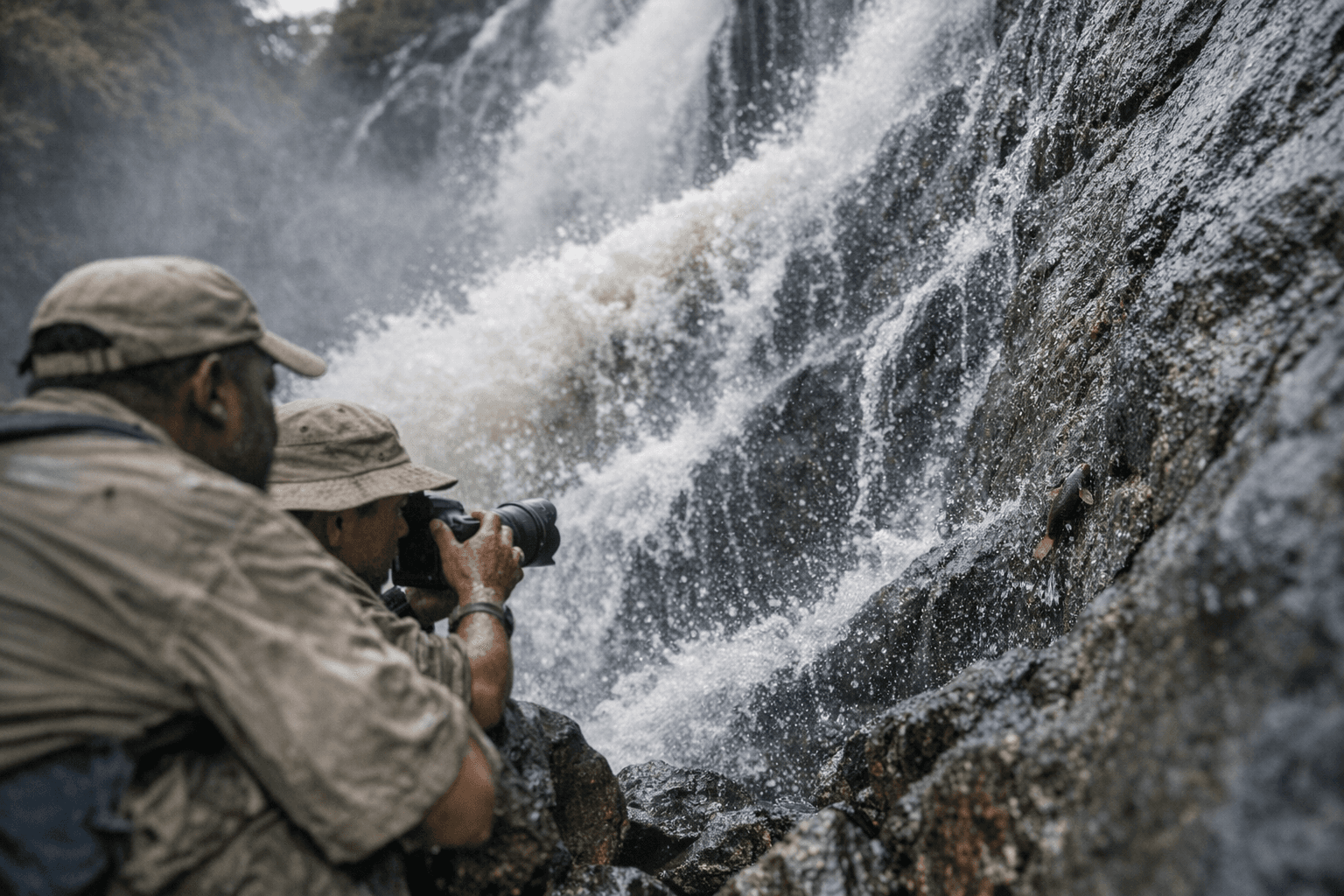
The story behind the research spans nearly two decades. About 17 years ago, Auguste Chocha Manda, a researcher at the Université de Lubumbashi, witnessed thousands of shellears climbing the rock face and managed to film the spectacle but later lost the footage, leaving no hard evidence. Mutambala, then a master's student at the same university, resolved to capture documented proof. Between 2018 and 2020, he led four separate expeditions to the falls, ultimately recording the behavior on camera and producing the photographic and cinematographic evidence the study rests on.
Co-author Emmanuel Vreven, an ichthyologist at the Royal Museum for Central Africa in Belgium, reflected on what the footage represents. "If you would ask a regular person, do you think fish can climb falls, most of them will tell you: you are crazy. Well, it exists, it is out there."
Waterfall-climbing fish are not entirely unknown to science. Hawaiian gobies, including the Nopili goby (Sicyopterus stimpsoni), use a sucker-and-mouth inchworm technique to scale falls. The shellear's method is anatomically distinct, and no such behavior had previously been documented anywhere in Africa.
The discovery carries urgent conservation weight. As thousands of shellears mass at the base of Luvilombo Falls before their climb, they become a concentrated target for illegal fishing, a threat already documented in the area. Proposed plans to divert water upstream from the Luvilombo River for dam construction or irrigation could reduce the river's flow at the falls and block the migration route entirely. Upemba National Park, which hosts 247 native fish species, 45 of which (18 percent) are endemic, faces additional pressure from poaching and habitat encroachment overseen by the Congolese Institute for Nature Conservation.
"This is important for the biodiversity and the conservation," Mutambala said. Whether authorities act on the new findings in time to protect the migration may determine whether shellear climbers continue their ancient, improbable ascent at all.
This article was produced by Prism’s automated news system from verified source data, official records, and press releases, then run through automated quality and moderation checks before publishing. The system is built and supervised by the people who set the standards it runs under. Read our full AI policy.
Did this article answer your question?