Tokyo and Washington narrow first projects under $550 billion package
Japan and the U.S. have shortlisted initial investments under a $550 billion pledge, moving trade talks toward concrete projects and a potential tariff tradeoff.
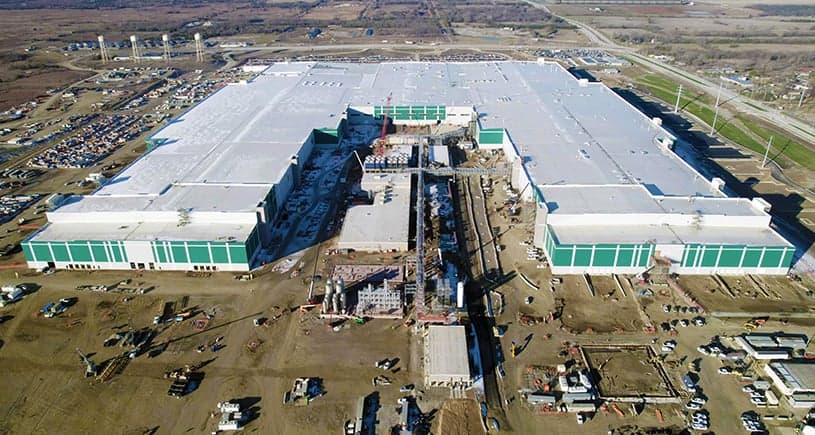
Tokyo and Washington have moved from broad agreement to concrete project selection in a signature economic initiative that would channel $550 billion (about 80 trillion yen) of Japanese investment into the United States, officials say. The bilateral framework, framed as part of broader trade negotiations, is now selecting the first projects to receive financing and government-backed support, with at least one SoftBank-linked data center among those shortlisted.
The initiative began as a memorandum creating an oversight structure in September, establishing a bilateral committee and a separate investment committee chaired by U.S. Commerce Secretary Howard Lutnick. The joint investment framework was unveiled at a summit in Tokyo on Oct. 28, and a later signing ceremony set out a pipeline of 21 strategic projects across energy infrastructure, artificial intelligence and critical-mineral procurement. Those 21 projects cumulatively exceed $400 billion, while individual proposals span from roughly $350 million to as much as $100 billion.
Officials briefed on the negotiations say the package contains a heavy energy focus: up to $332 billion is targeted at critical U.S. energy infrastructure, including nuclear reactors and power plants in partnership with Westinghouse, GE Vernova and Hitachi. Other allocations under the current proposals include $25 billion for large-scale power equipment such as gas turbines, $25 billion for electrical substation equipment with Toshiba, $30 billion for AI infrastructure with Mitsubishi Electric, $20 billion for optical fiber cable projects with Fujikura, $15 billion for advanced electronics with Murata Manufacturing and $15 billion for energy storage systems with Panasonic.
Industry participants named by officials include SoftBank Group, Hitachi, Mitsubishi Heavy Industries, Toshiba, Mitsubishi Electric, Panasonic, Fujikura and Murata Manufacturing. Japanese firms would be eligible for government-backed financing and loan guarantees for eligible projects, enabling much larger capital commitments than would be feasible on a purely commercial basis.
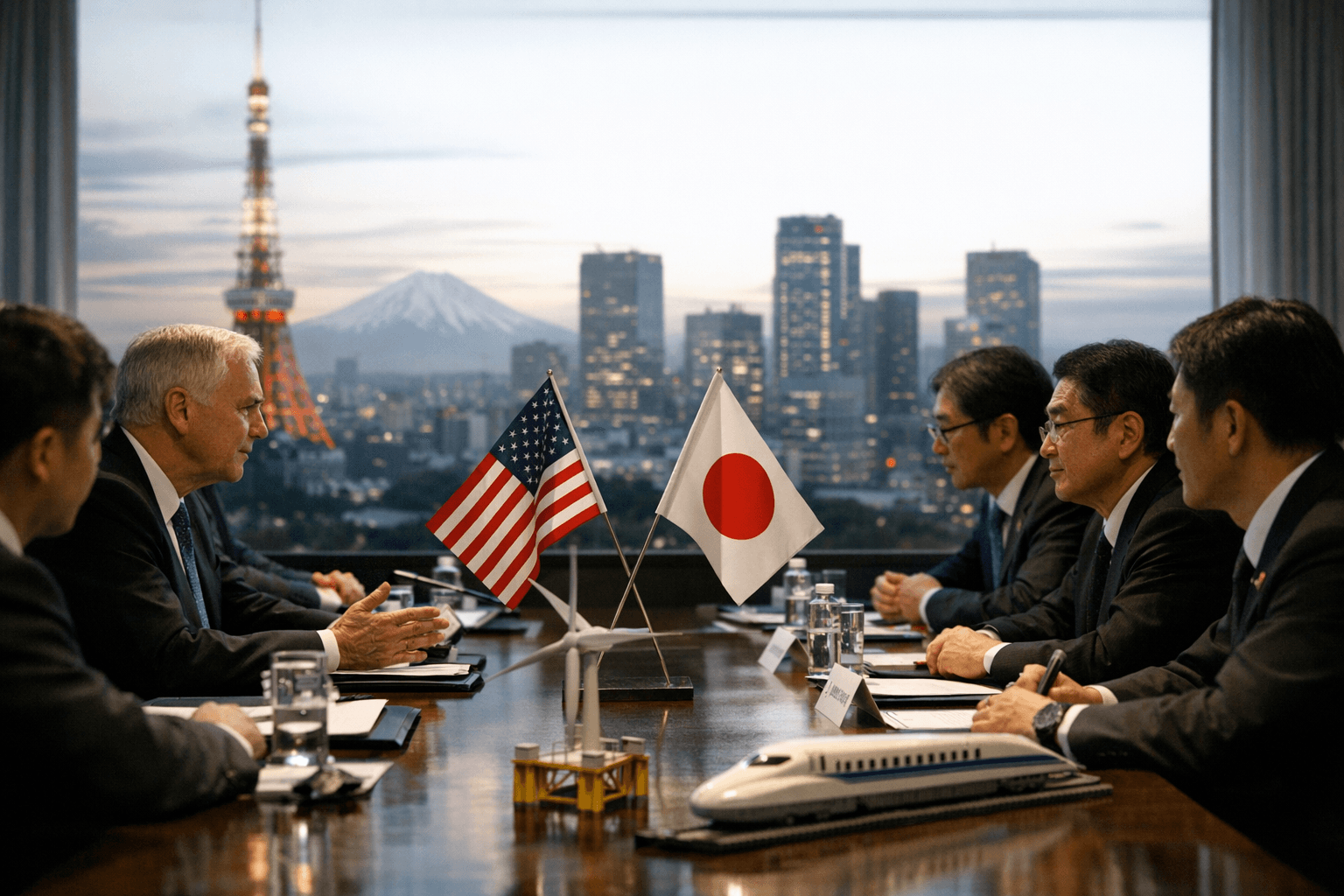
A critical and sensitive element of the package is its linkage to U.S. tariff policy. Officials say the investment pledge is part of a negotiated quid pro quo, with Tokyo expected to invest in return for a lower base tariff on Japanese imports into the United States, reportedly around 15 percent in the current compromise framework. Final investment decisions, officials add, will be subject to committee recommendations and require presidential approval.
Market and policy implications are wide-ranging. For U.S. industrial policy, the package could accelerate construction of new nuclear and small modular reactors, strengthen power and data infrastructure, and anchor AI supply chains onshore through large-scale investments. For Japanese exporters, a reduced tariff rate would blunt the immediate shock of higher trade barriers while redirecting corporate capital toward strategic overseas projects. For global markets, the arrangement underscores a shift toward state-backed cross-border industrial policy, where government financing and political negotiation determine the direction of private capital.
Key questions remain unsettled: the definitive shortlist of initial projects beyond the SoftBank-linked data center, the timetable for committee deliberations, the precise legal terms of loan guarantees, and the formal tariff commitment. Officials say those issues are active and will determine whether the $550 billion pledge becomes a durable template for U.S.-Japan economic cooperation or a temporary political arrangement.
This article was produced by Prism’s automated news system from verified source data, official records, and press releases, then run through automated quality and moderation checks before publishing. The system is built and supervised by the people who set the standards it runs under. Read our full AI policy.
Did this article answer your question?