Tomé Hill pilgrimage draws thousands, shapes recreation and policy
Tomé Hill draws thousands each Good Friday and serves year-round as a hiking and cultural site. Its popularity affects local traffic, land management and local businesses.
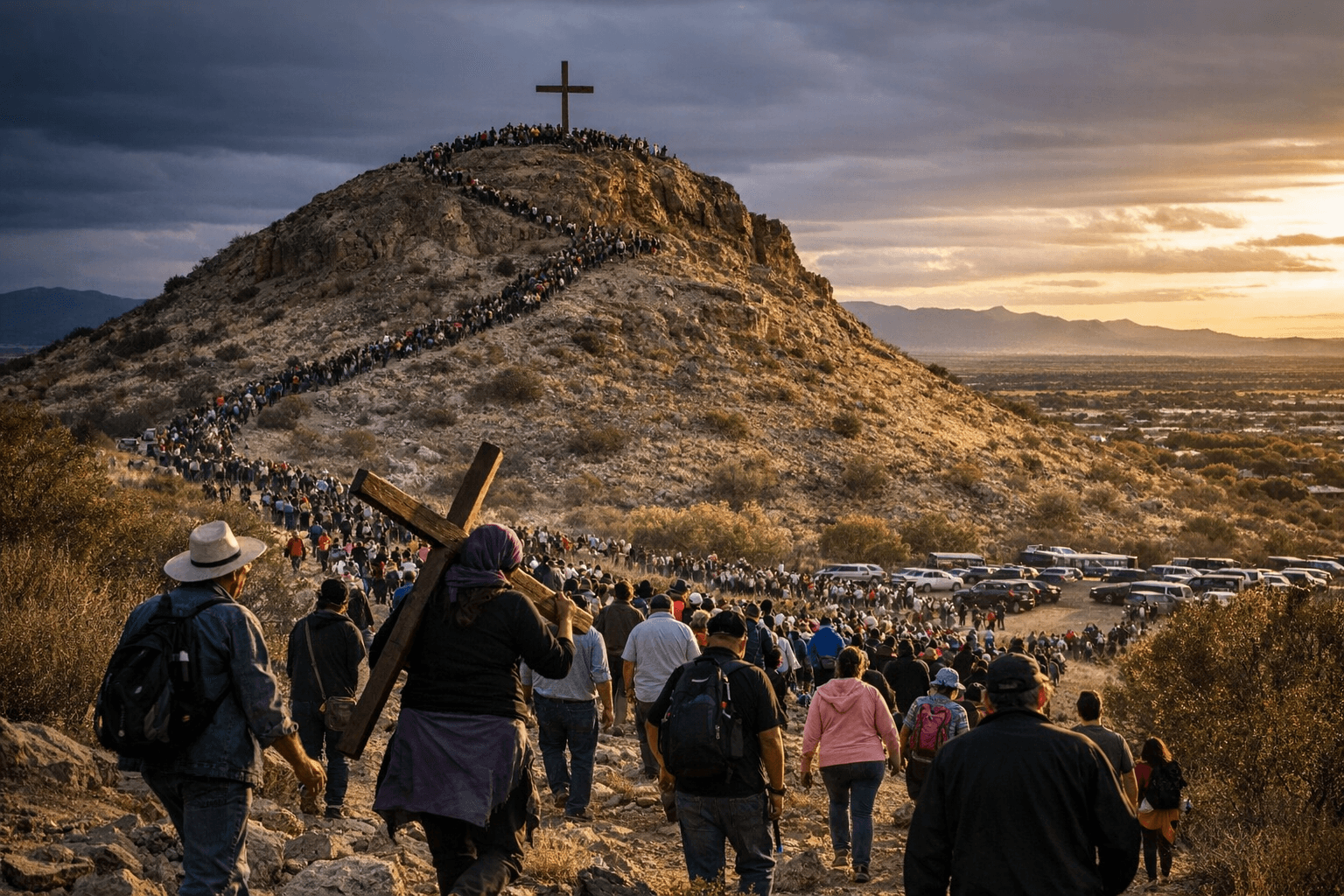
Tomé Hill, locally known as El Cerro de Tomé, remains a volcanic butte and cultural landmark southeast of Los Lunas and north of Tomé that functions as both a spiritual gathering place and a recreational destination for Valencia County residents. Each year modern Good Friday processions and ceremonies bring thousands of people to the hill, while the site is open year-round for hikers, families and those seeking panoramic views of the Rio Grande valley.
The hill's historic and spiritual significance for Hispano and Pueblo communities anchors the annual pilgrimage and everyday use. At the trailhead visitors find a small park and public art that mark the site as more than a hiking route; it is a focal point for community memory and ritual. That dual role creates recurring management questions: how to preserve ceremonial space, protect the trail and surrounding landscape, and accommodate recreational visitors who come for exercise and scenery.
Practical considerations matter for locals and visitors. The trail can be steep and exposed; sensible footwear, water, sun protection and respect for ongoing ceremonies or closures tied to religious events or land-grant governance are essential. Year-round access means steady foot traffic that benefits nearby businesses on pilgrimage weekends and during peak hiking months, but also produces wear on trails, pressure on informal parking and occasional conflicts over ceremonial access.
From an economic and policy perspective, the pattern is familiar for small tourism sites that double as sacred places. Thousands of annual visitors represent a seasonal boost for restaurants, gas stations and lodging in the wider Rio Grande valley, yet they also create municipal costs for parking management, signage, restroom maintenance and trail upkeep. Local land-grant governance and municipal authorities face trade-offs between open public access and protecting culturally sensitive uses; coordinating schedules, posting clear closures and investing in trail maintenance can reduce friction while preserving the hill’s character.
Longer-term trends point toward continued demand for nearby outdoor spaces as residents prioritize outdoor recreation and cultural reconnection. That makes modest, community-led investments valuable: clearer trail maps at the trailhead, shade and water reminders, and respectful signage explaining ceremonial times and land‑grant rules would serve both visitors and longtime community stewards.
The takeaway? Treat Tomé Hill like you would a neighbor's celebration: come for the view, bring water and sturdy shoes, and give space when the hill is serving its spiritual role. Our two cents? A little planning and common courtesy will help keep Tomé Hill both a lively community destination and a quiet place of tradition.
Sources:
Know something we missed? Have a correction or additional information?
Submit a Tip