Top 5-year CD rates beat national average as savers lock in yields
A $90,000 five-year CD at 4.28% APY would earn about $21,434, versus $8,077 at the 1.72% national average.

NASA Federal Credit Union was offering 4.28% APY on a five-year CD as of July 7, 2026, while Bankrate put the national average for the same term at 1.72% APY. On a $90,000 deposit held for five years, that gap translates into about $21,434 in interest at the top rate, compared with about $8,077 at the average.
That kind of CD fits best for people who can leave cash untouched for years and want a fixed return backed by deposit insurance. The Federal Deposit Insurance Corporation covers deposits at FDIC-insured banks up to at least $250,000 per depositor, per insured bank, per ownership category, and that protection includes certificates of deposit. A $90,000 balance stays well inside that ceiling at one institution, though taxes and inflation reduce real buying power.

Bankrate puts early CD withdrawal penalties at 60 to 365 days of interest, with longer terms carrying steeper penalties. A five-year CD is a poor fit for money needed for emergencies, home repairs or other near-term expenses, especially when high-yield savings accounts and shorter CDs can leave cash more accessible even if they do not always match the best long-term posted rates.
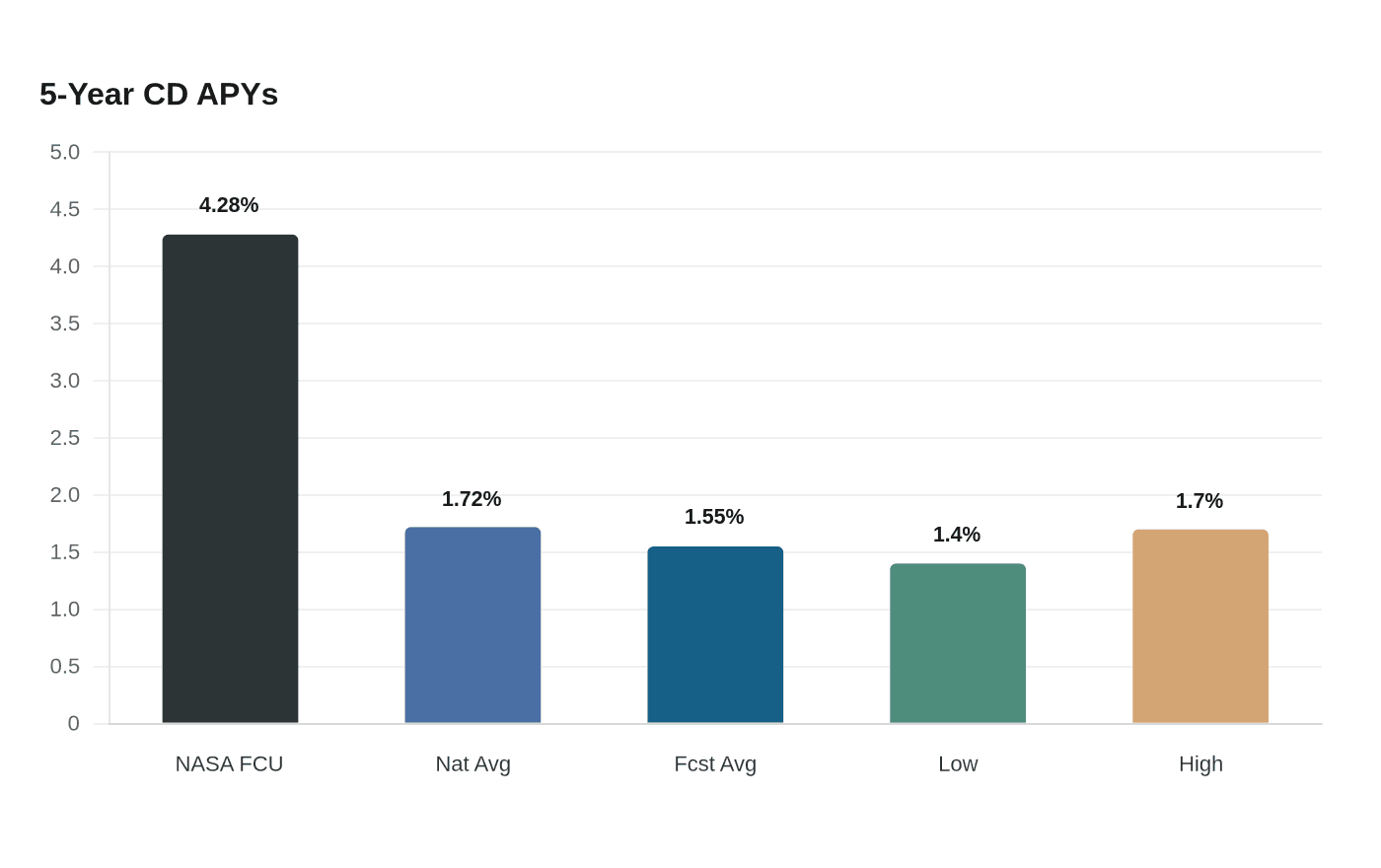
CD rates generally trended down in 2026 even as some online banks nudged competitive short-term rates higher, according to NerdWallet. The Federal Reserve kept its target range for the federal funds rate at 3.5% to 3.75% at its June 17, 2026 meeting. Bankrate’s 2026 forecast puts the overall national average for five-year CDs at about 1.55% APY, with a low around 1.4% and a high around 1.7%.
This article was produced by Prism’s automated news system from verified source data, official records, and press releases, then run through automated quality and moderation checks before publishing. The system is built and supervised by the people who set the standards it runs under. Read our full AI policy.
Did this article answer your question?