Toronto air quality briefly worst in world as wildfire smoke spreads south
Toronto briefly topped global air-quality rankings as wildfire smoke from northwestern Ontario pushed hazardous air across the city and south into New York.

Toronto’s air was briefly the worst among major cities in the world Wednesday as smoke from wildfires in northwestern Ontario drifted over the city and pushed a public health warning across one of Canada’s largest urban centers. Environment and Climate Change Canada issued an orange air-quality warning for Toronto in the morning, and the city’s Air Quality Health Index climbed into high-risk territory, reaching 8 at 1:00 p.m. EDT with a forecast peak of 10-plus for Wednesday and Wednesday night.
The federal weather agency said smoke from the fires was causing very poor air quality and reduced visibility in Toronto, with conditions expected to improve by Friday morning. At times during the day, Toronto sat first on IQAir’s live ranking of the world’s major cities, a stark marker for a city more used to managing summer traffic and heat than smoke thick enough to darken the skyline.
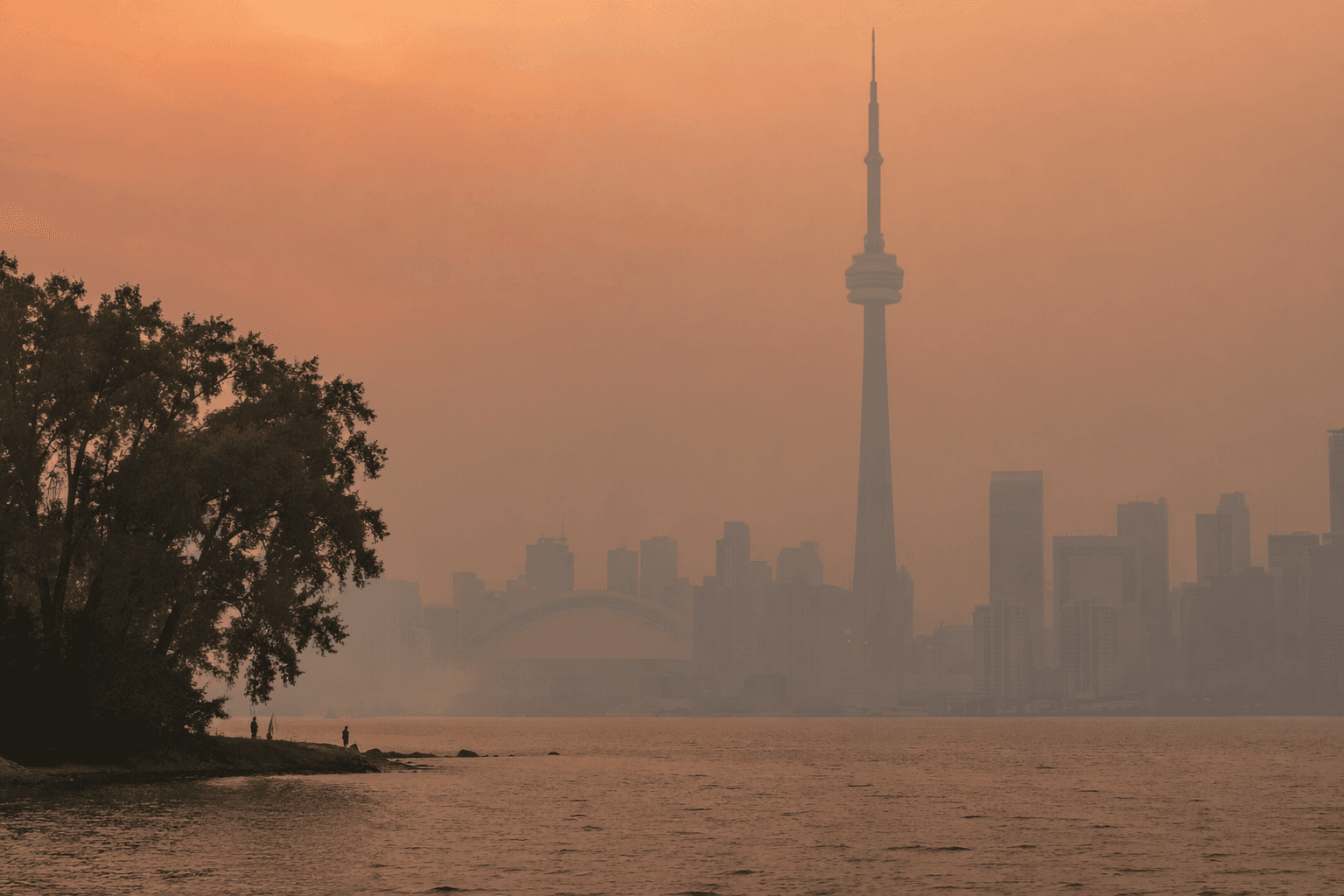
The smoke did not stop at the border. NYC Emergency Management and the New York City Department of Health and Mental Hygiene warned on Tuesday that smoke from significant, still-spreading wildfires in western Ontario could affect New York City air beginning Wednesday, adding another layer to a heat emergency already stretching the city’s public health response. The drift south underscored how wildfire smoke can move far beyond the fire line, turning a regional emergency into a cross-border air-quality event for millions.
Conditions in Ontario were severe enough to keep emergency crews and displaced communities on edge. One report counted 148 active fires in the Northwest Fire Region as of Tuesday evening, and several First Nations communities, including Armstrong First Nation and Whitesand First Nation, were under mandatory evacuation orders. The smoke episode also landed on top of a separate heat wave that pushed humidex values as high as 45 in parts of Ontario and drove downtown Toronto to 37.6 C, leaving residents to contend with dangerous heat and polluted air at the same time.
The scale of the smoke plume fits a broader pattern that Canada has already lived through. The country’s record wildfire season in 2023 burned nearly 18 million hectares nationwide, and this year’s fire weather has again shown how quickly distant flames can disrupt daily life in major cities, strain public health systems and force governments to plan for urban smoke as a recurring part of summer, not a rare exception.
This article was produced by Prism’s automated news system from verified source data, official records, and press releases, then run through automated quality and moderation checks before publishing. The system is built and supervised by the people who set the standards it runs under. Read our full AI policy.
Did this article answer your question?