Trade court weighs who can claim tariff refunds from Trump levies
A federal judge is pressing Customs on who gets tariff refunds, a fight that could decide how billions from Trump levies are returned.
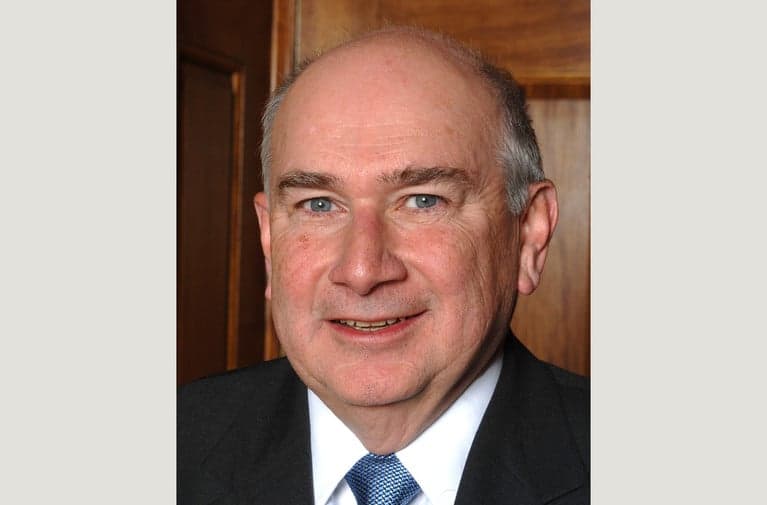
Tariff refunds tied to Donald Trump’s illegal levies have become a fight over access as much as money. At the U.S. Court of International Trade in Manhattan, Judge Richard Eaton pressed U.S. Customs and Border Protection on how it plans to return duties that the Supreme Court said the president had no authority to impose under the International Emergency Economic Powers Act.
The dispute now centers on a blunt question: will all importers of record get a chance to recover what they paid, or only the companies that sued? Eaton’s March 4 order in Atmus Filtration, Inc. v. United States said all importers of record whose entries were subject to IEEPA duties were entitled to the benefit of the Supreme Court ruling. The Justice Department has argued for a much narrower refund pool, saying only firms that were parties to the more than 4,000 tariff lawsuits should be eligible. Eaton has been weighing whether to order the government to speed up and broaden the refund process for a tariff haul that has been estimated at $166 billion, with some earlier estimates of potential refunds topping $175 billion.

Customs has already built a system to process claims. CBP launched its Consolidated Administration and Processing of Entries tool inside the Automated Commercial Environment on April 20, 2026, to streamline valid refund requests submitted under court order or applicable law. The agency says the CAPE function is meant to simplify IEEPA duty refund requests and move them electronically through the claims process. That system is now in place, but Eaton has warned that the Justice Department’s appeal could complicate or slow the return of the money.
The legal stakes are enormous for importers, customs brokers and supply-chain managers that absorbed the tariffs while they were in force. More than 330,000 importers and over 53 million shipments have been touched by the program, making the refund question one of the largest trade-administration exercises in recent memory. If Eaton’s broader reading stands, cash could flow back to a wide universe of businesses. If the government’s narrower view prevails, smaller firms that never sued may be shut out by procedural rules, even though they paid the same duties.
The broader legal fight has moved to the U.S. Court of Appeals for the Federal Circuit after the Trump administration appealed Eaton’s refund order on June 2, 2026. The Supreme Court’s February 20 ruling in Learning Resources, Inc. v. Trump and Trump v. V.O.S. Selections, Inc. already settled the underlying legality. What remains is who gets paid, how fast, and whether the refund process becomes a broad remedy or a gatekept one.
This article was produced by Prism’s automated news system from verified source data, official records, and press releases, then run through automated quality and moderation checks before publishing. The system is built and supervised by the people who set the standards it runs under. Read our full AI policy.
Did this article answer your question?
%3Amax_bytes(150000)%3Astrip_icc()%2FCertificate-of-deposit-2301f2164ceb4e91b100cb92aa6f868a.jpg&w=1920&q=75)