Trader Joe's Crew Handbook Clarifies Pay, Safety, and Leave Policies
Trader Joe's crew handbook (Crew Handbook 2024, Rev. 5.24) lays out core workplace rules and benefits for store employees, including at-will employment, pay practices, benefit eligibility, safety protocols, and leave procedures. The document aims to give crew members clarity on hours, premium pay, reporting procedures, and protections while also delineating employer authorities such as inspections and media relations.
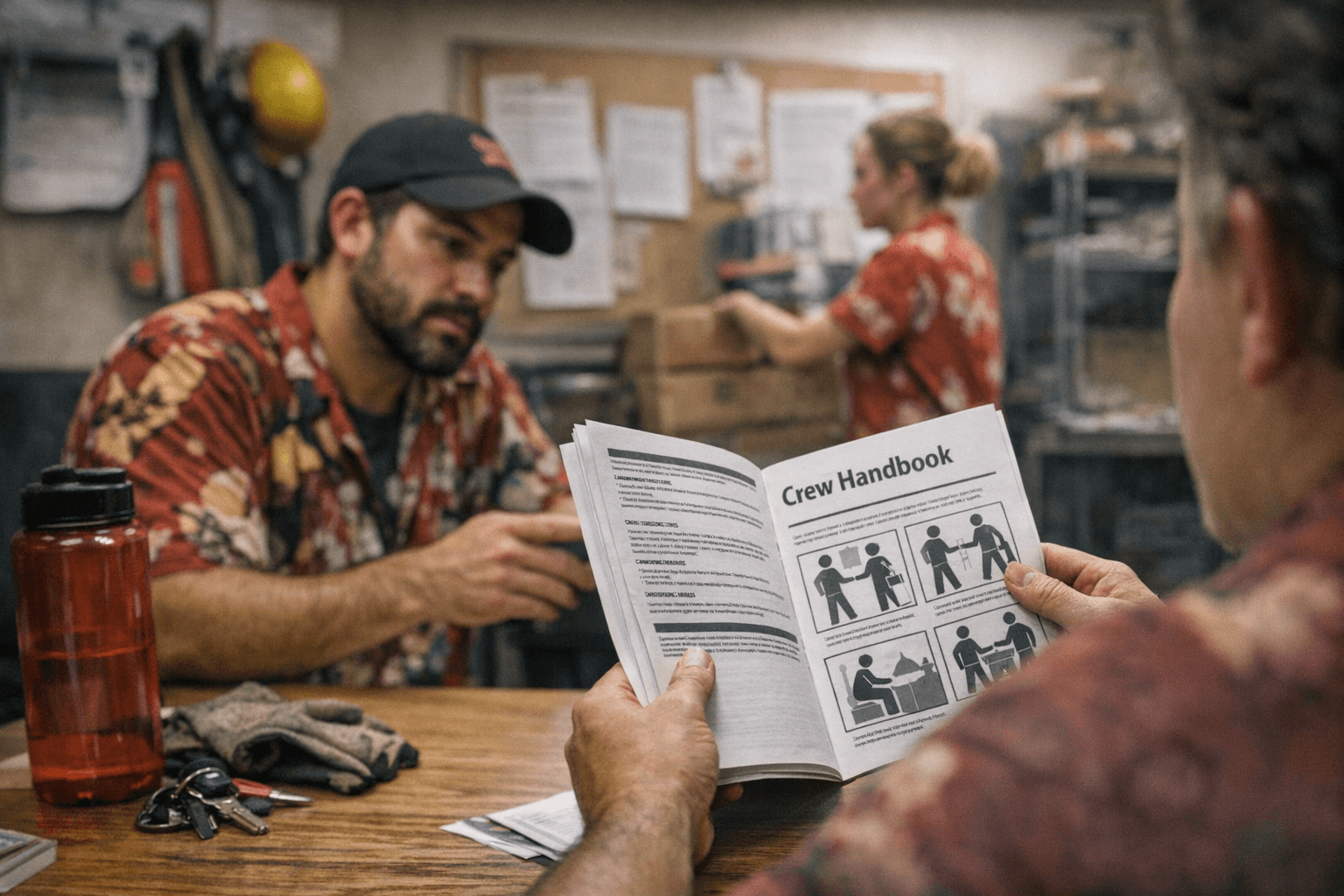
Trader Joe's crew handbook restates the company's at-will employment policy while spelling out an open-door process for raising workplace concerns and formal procedures for addressing them. The handbook frames at-will status alongside an expectation that employees may bring issues to management, and it emphasizes that crew members will not face retaliation for reporting unsafe conditions.
Compensation and hours are addressed in detail. Crew are classified as non-exempt and are paid for actual hours worked. The handbook explains overtime and premium pay practices, including holiday and Sunday premiums, instructs employees on how to record time, and notes that the company does not guarantee a minimum number of hours. It also references periodic performance-based raises as part of the compensation framework.
Benefits and retirement sections outline eligibility thresholds for health insurance and specify measurement periods used to determine eligibility for medical, dental, and vision coverage. The handbook provides plan contact information and summarizes retirement plan/401(k) features. Paid time off and PTO accrual rules are described, with guidance on how accruals are calculated and how time off is charged and approved.
Safety receives substantial attention, with detailed expectations for safe lifting, housekeeping, and avoiding obstruction of aisles. The handbook includes a workplace violence prevention program and instructs employees to report unsafe conditions, reiterating non-retaliation protections for those who raise safety concerns. Those provisions aim to reduce risk on the sales floor and during deliveries, and to create clearer channels for incident reporting.
Leave and accommodation sections cover FMLA-style rules, short-term disability and other leave types, and lay out return-to-work and accommodation procedures for employees recovering from illness or injury. These policies are intended to standardize how leaves are requested, approved, and managed across stores.
The handbook also sets rules on discipline, inspections, and privacy. It includes policies on inspections of store property such as lockers and desks, no-solicitation rules, and guidance on media relations. Those provisions clarify employer authority over workplace spaces and communications, which can affect how crew members engage with outside parties or organize internally.
For crew members, the handbook provides a consolidated reference to understand pay, scheduling realities, benefits access, safety expectations, and the mechanics of taking leave. For managers and HR professionals, it serves as a framework for consistent enforcement and documentation. Crew members should review the handbook and use the open-door procedures when they need clarification or to raise workplace issues.
This article was produced by Prism’s automated news system from verified source data, official records, and press releases, then run through automated quality and moderation checks before publishing. The system is built and supervised by the people who set the standards it runs under. Read our full AI policy.
Know something we missed? Have a correction or additional information?
Submit a Tip