Traffic Slowly Returns to Strait of Hormuz After Trump Announces Conditional Ceasefire
Oil futures plunged 14% on ceasefire news, but 800+ vessels remain trapped and Iran fired missiles at Gulf states within hours of the deal.

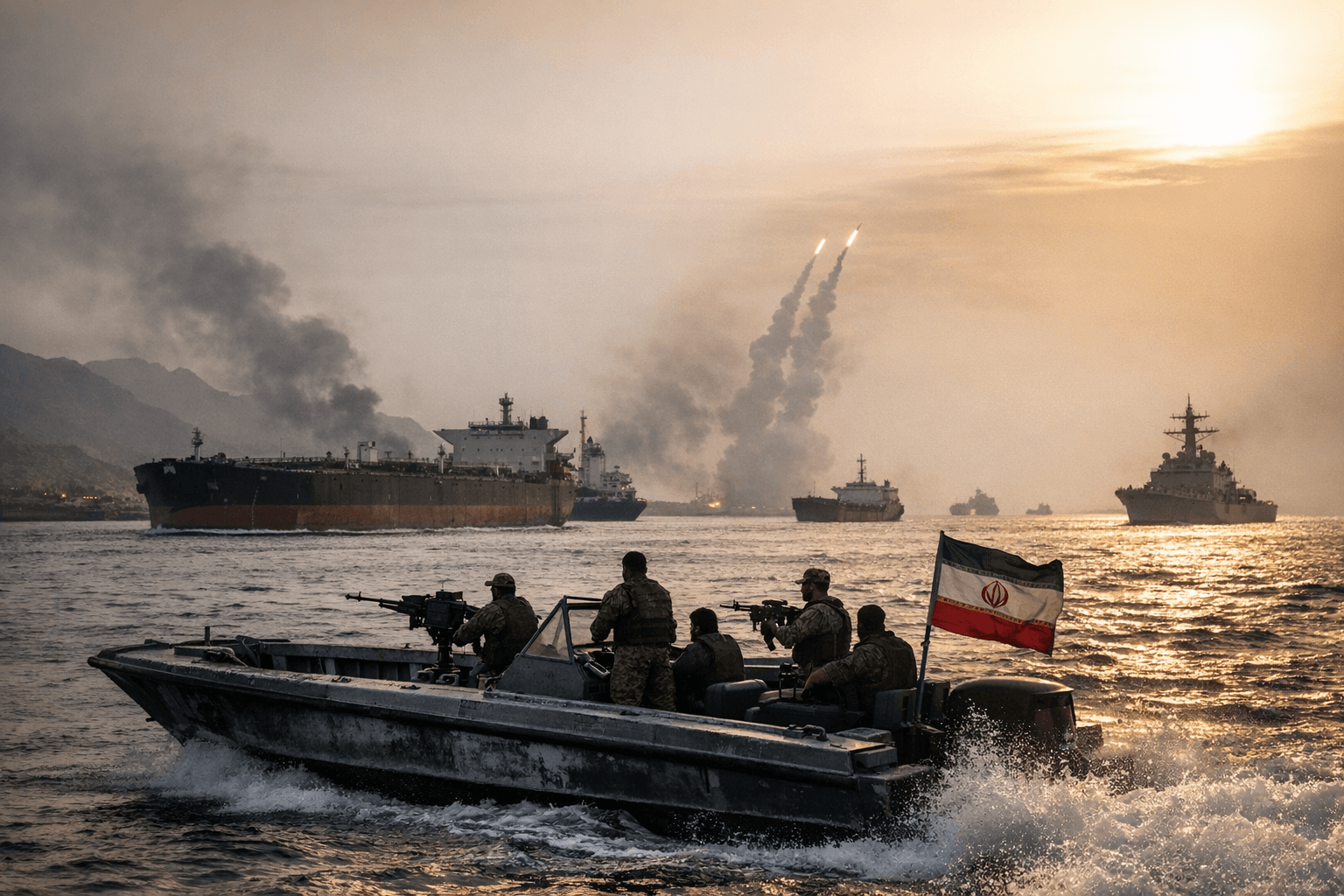
Crude oil markets staged their sharpest single-day drop in years on Wednesday after President Donald Trump announced a two-week ceasefire with Iran, contingent on Tehran's pledge to allow "COMPLETE, IMMEDIATE, and SAFE OPENING" of the Strait of Hormuz. Yet even as traders celebrated, Iranian cluster munitions were arcing toward Tel Aviv around 3 a.m. local time, and air defenses across the Gulf scrambled to intercept missiles and drones within hours of the deal taking effect. The gap between what financial markets priced and what shipping operators faced on the water could hardly have been wider.
WTI futures fell 16.3% to $94.53 per barrel, while international benchmark Brent crude dropped more than 14% to $93.93 per barrel. Those moves reflected relief at a headline, not the restoration of actual supply. Shipping data showed little movement in the waterway more than six hours after the ceasefire was announced, and more than 800 vessels remained trapped in the Persian Gulf, clustered around Dubai on one side and Khor Fakkan in the Gulf of Oman on the other.
The ceasefire itself carried fine print that underscored the arrangement's fragility. Iran said safe passage would be possible "via coordination with Iran's Armed Forces and with due consideration of technical limitations," a formulation that diverged meaningfully from Trump's call for a complete and immediate opening. Those are not the same thing, and shipowners know it. RSM US chief economist Joe Brusuelas said "confidence-building measures in coming days are going to be key to restoring shipments," noting that insurance for tankers would need to be reestablished before large-scale movements could resume.
The cost of war-risk coverage had surged to roughly 5% of a ship's value by mid-March, compared to fractions of a percentage point before the conflict began. For an oil tanker worth $100 million, that translates to $5 million just to clear the strait. Very large crude carriers were being chartered for as much as $770,000 per day, costs that flow directly through to refined products. U.S. regular gasoline was averaging $4.14 per gallon, the highest level since 2022.
The crisis dates to the joint U.S.-Israel strikes on Iran that began February 28, which included the killing of Supreme Leader Ali Khamenei. Iran responded with retaliatory missile and drone attacks on U.S. military bases, Israeli territory, and Gulf states, while the Islamic Revolutionary Guard Corps issued warnings prohibiting vessel passage through the strait, effectively halting shipping traffic. Daily transits fell from roughly 130 under normal conditions. Iran's parliament passed legislation formalizing transit tolls on Hormuz, and according to Iran's semi-official Tasnim News Agency, Iran and Oman plan to charge passage fees during the ceasefire period, with proceeds earmarked for reconstruction.
Pakistan Prime Minister Shehbaz Sharif brokered the agreement, asking Trump to extend his deadline and urging Iran's leadership to open the strait as a goodwill gesture. Sharif invited both delegations to Islamabad on April 10 to negotiate a longer-term settlement.
For the consumer impact pathway to actually reverse, several dominoes need to fall in sequence: Brent spreads between front-month and deferred contracts need to narrow, tanker day rates need to fall and hold lower before refiners commit to Gulf liftings, and Hormuz throughput numbers need to climb back toward their pre-conflict baseline. Eurasia Group managing director Henning Gloystein warned that it could take several months to repair oil refineries and energy infrastructure damaged in the conflict, and that shipping companies would need at least two months to resume operations even if hostilities were fully suspended.
Iran's continued missile activity on Wednesday morning was the most direct signal that a two-week pause and a durable reopening of the world's most critical energy chokepoint remain, for now, separate propositions.
This article was produced by Prism’s automated news system from verified source data, official records, and press releases, then run through automated quality and moderation checks before publishing. The system is built and supervised by the people who set the standards it runs under. Read our full AI policy.
Did this article answer your question?

