U.S. Trade Rep Says USMCA Talks Likely to Miss 2026 Review Deadline
USTR Jamieson Greer says USMCA talks will miss the July 1 deadline, with a June 1 congressional notice and withdrawal threat sharpening leverage over Canada and Mexico.
U.S. Trade Representative Jamieson Greer said Tuesday he does not expect negotiations over the United States-Mexico-Canada Agreement to be resolved by July 1, 2026, setting the stage for a prolonged renegotiation that could reshape trade flows, supply chains, and investment decisions across North America.
Speaking at a Hudson Institute event in Washington, Greer said the Trump administration is "on track" to sort out many of its issues with the agreement, but not before July 1, when the countries must share their plans for the trade deal. That assessment carries a sharper near-term edge: Greer is required to report to Congress on June 1, a full month ahead of the formal review date, to lay out the Trump administration's plans.
That June 1 window is where the leverage calculus sharpens. Greer raised the prospect of formally notifying Congress that the U.S. intends to pursue withdrawal from the trilateral framework, pending separate bilateral negotiations with Canada and Mexico. Withdrawal from the USMCA requires a minimum of six months' written notice to the other members, meaning a notice filed in early June would place the agreement's future on a December deadline.
The administration's approach also reflects a widening gap between its two partners. Greer said trade talks with Canada have fallen behind those with Mexico as the administration prepares for this year's review. "We're having talks separately with Canada, but we've moved along with Mexico. Canada is behind on this with Mexico," he said on Fox Business. Canadian Trade Minister Dominic LeBlanc has positioned Ottawa as willing to accept a mixed format. "We've said all along that there will be a bilateral element to these discussions, and there will also be a trilateral element," LeBlanc told reporters. Canada appears largely on the sidelines while Mexico is engaged in technical discussions with Washington, a posture that analysts say could ultimately leave Ottawa more exposed if bilateral deals are struck first.
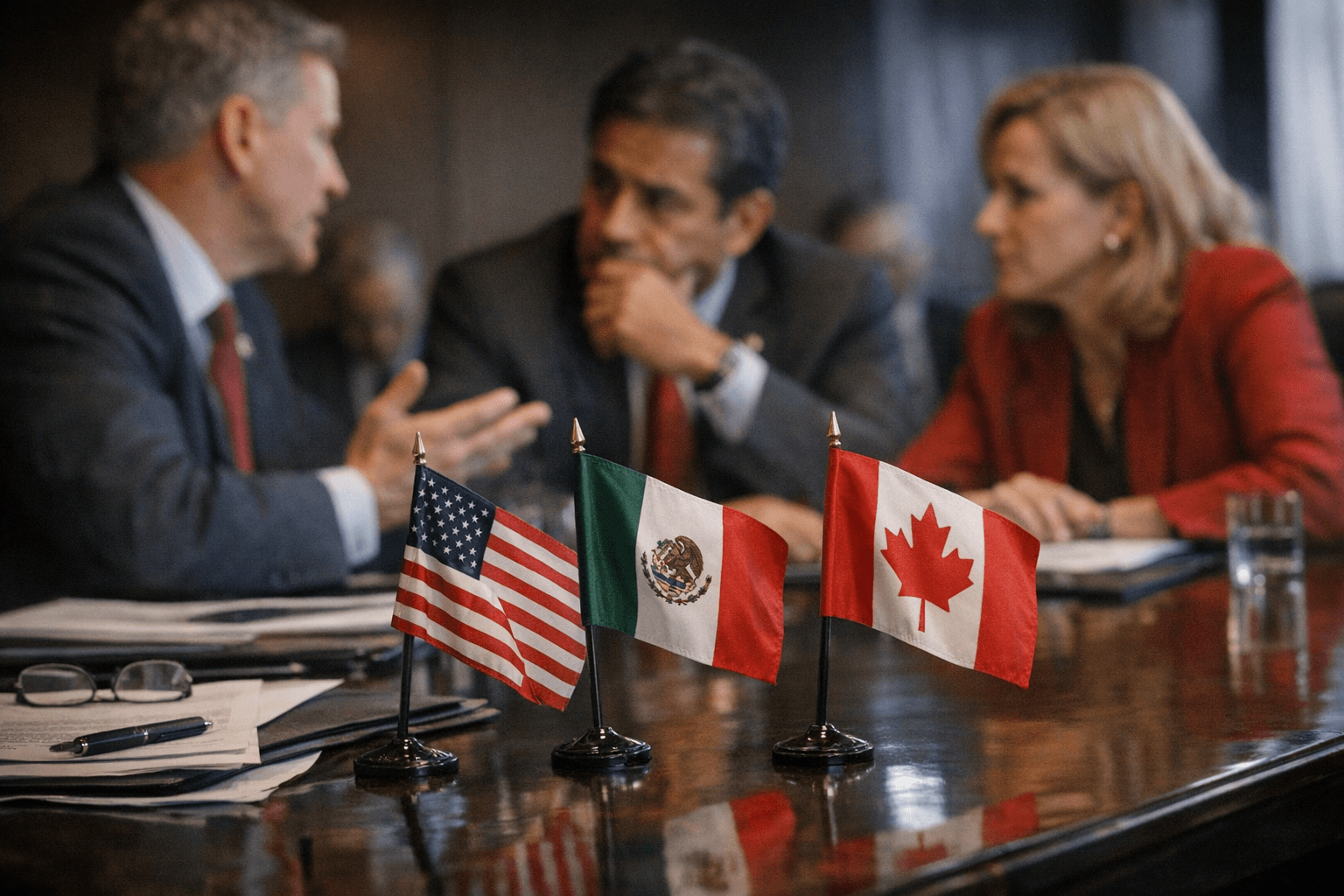
The substantive U.S. grievances center on specific trade flows: a surge in auto imports from Mexico and increased steel and aluminum volumes that Greer argues have grown out of balance. Those concerns focus attention on USMCA's automotive rules of origin, which require a set share of vehicle content to originate within the North American bloc for duty-free treatment. Any tightening of those thresholds would force manufacturers to reroute cross-border sourcing, absorb higher input costs, or face tariff exposure on finished vehicles.
Across those sectors, Greer's comments impose costs even before any formal action. Automakers, parts suppliers, and steel processors make sourcing and capital decisions months in advance; a review that stretches past July without resolution, and that could escalate toward bilateral protocols or a withdrawal notice by December, compresses the window for reliable planning. The Trump administration has not sought formal trade promotion authority from Congress, limiting its ability to alter the core text of the USMCA. A withdrawal notice, however, sidesteps that constraint entirely by forcing all three parties back to the table under a hard deadline.
USMCA entered into force on July 1, 2020, replacing the 1994 North American Free Trade Agreement. Its six-year review process leads to a decision each government must make: whether to renew the pact for 16 more years, with another joint review after six years, or whether to withdraw. Greer's Hudson Institute remarks suggest the administration intends to keep both tracks in play simultaneously, using the bilateral format and the threat of exit as pressure to accelerate concessions that the trilateral process, on its current timeline, cannot deliver.
This article was produced by Prism’s automated news system from verified source data, official records, and press releases, then run through automated quality and moderation checks before publishing. The system is built and supervised by the people who set the standards it runs under. Read our full AI policy.
Did this article answer your question?

