Trainer-Sourced Schedule and Stimulation Tips for High-Energy Dogs
Adoptapet’s trainer-backed roundup (published Feb. 17, 2026) pairs a daily exercise benchmark with food-puzzle meals and clear off-switch steps so busy owners can channel turbo pups’ energy.

Adoptapet published a trainer-sourced feature on Feb. 17, 2026 offering day-to-day scheduling suggestions, mental stimulation protocols, and exercise strategies for high-energy dogs — here’s a consolidated, trainer-sourced checklist that pulls together those recommendations with practice-focused tips from Offleashk9oklahoma, BuddyandFriendsDD, Kennel to Couch, and Michigan Humane.
1. Establish a predictable daily schedule
Consistent routines reduce anxiety and behavioral issues: "Regular schedules help these dogs know what to expect, reducing anxiety and behavioral issues," Offleashk9oklahoma emphasizes. Use fixed windows for exercise, training, meals, and rest so your dog learns when it’s playtime versus downtime; the source frames routine as core to "building trust and understanding." Consistency across all household members accelerates learning, as Michigan Humane stresses: "Be consistent—Be sure everyone in the household knows the plan."
2. Hit at least one hour of physical activity (adjust for breed/age)
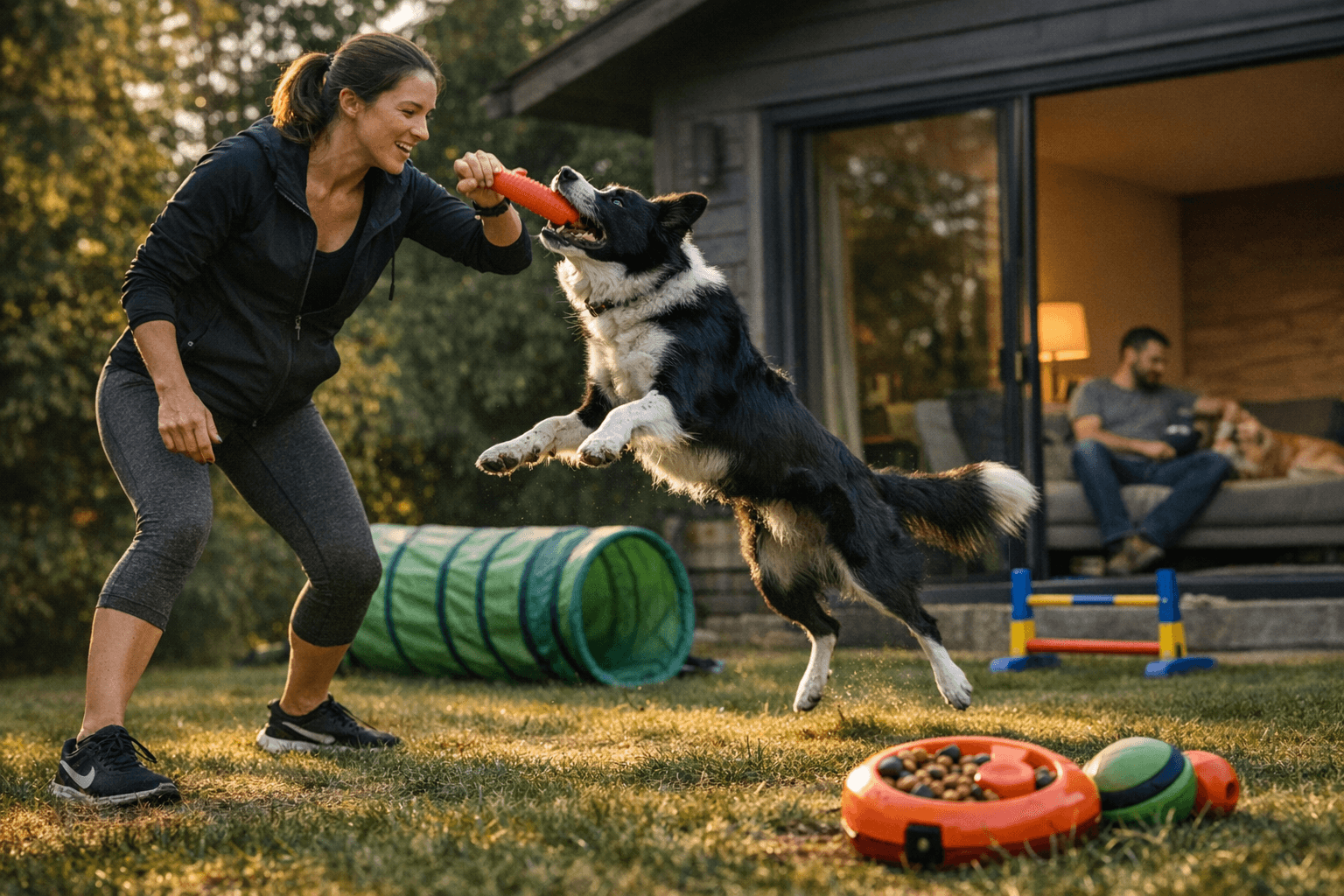
BuddyandFriendsDD’s explicit numeric benchmark is clear: "Make sure to provide them with at least an hour of exercise each day, tailored to their breed and age." That can be a brisk walk, run, park play, or an agility session; Offleashk9oklahoma adds agility courses, long walks and interactive games as ideal outlets. Tailor intensity to age and health; older or medically fragile dogs need modified sessions while working breeds may need higher-intensity outlets.
3. Pair physical work with mental challenges
"High-energy dogs thrive on a mix of physical and mental activities," Offleashk9oklahoma says — and every source echoes it. Combine fetch or agility with short scent-work drills, trick training, or puzzle toys to tire both body and brain. BuddyandFriendsDD notes these "provide a workout for their brains and help prevent destructive behaviors born out of boredom."
4. Use food puzzles for at least one meal daily
Michigan Humane: "For these dogs, we always recommend using only food puzzle toys for meals to give them a natural opportunity to work while also staying busy at least once a day." Rotate options like Kong Wobbler, Starmark Bob-a-lot, Kong Gyro, or an Original Kong filled and frozen with a safe high-value filling. Michigan Humane also suggests a DIY PVC pipe puzzle (drill holes, fill with kibble, cap ends) for variety — but always supervise homemade devices and consider choking risks relative to your dog.
5. Build indoor exercise routines and supervised equipment use
Kennel to Couch lists practical indoor moves: "Play tug. Teach him to bowl. Teach him to catch, then repeatedly toss him his ball 10 feet away and have him bring it back to you." For mechanical options—treadmills and canine exercise wheels—Kennel to Couch warns: "(These must be carefully trained and supervised, and it must be enjoyable for your dog.)" Start slow, reward calm acceptance, and never force a dog onto equipment.
6. Scale training progression and class work
If basic classes aren’t enough, Kennel to Couch recommends: "Increase his training time. If you’ve already taken him to a basic training class, sign up for a Level 2. Or a tricks class, or agility..." Advanced classes keep both of you learning and satisfy working breeds’ need for challenge. BuddyandFriendsDD recommends daily short training sessions using positive reinforcement to maintain engagement and strengthen your bond.
7. Teach a reliable "off-switch" for play endings
Kennel to Couch provides stepwise guidance for ending play: ignore re-engagement attempts, warn others to ignore, quietly praise once the dog settles, and consistently use your off-switch so the dog learns "the fun really is over when you say it is." Practical consistency—everyone in the home following the same end-of-play protocol—speeds mastery and prevents repeated reinforcement of over-arousal.
8. Practice calm greeting and preemptive reward placement
Michigan Humane’s behavior tips are concrete: practice greetings with "four feet on the ground," keep treats on you to reward calm behavior as you enter the house, and always offer treats at floor level to encourage focus downward. When entering known triggers, bring high-value treats and position yourself at a distance where the dog can succeed; reset farther away if they become too aroused.
9. Maintain balanced nutrition and smart treat use
Offleashk9oklahoma lists "maintain balanced nutrition" among core practices; Michigan Humane provides filling suggestions for enrichment treats (peanut butter, cream cheese, wet food) and freezing the Original Kong for longer-lasting value. Keep calorie counts in mind when using food puzzles daily; consider portion-adjusting meals to account for treats and puzzle-fed meals.
10. Consider doggy daycare and supervised social outlets
BuddyandFriendsDD recommends doggy daycare when owners can’t meet exercise needs: "If you find yourself unable to provide the necessary exercise, consider enrolling your pup in doggy daycare." Daycare offers supervised play and socialization that burns energy and builds canine social skills. BuddyandFriendsDD lists contact info for owners exploring that option: phone 716-389-0073 and email bark@BuddyandFriendsDD.com.
11. Know when to escalate to credentialed professionals
If behaviors indicate fear, aggression, or problematic barking, Michigan Humane warns: "If your dog is showing any signs of fear, aggression or is barking at dogs, other animals, or when you leave the house... consult with a Certified Veterinary Behaviorist and/or a Certified Professional Dog Trainer." Offleashk9oklahoma also recommends seeking professional help if challenges persist; these credentials target underlying medical or deep behavioral issues beyond enrichment and routine.
12. Stock a starter kit of proven enrichment tools
Michigan Humane’s product list gives you a practical starter pack: Kong Wobbler, Starmark Bob-a-lot, Kong Gyro, Original Kong (fill and freeze), plus the PVC pipe puzzle option. Rotate toys and formats so "consistency doesn’t mean boredom," as Offleashk9oklahoma puts it — varied tools keep sessions engaging and prevent habituation.
Conclusion Combine a predictable schedule, the BuddyandFriendsDD guideline of at least an hour of tailored exercise, daily food-puzzle mealtimes from Michigan Humane, and Kennel to Couch’s off-switch routine, and you’ll have a cohesive plan that trainers and shelters recommend. If progress stalls or you see signs of fear or aggression, follow Michigan Humane’s advice and consult a Certified Veterinary Behaviorist or a Certified Professional Dog Trainer to address underlying issues.
Know something we missed? Have a correction or additional information?
Submit a Tip