Transit Coalition Launches Stronger Muni For All Campaign, Seeks $160M Parcel Tax
Dolores Park launch unveiled a proposed parcel tax to raise roughly $160 million a year for Muni, with backers aiming to qualify the measure for the Nov. 3, 2026 ballot.
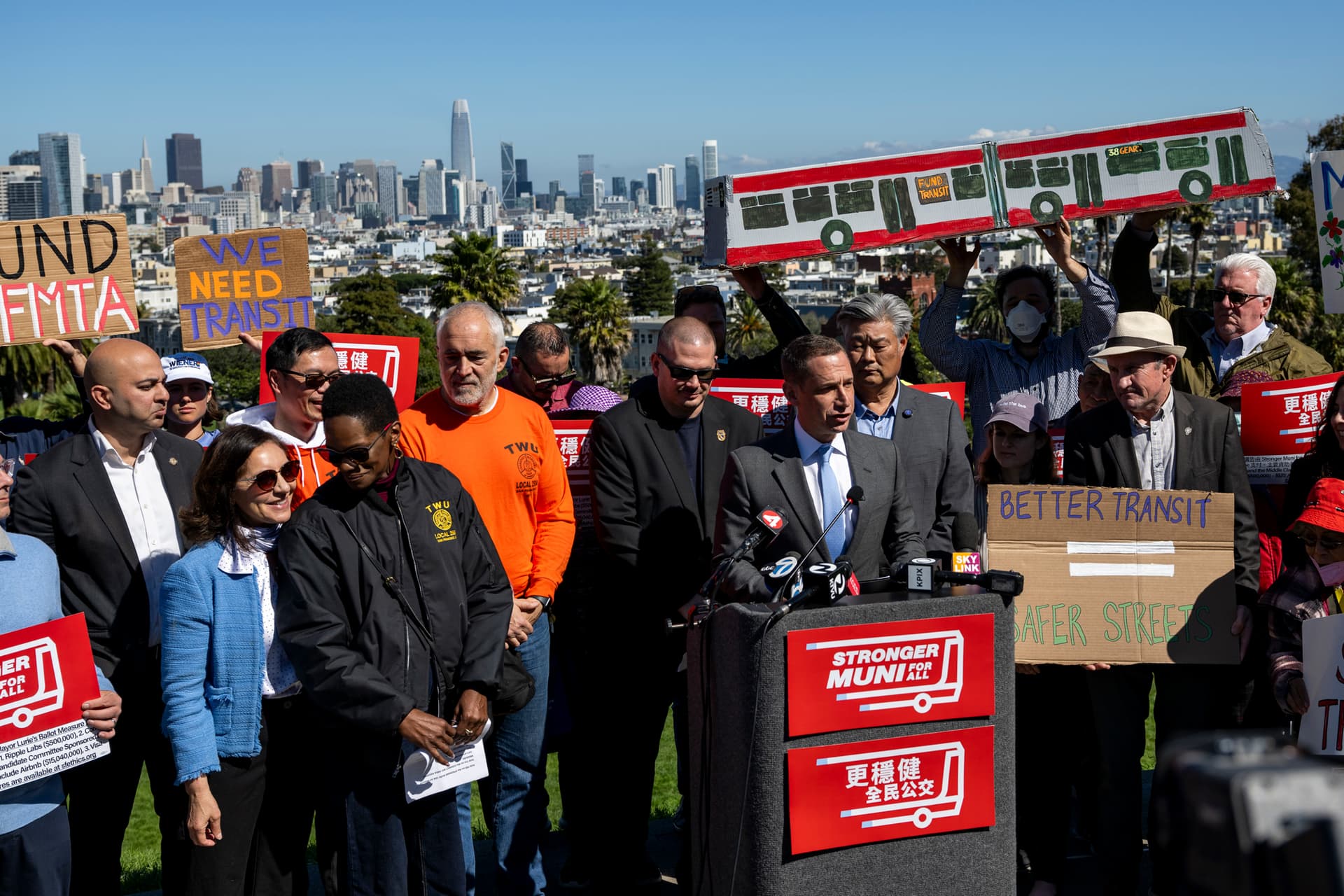
Dolores Park served as the kickoff site March 3 for the Stronger Muni For All campaign, where transit advocates, labor and city officials unveiled a prospective parcel tax intended to raise roughly $160 million a year for San Francisco Municipal Transportation to avert what supporters describe as catastrophic Muni service cuts. Campaign organizers said the revenue would stabilize service and invest in long-term safety, reliability and affordability across the city.
Mayor Daniel Lurie framed the measure as central to the city’s rebound, saying, “Muni gets people to work, and it gets our kids to school, all while cutting down on traffic congestion—saving families time and money.” Lurie added that “Safe, reliable and affordable Muni is critical to powering the economic recovery underway across San Francisco. I’m inspired by the broad coalition of San Franciscans that are all-in to pass both the local and regional transit measures in November.”
Proponents filed a notice of intent to begin collecting signatures to qualify the local ballot measure for the Nov. 3, 2026 general election and reported a July 6 deadline to submit signatures. The campaign’s published signature target appeared in the launch materials as “just over 10,6000 valid signatures,” a numeric string that reads as a typographical error and will require clarification before submission numbers are finalized.
Community advocates at the event included Dylan Fabris, identified as the community and policy manager with the nonprofit San Francisco Transit Riders, who said he would have preferred merging two transit-related measures but acknowledged the scale of Muni’s deficit means Muni needs to “self-help.” Fabris added, “It’s not one or the other. At the end of the day, we need both of these measures to pass to prevent catastrophic cuts.”
Campaign materials also highlighted recent internal cost-cutting at Muni, listing measures that proponents say eliminated more than 500 vacant positions, consolidated operations, reduced layers of management and improved service efficiency. Organizers contend those changes are “generating nearly $137 million in ongoing annual savings,” yet they say the savings are insufficient to prevent service reductions without new local funding.
A speaker identified only as Siegal urged local action, stating, “Structurally, we just need new funding, and it’s not coming from the federal government or the state government. We need to do it ourselves.” Supporters argue that without the parcel tax, riders would shift to private vehicles, worsening traffic congestion and undermining recovery, while reducing mobility for older adults, children and workers.
The launch did not disclose key parcel tax specifics such as the proposed rate, duration, exemptions, or the exact allocation of the roughly $160 million a year within Muni’s budget, nor did it identify every coalition partner by name. Campaign organizers say they will begin signature gathering ahead of the July filing deadline and pursue placement on the November ballot; passage would determine whether the city secures the new local revenue backers say Muni needs to avoid deep service cuts.
Sources:
Know something we missed? Have a correction or additional information?
Submit a Tip