Travel expert shares summer airfare savings, Southwest tightens power-bank rules
Southwest will cap flyers to one power bank starting April 20 and ban overhead-bin storage. New data points to August and Tuesday departures as summer’s biggest savings levers.
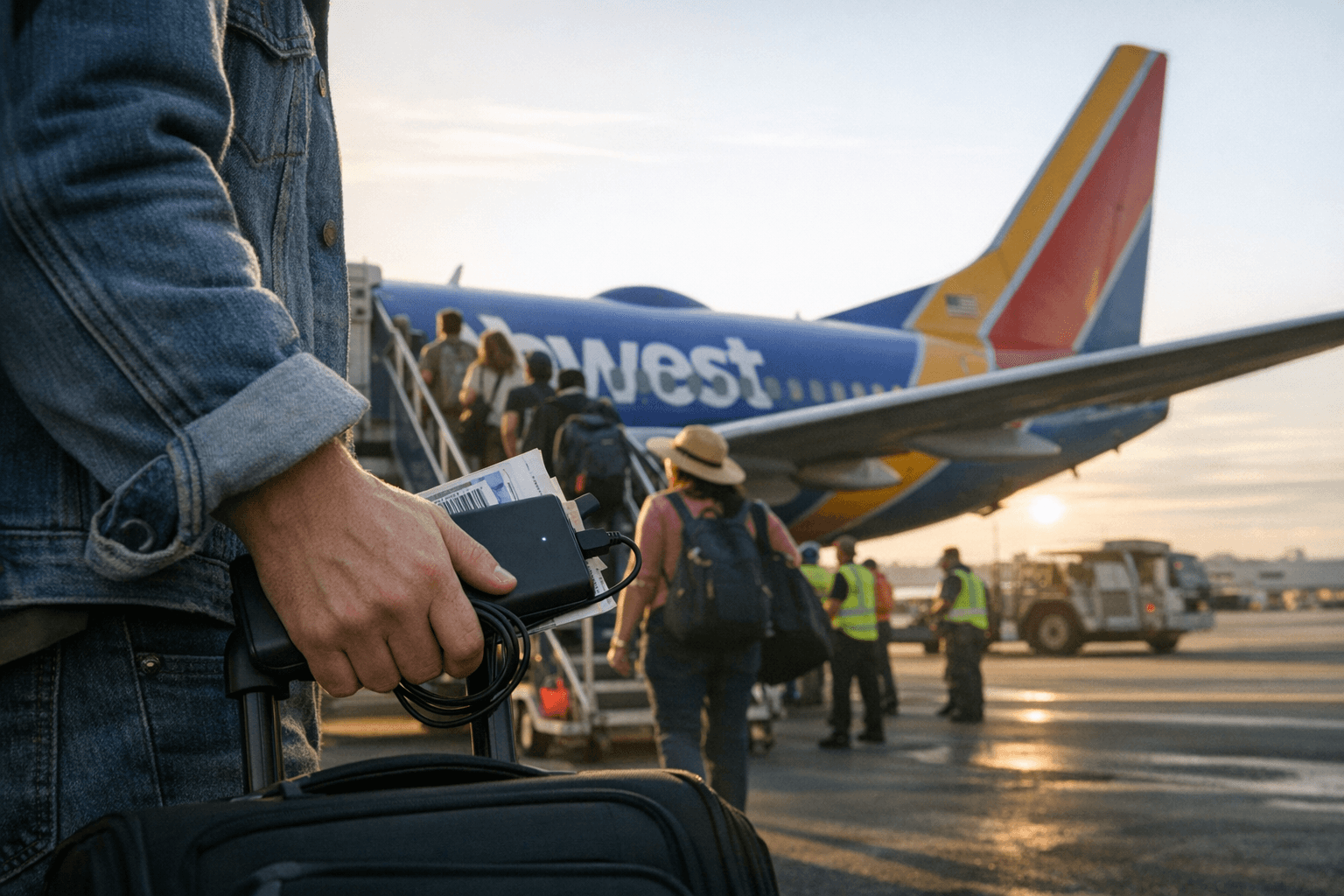
Southwest Airlines is tightening what passengers can do with portable battery chargers, a policy shift that underscores a broader summer travel reality: airlines are increasingly layering carrier-specific safety rules on top of federal standards, and travelers who miss a detail can end up repacking at the gate.
Beginning April 20, Southwest will limit each passenger to one portable charger, also known as a power bank. The airline’s policy bars storing a power bank in an overhead bin, prohibits packing it in checked luggage, and bans recharging it using in-seat power outlets. Southwest already requires passengers to keep chargers out in the open while using them so flight attendants can respond quickly if a device overheats.
Southwest Vice President of Safety and Security Dave Hunt said the airline does not plan to “aggressively enforce” the new policy by searching bags and confiscating chargers. Instead, Hunt said Southwest will emphasize education and warnings during booking and at the airport. The restriction goes beyond the International Civil Aviation Organization’s recommended limit of two chargers per passenger.
The policy arrives amid rising concern about lithium-battery overheating events. UL Standards & Engagement CEO Jeff Marootian said, “A huge part of the concern here is seeing that number of incidents continue to increase, correlating, of course, to the number of devices that people are bringing on planes.” Federal Aviation Administration data shows reported lithium-battery incidents reached 97 in 2025. Marootian said his organization hears about roughly two incidents per week and recorded a 42% increase in portable-charger incidents in 2025. A January 2025 fire on an Air Busan plane in South Korea forced the evacuation of 176 people and burned through the aircraft’s roof.
Federal baseline rules have not changed: the Transportation Security Administration allows power banks in carry-on bags but prohibits them in checked bags. The FAA similarly warns that spare, uninstalled lithium batteries and portable rechargers should remain accessible in the cabin and advises protecting battery terminals to prevent short circuits, including removing spares if a carry-on is gate-checked. Southwest’s move shows the gap travelers must manage: compliance is not just about TSA screening, but also about airline cabin rules that can be stricter and enforced at boarding.
Pricing pressure is also building as summer demand approaches. The Bureau of Labor Statistics reported April 10 that the airline-fares index increased in March, a signal that ticket prices are rising in the consumer inflation basket. Airlines Reporting Corp. reported U.S.-based travel agencies sold $9.6 billion in air tickets in February 2026, with 25.9 million passenger trips settled, and an average domestic round-trip ticket price of $601, including an average economy-class ticket price of $539.
For booking strategy, Expedia’s 2026 Air Hacks analysis points to specific windows and day-of-week levers. Expedia data indicates the most affordable booking window for domestic economy flights is 15 to 30 days before departure, averaging $130 less than bookings made more than six months out. For international trips, Expedia says travelers save about $190 on average by booking 31 to 45 days ahead, with the biggest value often appearing 8 to 14 days before departure, averaging $225 in savings. Expedia also found August is the most affordable month to travel, with flights averaging 29% cheaper than December, about $120 per ticket, and that Tuesday is the cheapest day to fly domestically, averaging 14% less than Sunday. “Business travelers head home earlier in the week,” Expedia Group Brands public relations head Melanie Fish said, pointing to “smarter travel days, like Friday.”
Taken together, the savings playbook for this summer is as much about avoiding onboard and gate surprises as it is about chasing fare drops: book in the data-backed window for the trip type, watch the calendar for August and midweek departures, and treat lithium-battery rules as a moving target that can tighten by airline with little tolerance once boarding starts.
This article was produced by Prism’s automated news system from verified source data, official records, and press releases, then run through automated quality and moderation checks before publishing. The system is built and supervised by the people who set the standards it runs under. Read our full AI policy.
Did this article answer your question?

