Treasury chief urges calm as transatlantic spat over Greenland threatens trade ties
Scott Bessent presses allies to de‑escalate at Davos, warning that retaliation would be "very unwise" and dismissing threats to dump U.S. Treasuries.
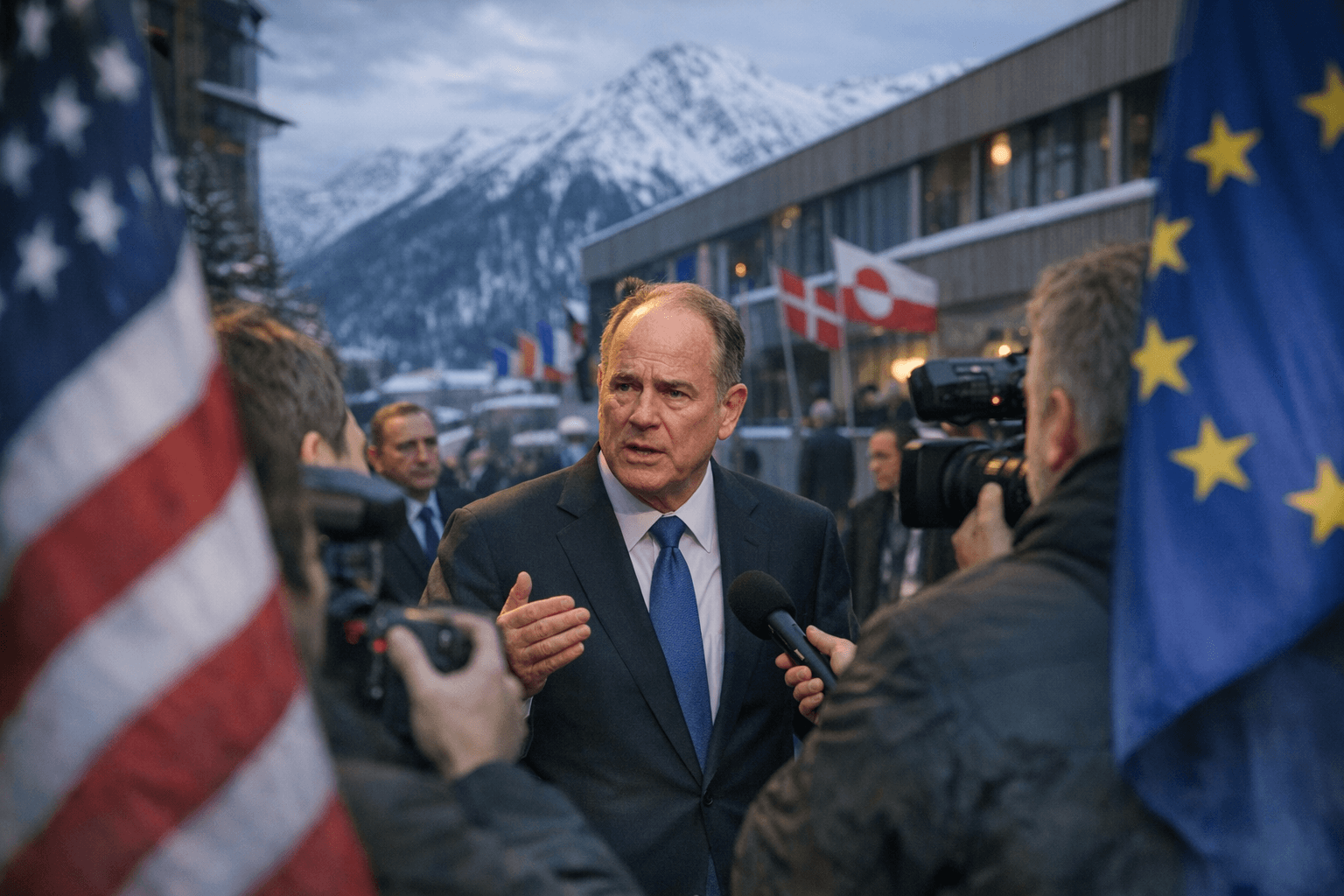
At the World Economic Forum in Davos, U.S. Treasury Secretary Scott Bessent is urging restraint as a transatlantic rift widens over President Donald Trump’s expressed interest in Greenland. Speaking to reporters at the U.S. venue in Davos, Bessent told interlocutors to "take a deep breath" and expressed confidence that leaders will avoid escalation, saying he is "confident that the leaders will not escalate" and that the dispute will "work out in a manner that ends up in a very good place."
Bessent framed Greenland explicitly as a strategic interest for the United States, telling European counterparts that the island is fundamental to U.S. national security and asserting, "We are not going to outsource our hemispheric security to anyone else." He advised allies to "take the president at his word" about Washington’s intentions and cautioned that reciprocal trade measures would be counterproductive, calling any retaliatory tariffs "very unwise." He also downplayed the prospect that Europe could credibly threaten U.S. economic stability by selling U.S. Treasuries, dismissing that as an appropriate response to a diplomatic dispute.
European leaders have signaled both alarm and readiness to respond if threatened measures move forward. European Council President António Costa warned that tariffs would undermine transatlantic relations and run counter to the existing trade framework. The European Commission has indicated a preference "to engage, not escalate" while remaining prepared to act should tariffs be imposed. Several capitals have discussed activating the bloc’s Anti-Coercion Instrument, a mechanism that allows the EU to deploy import or export restrictions and targeted retaliatory measures to deter economic pressure from third countries.
The standoff has prompted high-level contacts across institutions. European Commission President Ursula von der Leyen met with a bipartisan U.S. congressional delegation in Davos and stressed respect for the sovereignty of Greenland and the Kingdom of Denmark. German and French officials have taken firm public positions: some described the U.S. rhetoric as coercive, while Germany’s chancellor has sought a direct meeting with President Trump in Davos. At the same time, vice‑chancellors and foreign ministers emphasized the potential long-term damage to diplomatic and commercial ties.
The economic stakes underlying the confrontation are substantial. The EU and United States had bilateral goods and services trade valued at roughly €1.7 trillion in 2024, an exchange equating to about €4.6 billion per day. That scale informs European warnings that even limited tariffs could reverberate through supply chains and political constituencies on both sides of the Atlantic, complicating domestic politics and elections in EU member states and in the United States.
Diplomatically, the dispute tests the resilience of post‑war transatlantic institutions. EU leaders are convening an emergency meeting in Brussels after Davos to coordinate policy options, underscoring reliance on collective decision making under the ACI framework. Bessent acknowledged heavy diplomatic traffic, noting "evidently there are a lot of inbounds" from European capitals seeking clarification.
The immediate outlook is cautious: U.S. officials are urging de‑escalation while European institutions ready defensive tools that could be costly for both sides. The confrontation places trade and security policy at a collision point, forcing Western democracies to weigh alliance management against domestic political pressures with potentially lasting consequences for economic interdependence.
This article was produced by Prism’s automated news system from verified source data, official records, and press releases, then run through automated quality and moderation checks before publishing. The system is built and supervised by the people who set the standards it runs under. Read our full AI policy.
Did this article answer your question?

