Treasury rout tests Washington’s tolerance for higher borrowing costs
Higher Treasury yields are already lifting mortgage, card and business loan costs as Washington faces a $1 trillion interest bill and a test of fiscal tolerance.
Higher Treasury yields are pushing up mortgage rates, credit card costs and business loans just as Washington faces a growing bill for its own borrowing. The jump in long-term Treasury rates has tightened the room to finance federal deficits cheaply, and it is forcing President Donald Trump and congressional Republicans to confront a market that can quickly turn higher borrowing costs into a political problem.
The benchmark 10-year Treasury yield sat around 4.6% to 4.7% in mid-May, while the 30-year yield climbed above 5.1% and at points reached about 5.2%, the highest level since 2007. That level matters far beyond Wall Street. When Treasury yields rise, lenders typically pass the increase through to households and companies, making mortgages, credit cards and business loans more expensive and raising the risk of strain across the economy.

The selloff also carries a sharper warning for Washington. Some Republicans in Congress have grown uneasy about Trump’s calls for more spending ahead of the midterm elections, when thin GOP control of the House and Senate will be on the line. Bond investors are signaling that fiscal discipline is not optional when debt loads are already large and the market is demanding a higher return to lend to the government.
Part of the move has been linked to inflation fears tied to the U.S.-Iran conflict, along with broader concerns that heavy federal borrowing is running into weak demand for bonds. The old bond vigilantes theme has returned, describing investors who pressure governments toward restraint by selling bonds or demanding higher yields. The message is especially stark in the long bond market: the 30-year yield has not been this high since the run-up to the 2008 global financial crisis.
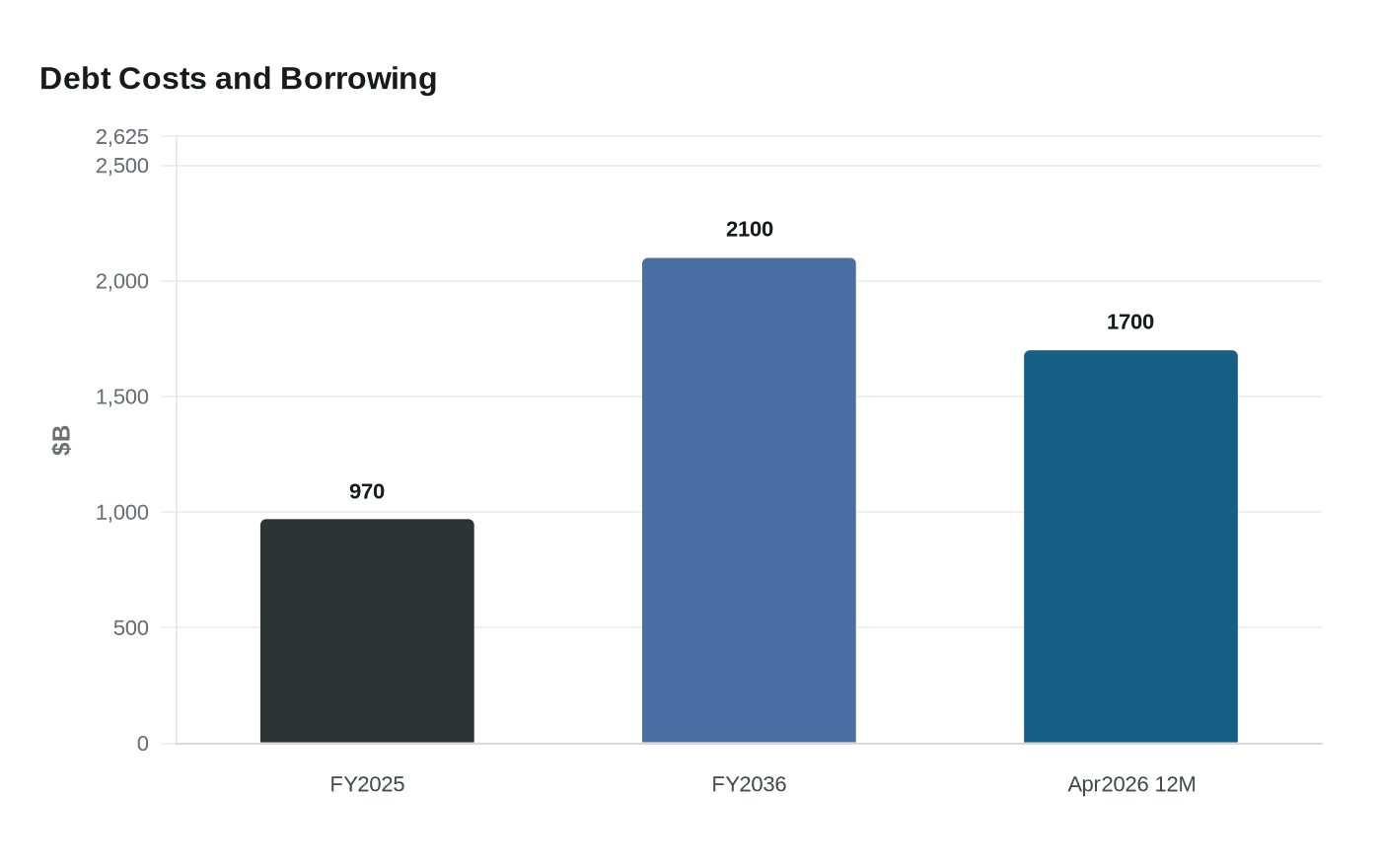
The budget math is becoming harder to ignore. The Committee for a Responsible Federal Budget said net interest on the national debt was about $970 billion in fiscal 2025 and is projected to exceed $1 trillion in fiscal 2026 before rising to about $2.1 trillion by fiscal 2036. It also said the federal government borrowed about $1.7 trillion over the 12 months through April 2026.
Treasury Fiscal Data shows the debt picture in real time through its Debt to the Penny dataset, updated daily, and its Monthly Statement of the Public Debt, which tracks debt held by the public and by government agencies. Together, those figures underscore the same risk now pressing on the market: if yields stay elevated, Washington’s margin for tax cuts, new spending and cheap refinancing narrows fast.
This article was produced by Prism’s automated news system from verified source data, official records, and press releases, then run through automated quality and moderation checks before publishing. The system is built and supervised by the people who set the standards it runs under. Read our full AI policy.
Did this article answer your question?