Treasury secretary abandons restraint and criticizes Fed chair in public clash
Scott Bessent breaks months of silence to openly criticize Fed chair Jerome Powell, raising questions about central bank independence and market stability.
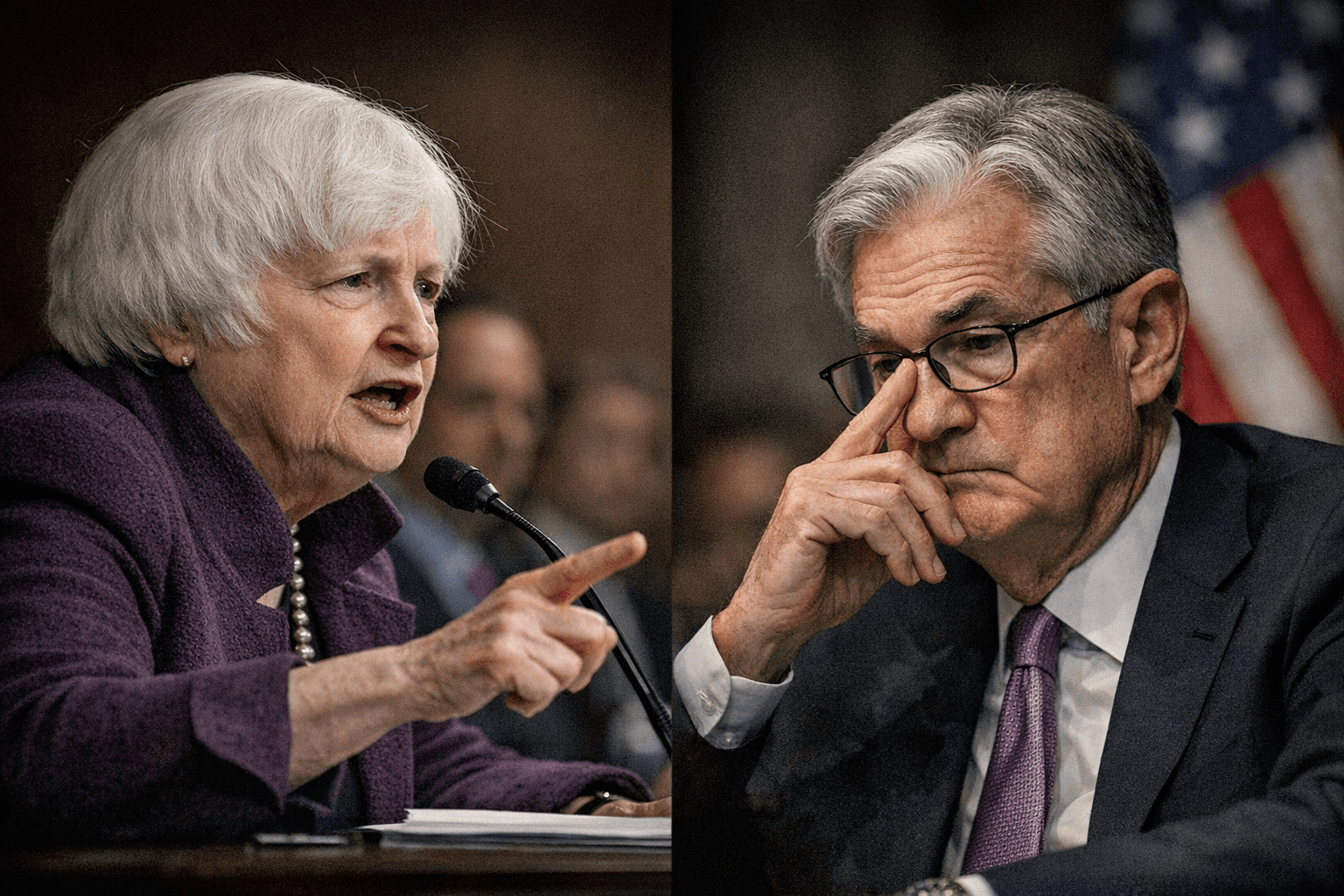
Scott Bessent, who had acted as a moderating force between President Trump and the Federal Reserve, has publicly turned on Fed Chair Jerome Powell, ending months of quiet diplomacy and escalating a rare public feud between the Treasury and the central bank. On January 24, 2026, Bessent’s shift into an outspoken critic marks a significant break in the usual norms that separate fiscal policy from monetary authority.
Bessent’s emergence as a public antagonist comes after a sustained period in which he privately sought to smooth tensions between the White House and the Fed. That restraint had been credited with limiting market frictions as the Fed navigated higher interest rates and the Treasury managed heavy borrowing needs. The abrupt change signals that internal disagreements over the central bank’s strategy or communications have spilled into the open, altering the political and economic landscape.
The immediate market implication of a public rift between the Treasury and the Fed is uncertainty. Investors prize clear boundaries that protect central bank credibility; when those boundaries blur, risk premia can rise. Capital markets respond to perceived weakening of central-bank independence with higher term premiums on government debt and elevated volatility across assets. For the Treasury, higher yields translate directly into larger borrowing costs, complicating debt management and fiscal planning at a time when the United States is carrying elevated debt levels after pandemic-era spending and recent budget choices.
Beyond raw market movements, the dispute threatens to complicate the Fed’s core mission of price stability. The central bank relies on expectations management; if fiscal authorities are seen as politicizing monetary decisions, inflation expectations could drift, forcing the Fed into either a more aggressive policy stance or into credibility-restoring measures that tighten financial conditions. For households and businesses, that scenario could mean higher rates on mortgages and loans and a slowdown in investment, with knock-on effects for growth.
The conflict also raises institutional questions. Treasury secretaries historically avoid direct public confrontations with the Fed to preserve a functional separation between debt management and monetary policy. Bessent’s new posture indicates either a belief that Powell’s approach is materially damaging to economic goals or a strategic calculation tied to broader political priorities. Either way, the episode highlights a longer-term trend: the increasing politicization of central banking in advanced economies amid higher debt burdens and slower potential growth.
Foreign investors and central banks will be watching closely. Confidence in U.S. policy coordination underpins demand for Treasury securities; any signal that coordination is fracturing may encourage portfolio shifts that strengthen funding pressures. In turn, that dynamic would influence the dollar, import prices, and global financial stability.
As markets digest the development, all eyes will be on the Fed’s next communications and on Treasury debt auctions. How Powell responds and whether the White House signals new priorities will determine whether this becomes a contained dispute or the start of a protracted battle that reshapes expectations, raises borrowing costs, and complicates both the inflation fight and the long-run fiscal outlook.
This article was produced by Prism’s automated news system from verified source data, official records, and press releases, then run through automated quality and moderation checks before publishing. The system is built and supervised by the people who set the standards it runs under. Read our full AI policy.
Did this article answer your question?

