Trojan Horse myth still fuels debate over the Trojan War
Odysseus is tied to the Trojan Horse, but Homer leaves the episode offstage, and that gap still drives the myth-versus-history debate. Modern retellings now question the heroics of deception itself.
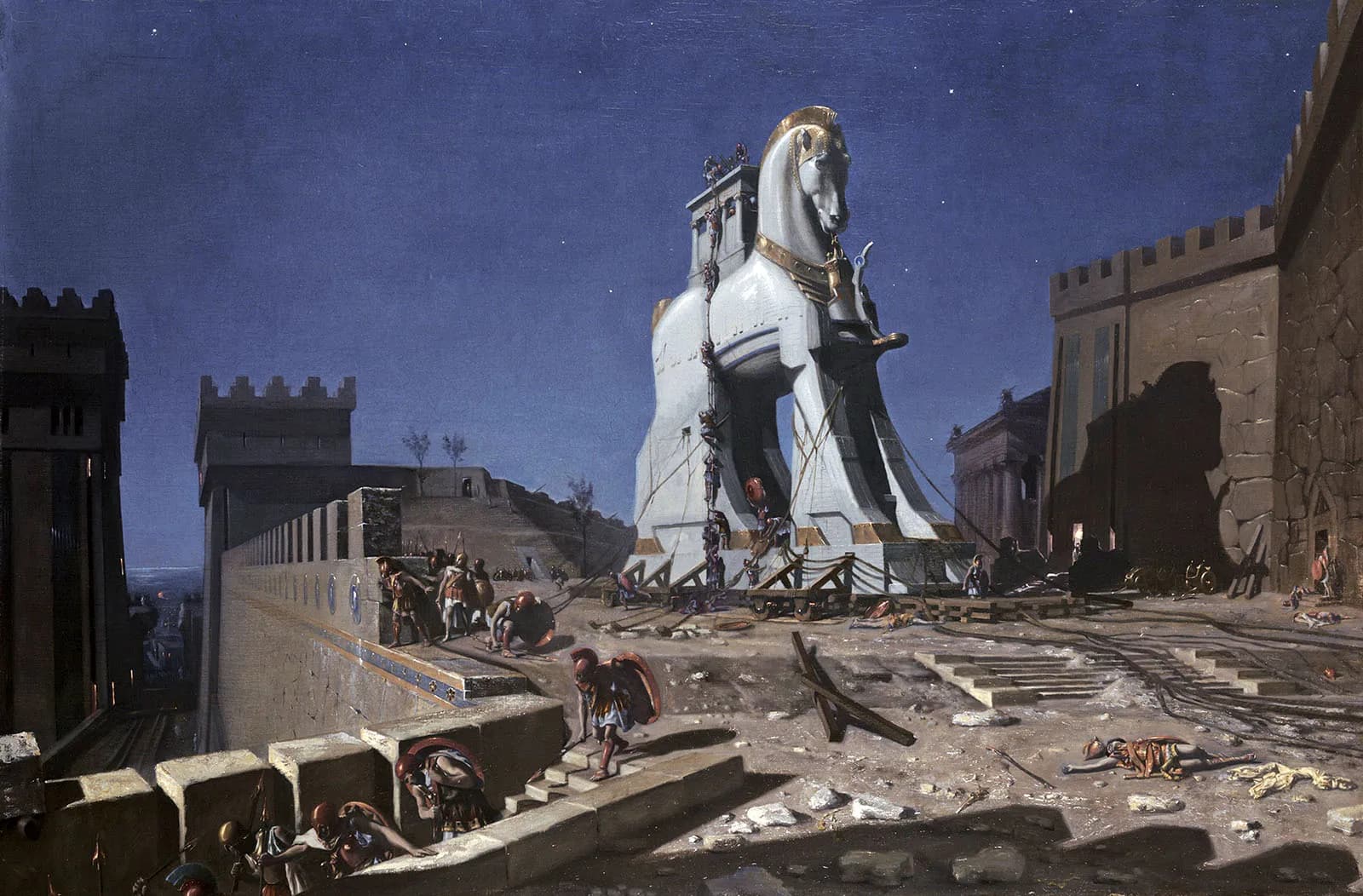
Odysseus is traditionally credited with devising the Trojan Horse, yet Homer never stages the famous breach in the Iliad. That omission matters because it leaves one of Western literature’s most durable images, a giant wooden horse hiding Greek soldiers, to be carried by later storytellers, historians, and museum curators rather than by Homer’s battlefield narrative.
The scene Homer never tells
The Iliad ends before Troy’s final destruction, so the horse is not described there in detail. That gap has forced readers to reconstruct the story from the wider Trojan cycle, where the horse becomes the turning point that allows the Greeks to enter Troy and bring the city down. In the traditional telling, the stratagem belongs to Odysseus, whose intelligence is as central to his identity as his courage.
That division between the epic’s ending and the war’s outcome has shaped how the myth is read. The Trojan Horse is not just an object in the story; it is the device that turns a siege into a deception, and deception into victory. Because Homer leaves the act offstage, the horse has become a symbol that later writers could reinterpret far more freely than a fully narrated scene.
Why the horse outlived the war
Encyclopedia Britannica treats the Trojan Horse as both part of the Trojan War tradition and a metaphor for deception. That double meaning explains its staying power: it is at once a plot device in an ancient legend and a shorthand for hidden danger in modern language. Few mythic images move as easily between literature, politics, and everyday speech.
The broader Trojan War story also helps keep the horse in circulation. In the mythic tradition, the conflict lasted a decade, centered on Troy in Anatolia and the feud involving Helen of Troy, Menelaus, and Paris of Troy. History and literature sources generally place the war in the late Bronze Age, which gives the legend a kind of historical shadow even when the details remain uncertain.
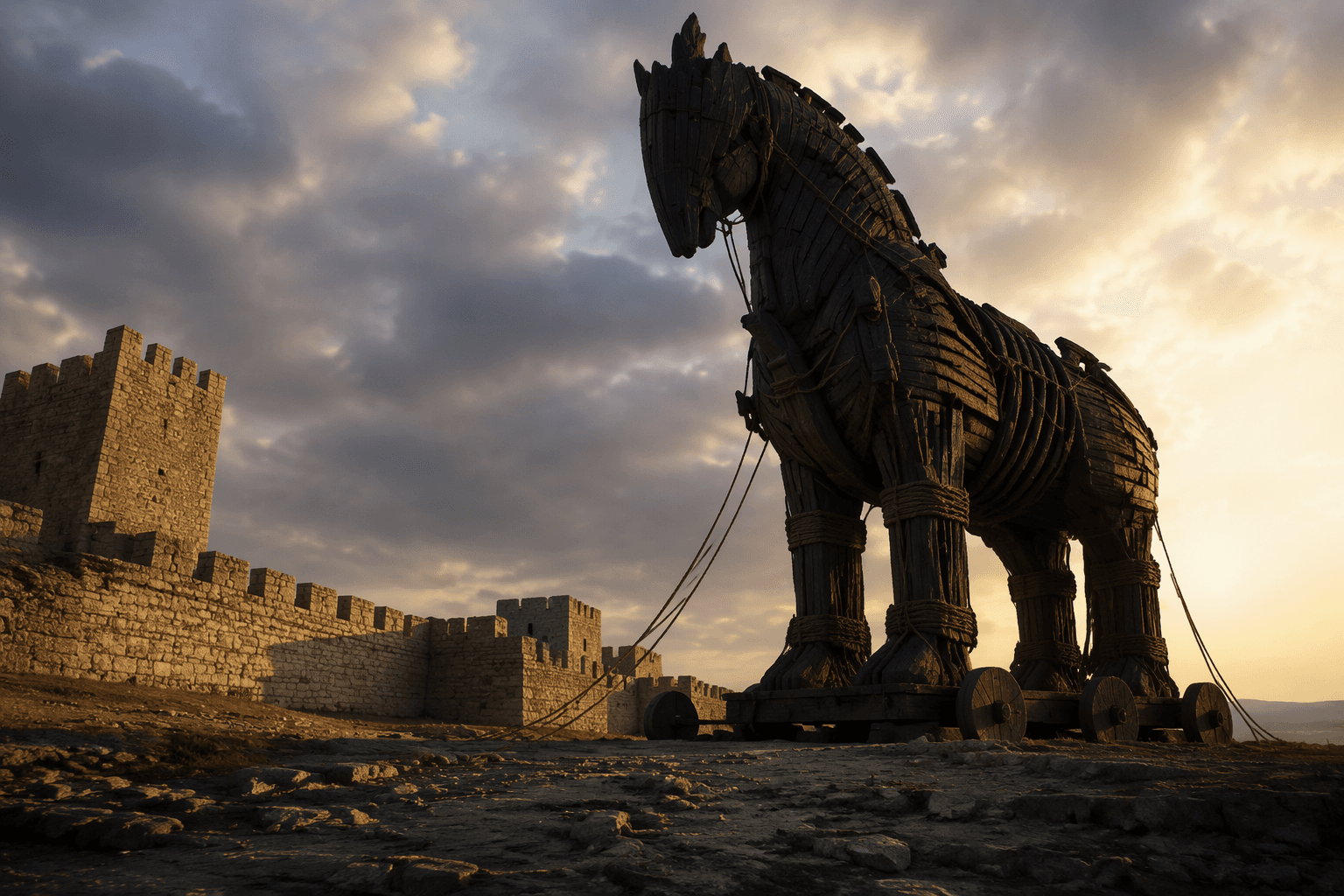
Myth, history, and the long afterlife of Troy
The question of whether the Trojan War was historical or largely mythic has never gone away. A BBC piece published on January 6, 2020, revisited that dispute and noted the story’s long afterlife in literature, from Homer’s Odyssey to Alexander Pope. History.com’s overview of the Trojan War, published on December 18, 2009 and last updated on May 27, 2025, similarly presents the war within the epic tradition rather than as a settled historical record.
That tension between evidence and legend is exactly what keeps Troy in public conversation. The British Museum’s Troy: myth and reality exhibition ran in London from November 21, 2019 to March 8, 2020, and explicitly explored the relationship between the mythic tale and possible historical foundations. Its framing captured the central problem of the Trojan Horse: the story is powerful enough to feel real, even when its most famous episode survives more securely as literature than as history.
What modern readers are really questioning
The deeper shift in recent retellings is not whether Odysseus was clever. It is whether the old celebration of cunning still deserves admiration when that cunning is attached to mass violence, concealment, and the fall of a city. The Trojan Horse has endured because it rewards the victor’s intelligence, but it also exposes how war stories depend on the winners’ version of events.
That is why the horse now carries two meanings at once. It remains a master image of strategy, yet it also stands for hidden danger and for the uneasy way societies turn violence into legend. Odysseus’s association with the horse has made him the face of that contradiction, and the debate over Troy persists because the myth itself never lets victory and deception separate cleanly.
This article was produced by Prism’s automated news system from verified source data, official records, and press releases, then run through automated quality and moderation checks before publishing. The system is built and supervised by the people who set the standards it runs under. Read our full AI policy.
Did this article answer your question?