Trump Administration Invokes National Security to Resume White House Ballroom Construction
The DOJ invoked national security in a bid to resume the $400 million White House ballroom project, even as the judge who halted construction reviewed classified evidence and disagreed.
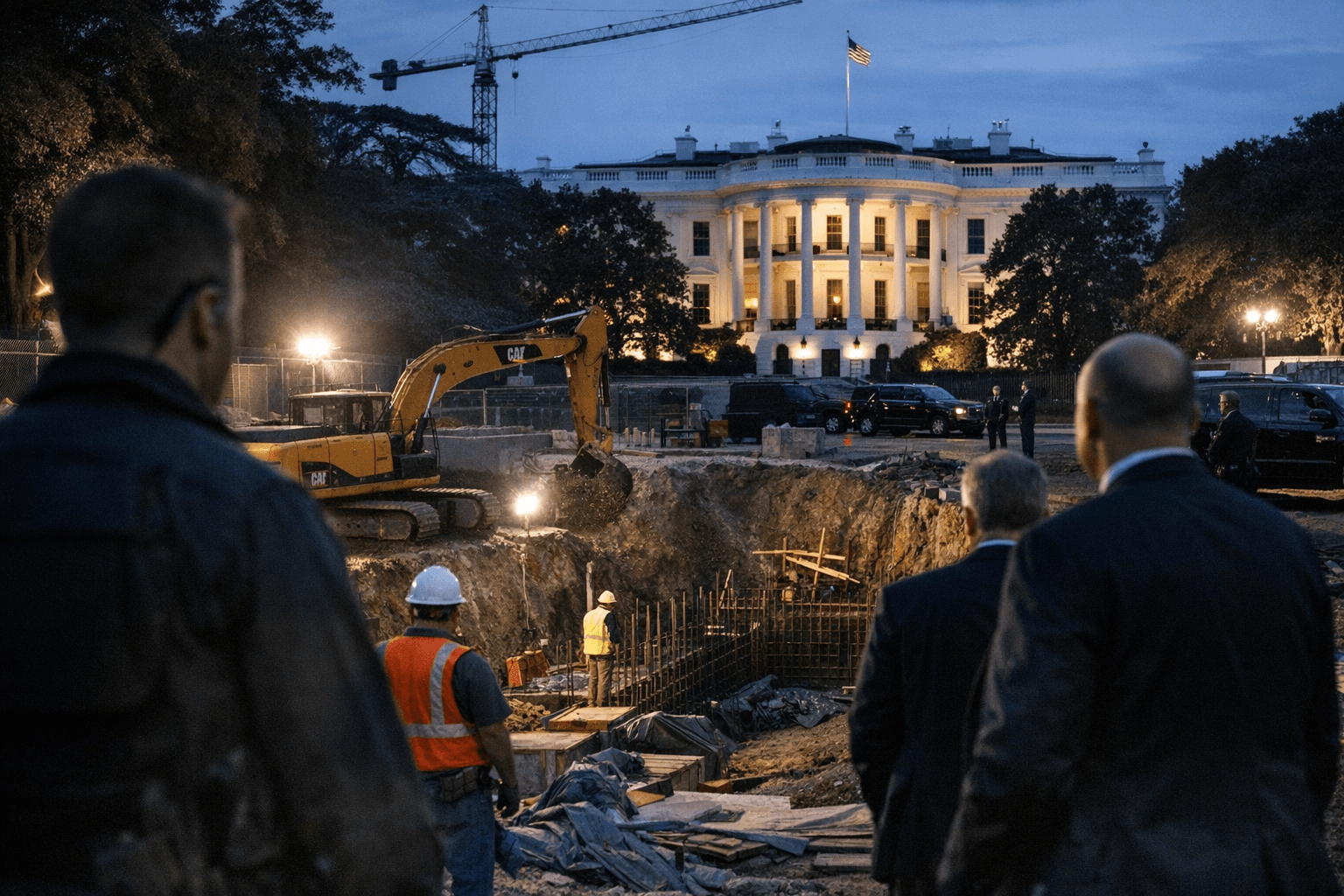
The Justice Department filed an emergency appeal Friday arguing that a federal judge's order halting construction of a $400 million White House ballroom poses a grave threat to presidential security, even as that same judge concluded, after reviewing classified government materials, that pausing the project would not jeopardize national security.
Assistant Attorney General Brett A. Shumate filed the motion with the U.S. Court of Appeals for the D.C. Circuit, arguing that U.S. District Judge Richard J. Leon's injunction was "threatening grave national-security harms to the White House, the President and his family, and the President's staff." The appeal revealed that the ballroom project encompasses bomb shelters, military installations, and a medical facility. Secret Service Deputy Director Matthew Quinn signed a declaration warning that a construction pause "would leave the contractor's obligation unfulfilled in this regard and consequently hamper the Secret Service's ability to meet its statutory obligations and protective mission."
Leon, a George W. Bush appointee, issued the preliminary injunction on March 31 after finding that "no statute comes close to giving the President the authority he claims to have." He wrote that "The President of the United States is the steward of the White House for future generations of First Families. He is not, however, the owner!" The Justice Department filed its notice of appeal roughly 90 minutes after the ruling; the injunction takes effect April 14.
The appeal also contained an unusual 130-word passage that read less like legal argument than promotional copy: "Private donors and American Patriots singlehandedly funded the 300 to 400 Million Dollar project (depending on finishes), which is on budget and ahead of schedule. No taxpayer dollars are being used for the funding of this beautiful, desperately needed, and completely secure (for national security purposes) ballroom." CBS News raised questions about whether Trump had a hand in drafting the brief; a White House spokesperson did not respond to two inquiries.
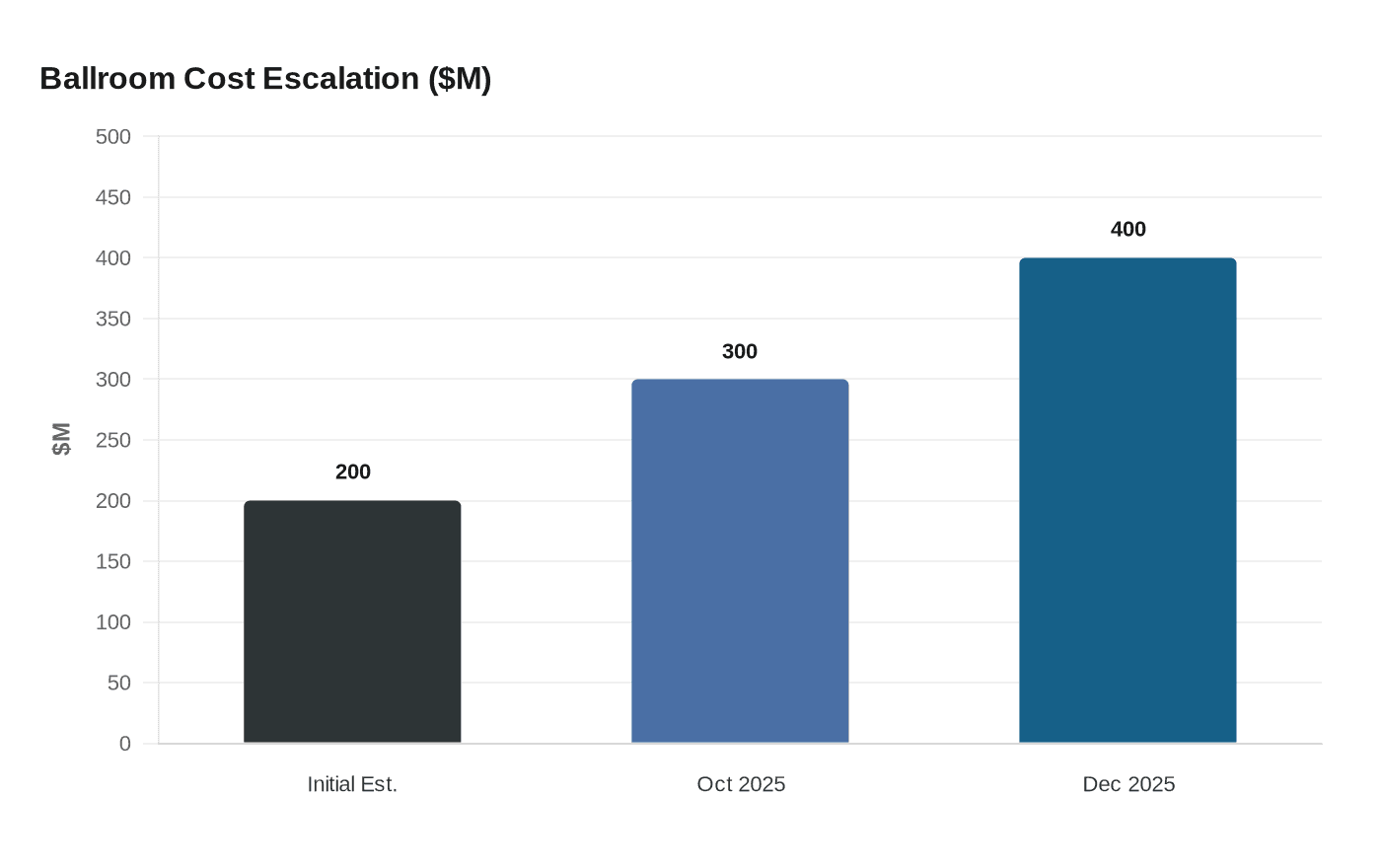
The project has drawn sustained scrutiny over its scale and cost trajectory. Trump ordered the demolition of the White House East Wing in October 2025 to clear the site for the ballroom, designed by architect Shalom Baranes at approximately 90,000 square feet, nearly twice the size of the 55,000-square-foot Executive Mansion. The cost estimate escalated from $200 million to $300 million in October 2025 and then to $400 million in December 2025. While the administration says the ballroom is privately funded, with Alphabet contributing $22 million as part of a legal settlement and Comcast among corporate donors, the underground military complex is taxpayer-funded at a classified, undisclosed cost.
The demolished East Wing housed the Presidential Emergency Operations Center, the bunker where Vice President Dick Cheney sheltered on September 11, 2001. That facility was dismantled as part of the demolition and is being replaced by a deeper underground complex. Trump himself disclosed the underground scope in March 2026, telling reporters aboard Air Force One that "the military is building a massive complex under the ballroom," later acknowledging the project "was supposed to be secret."
At the core of the case is whether the president needs congressional authorization to build on White House grounds. The administration contends that decisions about presidential security "cannot possibly be outsourced to other branches of government," and has signaled it is prepared to take the dispute to the Supreme Court. National Trust for Historic Preservation president Carol Quillen, whose organization filed suit in December 2025, called Leon's ruling "a win for the American people on a project that forever impacts one of the most beloved and iconic places in our nation.
This article was produced by Prism’s automated news system from verified source data, official records, and press releases, then run through automated quality and moderation checks before publishing. The system is built and supervised by the people who set the standards it runs under. Read our full AI policy.
Did this article answer your question?

