Trump allies fast-track approval of proposed Washington triumphal arch
The fine arts commission cleared a modified 250-foot arch for Memorial Circle after nearly 1,000 all-opposed comments. Veterans and lawmakers are still trying to stop it.
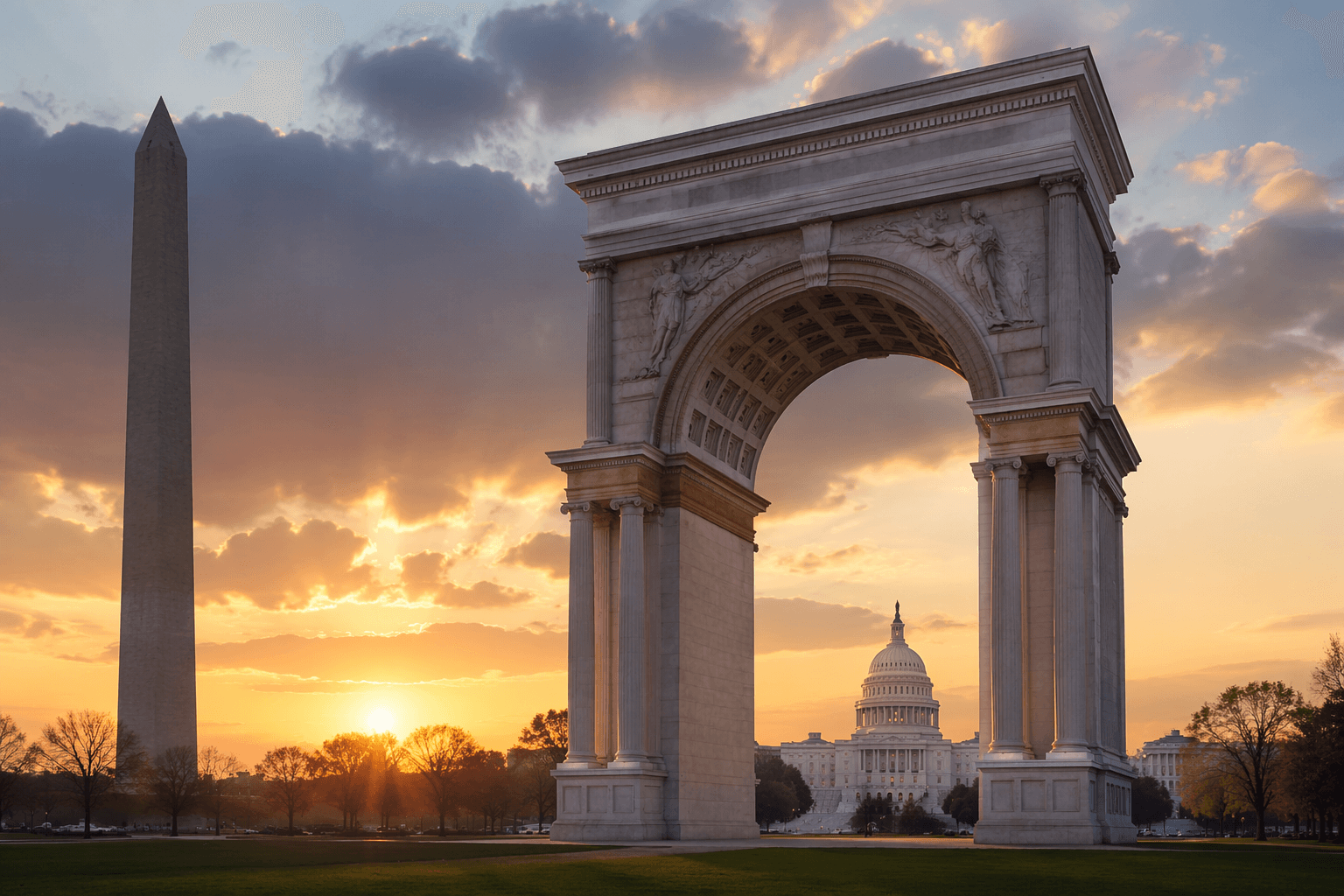
The U.S. Commission of Fine Arts approved a modified design for the proposed United States Triumphal Arch in April 2026, pushing forward a 250-foot monument at Memorial Circle even after nearly 1,000 public comments came in against it. The fast-moving approval has sharpened questions about how much influence a small group of Trump allies had over a national memorial project that normally would move through a slower, broader review.
National Park Service documents describe the arch as a reinforced-concrete structure clad in granite and ornamented by a central winged figure and two eagles. The site sits on Columbia Island at the western end of Arlington Memorial Bridge and Memorial Avenue, directly across the Potomac from the Lincoln Memorial and on the Virginia side of the river. The agency says the arch is meant to honor the nation’s 250th anniversary, reflect American founding principles and draw on the Roman precedent of freestanding triumphal arches as a ceremonial gateway into Washington and toward Arlington National Cemetery.
The project has been wrapped in federal process requirements because it is a public undertaking on Interior Department land. The National Park Service says it is subject to Section 106 review under the National Historic Preservation Act of 1966, and the agency has already posted an environmental assessment, a finding of no significant impact, a Section 106 assessment of effect and a draft programmatic agreement for public comment. The park service also says the site already functions as part of an Avenue of Heroes corridor.
The April vote by the fine arts commission came after a flood of opposition. Thomas Luebke, the commission’s secretary, said all of the nearly 1,000 comments submitted were opposed to the project. The review has also drawn political resistance: two House Democrats introduced legislation to block the arch, while the Trump administration has argued that projects on Interior Department land do not need congressional approval.
The legal fight escalated in February 2026, when Vietnam War veterans filed suit to stop the monument, saying the administration lacked authorization from Congress. The arch has become one of the clearest flashpoints in the National Park Service’s Freedom 250 campaign, the official national commemoration of the United States’ 250th anniversary, where the dispute is no longer just about a memorial but about who controls the process that puts monuments on Washington’s ceremonial core.
This article was produced by Prism’s automated news system from verified source data, official records, and press releases, then run through automated quality and moderation checks before publishing. The system is built and supervised by the people who set the standards it runs under. Read our full AI policy.
Did this article answer your question?