Trump and Iran digitally sign deal ahead of Geneva ceremony
Trump and Masoud Pezeshkian signed the Iran deal two days early, turning a planned Geneva ceremony into a rush to lock in a 60-day cease-fire.
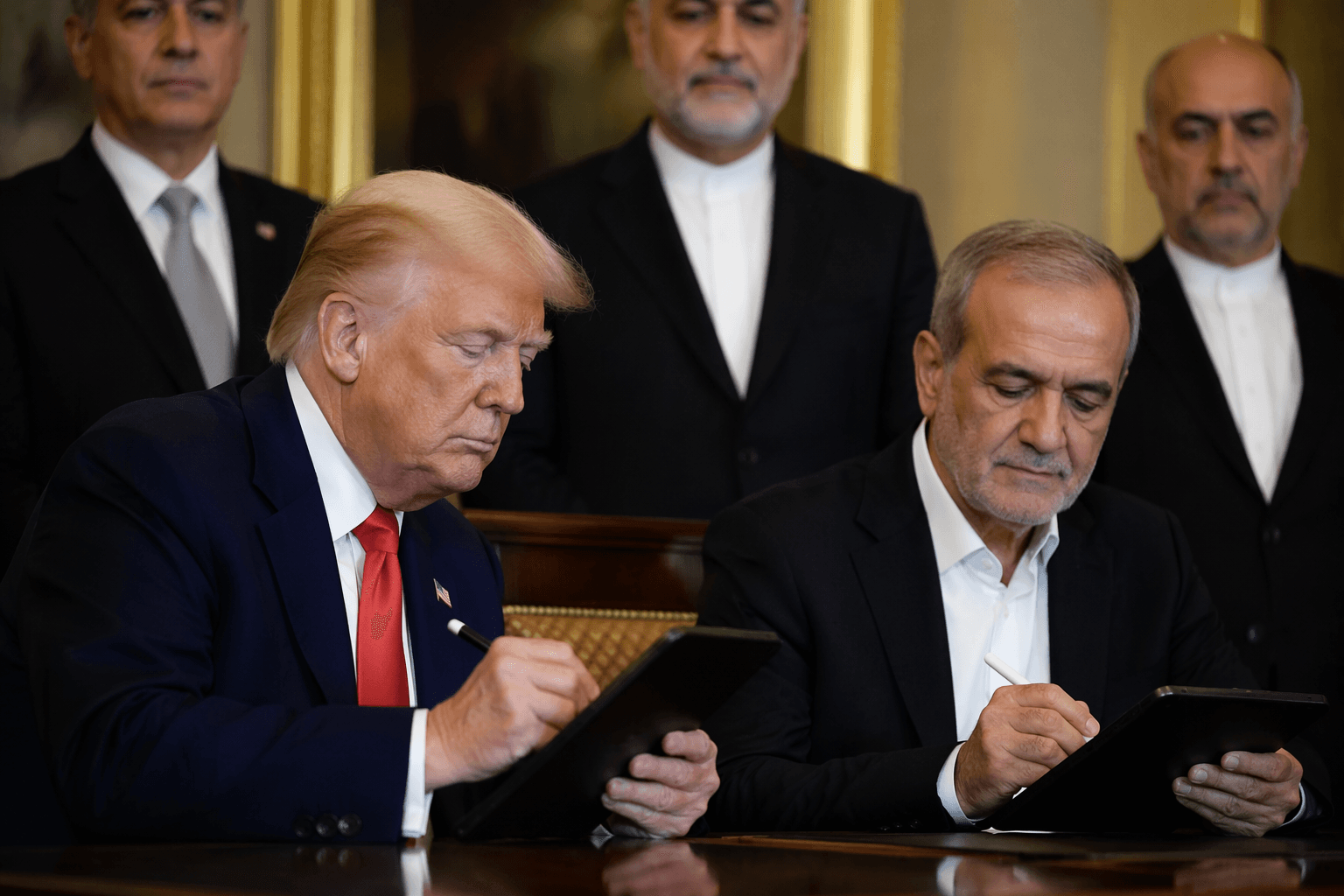
The United States and Iran moved to lock in their war-ending framework two days before a planned Geneva ceremony, digitally signing the memorandum of understanding on Wednesday, June 17, 2026. President Donald Trump and Iranian President Masoud Pezeshkian both signed remotely, and U.S. and Iranian officials said the agreement was already in force as the formal Friday meeting in Geneva was still being prepared.
The pace mattered as much as the text. Time described the deal as a 14-point agreement built around an extended 60-day cease-fire and the reopening of the Strait of Hormuz, while reporting that military operations would end on all fronts, including Lebanon. The New York Times said the document still left Iran’s nuclear program unresolved and preserved a 60-day window for additional decisions, a sign that the rush to sign did not settle the hardest questions. Vice President J.D. Vance had been expected to represent the United States in Switzerland for the original ceremony.
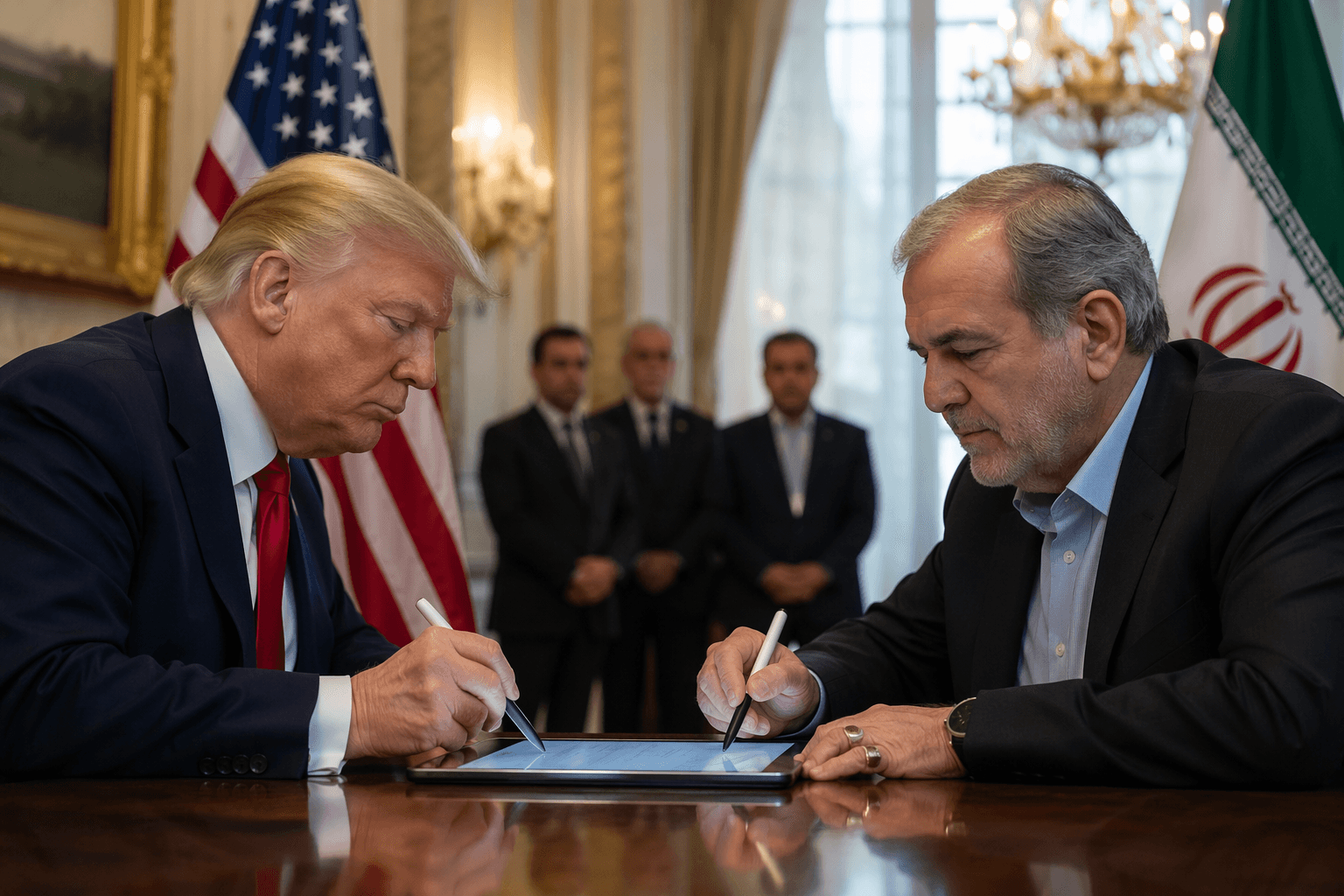
The early signing suggested both governments wanted momentum before opposition could harden. Trump defended the agreement at the G7 summit in Évian-les-Bains, France, even as he said it might not be permanent, underscoring how politically fragile the deal remained. Reuters-derived reporting cited by Time said Trump, Vance and Mohammad Bagher Ghalibaf, Iran’s parliamentary speaker and chief negotiator, had already signed virtually on Sunday before the Wednesday formalization, a sequence that pointed to a deliberate effort to bind the framework before it could unravel.
The stakes reached far beyond diplomacy. Axios reported that the memorandum was already in effect when the remote signing became public, and Pakistan’s Prime Minister Shehbaz Sharif said the agreement took effect with immediate effect and that Hormuz would reopen instantly. CNBC reported that markets responded quickly, with oil prices and bond yields falling after the preliminary deal. That reaction showed why the timetable mattered: both sides were trying to seize control of events before military pressure, economic pain or political resistance could close the window.
This article was produced by Prism’s automated news system from verified source data, official records, and press releases, then run through automated quality and moderation checks before publishing. The system is built and supervised by the people who set the standards it runs under. Read our full AI policy.
Did this article answer your question?


