Trump and Netanyahu Launched Iran War With No Clear Exit Strategy
A month into Operation Epic Fury, neither Trump nor Netanyahu can define what victory looks like, leaving global markets rattled and the Strait of Hormuz blocked.
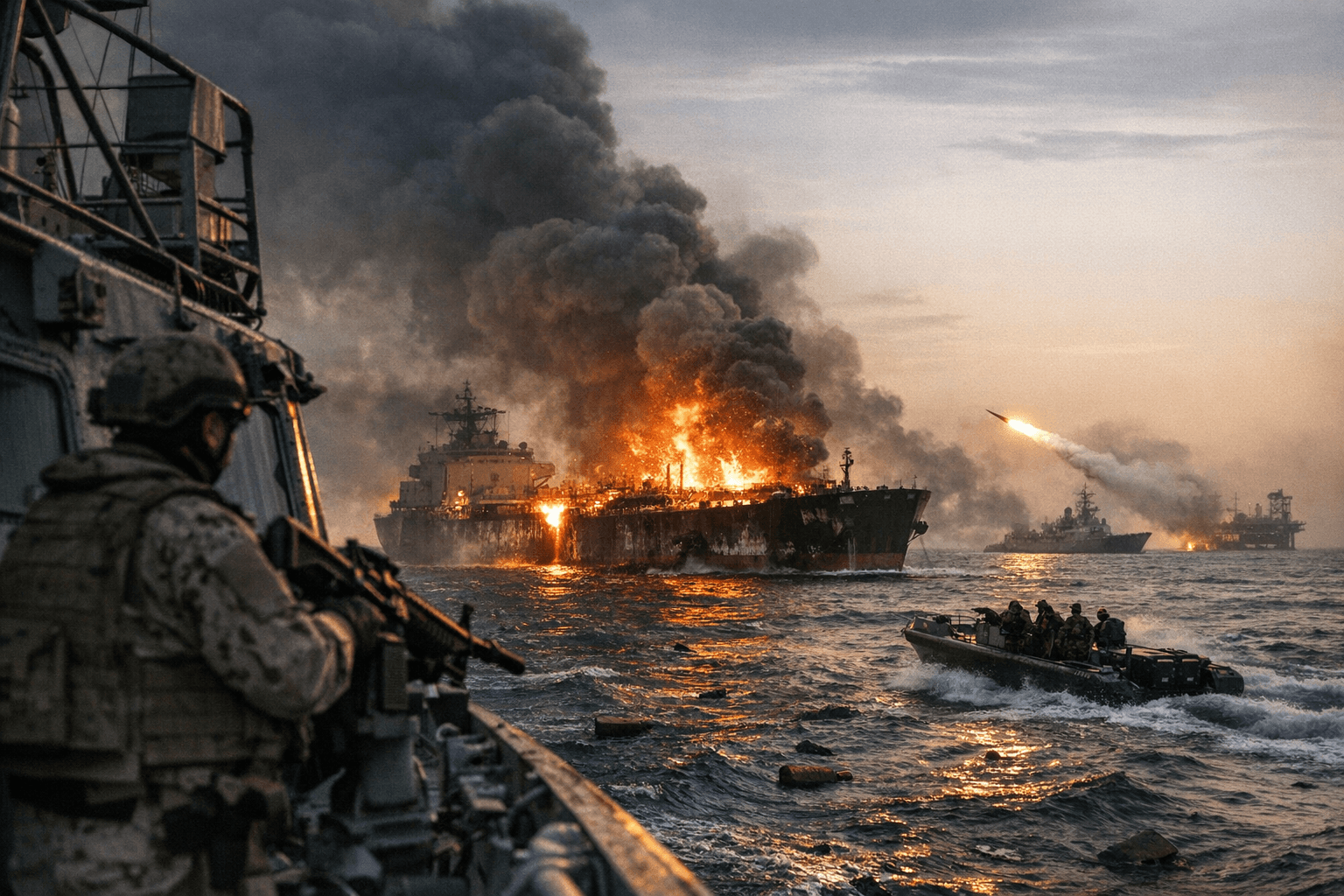
When U.S. and Israeli warplanes launched Operation Epic Fury on February 28, 2026, the opening salvo killed Iranian Supreme Leader Ali Khamenei within hours. Trump announced the strikes in a recorded address, framing the mission as eliminating "imminent threats from the Iranian regime" and ensuring Tehran "can never have a nuclear weapon." What neither he nor Benjamin Netanyahu announced, because neither had fully worked it out, was how the war would end.
A month later, that omission defines the conflict.
A War Built on Optimism, Not Strategy
Trump reportedly wanted a Venezuela moment in Iran: strike fast, decapitate the leadership, install someone friendlier, declare victory, and go home with minimal cost to the United States. It did not go that way. Iran retaliated with hundreds of missiles and thousands of drones across the Middle East, leaving enormous damage and thousands of casualties. Some analysts said the Trump administration was convinced to go to war by Netanyahu, who has been seeking U.S. military intervention in Iran for decades, and that Trump was buoyed by a swift U.S. military operation in Venezuela and did not think through the consequences.
The buildup itself telegraphed ambition without blueprint. By February 19, the U.S. military presence was described as the largest in the Middle East since the 2003 invasion of Iraq. At the State of the Union address on February 24, 2026, Trump stated that Iran had restarted its nuclear program and was developing missiles capable of striking the United States. On February 20, he had already issued a 10-day deadline for a nuclear deal, and when the third round of negotiations yielded nothing satisfactory, the bombs fell.
Netanyahu's Defined Mission, Trump's Undefined One
Nearly two weeks after the onset of the attack, it became clear that Netanyahu entered the conflict with a defined objective, whereas Trump did so without an exit strategy, a decision that was beginning to cost him. The divergence runs deep.
"For Netanyahu, the endgame in this war is to see a heavily diminished Iran," according to retired Col. Miri Eisen, who worked in military intelligence for the Israel Defense Forces. Though the prime minister would like to see regime change, she said he would likely be satisfied with less: he wants the physical threat from Iran's nuclear program, missiles, and regional proxies "brought down to an incredibly low level." For Netanyahu, this is the culmination of decades of work.
Trump's calculus is different and more transactional. The cracks between Trump and Netanyahu have become more pronounced, particularly over energy and leadership targets. Trump appears interested in the Venezuela model in Iran, predicated on aligning with a pragmatic regime insider and accessing vast oil reserves and other resources, while Netanyahu seems to prefer a more maximalist approach. The tension between those two visions has paralyzed U.S. strategy. Several U.S. officials recognize that the two countries' endgames and risk tolerance may diverge as the war continues, with one Axios-reported observation that "Israel doesn't hate the chaos."
The 15-Point Plan and Iran's Rejection
Facing mounting economic pressure and an unresolved conflict now entering its second month, the U.S. drafted a 15-point plan intended to bring the war with Iran to a close, highlighting intensifying urgency within the Trump administration to resolve the conflict as economic costs mounted. The proposal was delivered to Tehran through Pakistan and included Iran's commitment to never pursuing nuclear weapons and dismantling any existing nuclear capabilities, as well as sanctions relief in exchange for Iran's removal of all enriched uranium.
Iran's response was swift and categorical. Tehran dismissed the 15-point plan as "maximalist, unreasonable," and a diplomatic source told Al Jazeera that Iran has a clear understanding of what conditions it requires for a ceasefire and what it will reject. Iran countered with five conditions of its own: a complete halting of attacks and assassinations by the U.S. and Israel, the establishment of mechanisms to ensure the war does not resume, compensation for damages, and Iranian sovereignty over the Strait of Hormuz.
That last demand carries enormous economic weight. About one-fifth of the world's oil typically passes through the Strait of Hormuz, but Iran has blocked most shipping linked to its adversaries, while allowing vessels from India, China, Russia, and other "friendly" nations to transit the key passage. Global markets have been jolted by the conflict, and oil price volatility has compounded pressure on the White House to find an exit.
The Accountability Question
In his resignation letter, a State Department official named Kent stated that Trump had started the war against Iran, which had "posed no imminent threat," due to pressure from Israel and its powerful American lobby. The White House denied the allegations, but the resignation added to a pattern of internal dissent that has shadowed the operation.
A Carnegie Endowment analysis noted that Netanyahu has been an ardent and very public advocate for unseating the Iranian regime for four decades and has pursued this mission relentlessly with every U.S. president and every member of Congress who visited Israel. During Trump's second term, Netanyahu pressed hard for regime change in Iran. Whether that constitutes undue influence or aligned interests is a debate that will outlast the conflict itself.
A Way Out
A Foreign Policy analysis outlined one possible exit path: Trump would effectively declare victory and end bombing operations while preserving the ability to resume attacks if and when Iran rebuilds its damaged military infrastructure. This face-saving option is superficially attractive, but analysts note its fragility.
A more durable path may run through Moscow. Russia is unusually well-positioned to talk with all sides in the deepening crisis, and Putin's relationship with Trump gives him rare access to both camps. Meanwhile, one mediating country proposed a temporary ceasefire to allow for detailed negotiations, but the Trump administration has preferred negotiating under fire to maintain leverage, according to two Israeli officials.
As of March 31, Netanyahu declared that war goals had been achieved "beyond the halfway point," but both leaders refused to put a timeline on an operation that has ignited a month-long regional war. That non-answer is itself the most honest description of where things stand: a war with a beginning, a body count, a rattled global economy, and no agreed ending in sight. The exit exists. Finding the political will to take it is the harder problem.
This article was produced by Prism’s automated news system from verified source data, official records, and press releases, then run through automated quality and moderation checks before publishing. The system is built and supervised by the people who set the standards it runs under. Read our full AI policy.
Did this article answer your question?


