Trump and Xi meet at Beijing’s Great Hall of the People
Xi staged Trump’s arrival at the Great Hall of the People, turning a trade summit into a display of Chinese power and control.
Donald Trump’s meeting with Xi Jinping at the Great Hall of the People was more than a diplomatic handshake. By receiving the U.S. president with a formal welcome ceremony outside the building on the western edge of Tiananmen Square, Xi Jinping turned the summit into a carefully staged display of authority, suggesting that Beijing intended to frame the encounter on its own terms.
The venue mattered. The Great Hall of the People is one of China’s most symbolic political buildings, approved in August 1958 and completed in 1959 to mark the 10th anniversary of the People’s Republic of China. It is used for major legislative and ceremonial events, including the annual sessions of the National People’s Congress. Hosting Trump there tied the bilateral talks to the heart of Chinese state power, not to a neutral diplomatic setting.
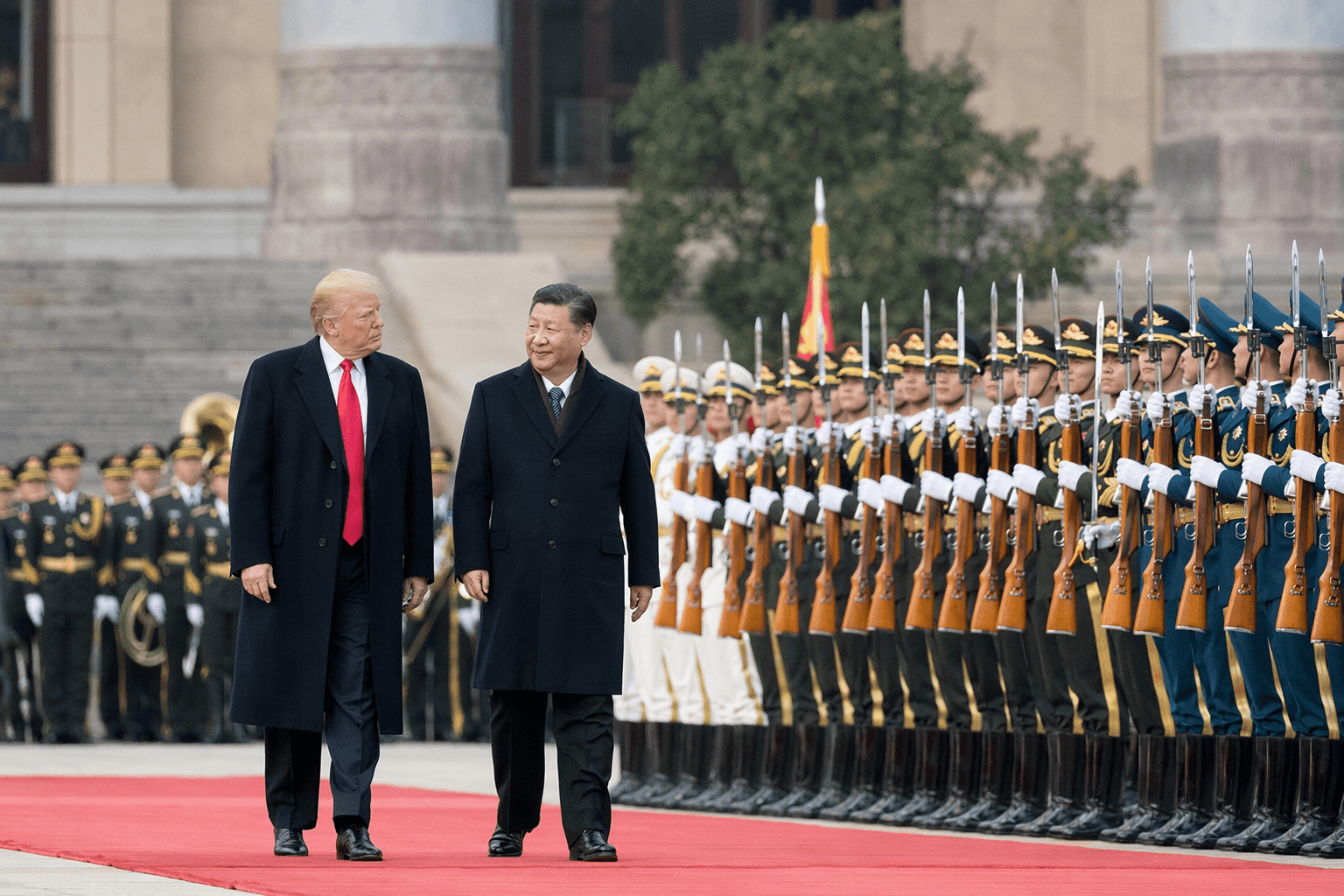
Trump’s visit was his first trip to China since 2017, and Reuters described it as the first by a U.S. president to America’s main strategic rival since that earlier visit. That alone gave the summit unusual weight. Chinese officials used the arrival ceremony to underline the importance Beijing placed on the meeting, while also projecting order, pageantry and control at a time when relations with Washington remained tense.
The agenda was wide-ranging and politically loaded. The talks were expected to focus on trade, technology, Taiwan and the Iran war, with Reuters also saying the leaders aimed to preserve a fragile trade truce. U.S. arms sales to Taiwan remained another flashpoint, underscoring how quickly a commercial dispute could spill into military and security concerns. The Associated Press said the visit could be more about symbolism and pageantry than major bilateral breakthroughs, a judgment that reflected the limited trust between the two governments.
That balance of leverage defined the summit. Trump arrived seeking movement on trade and a steadier relationship with Xi, while Beijing used the location, the ceremony and the setting in Tiananmen Square to signal that China was not approaching the talks as a supplicant. Even if the meeting produced few immediate concessions, the message was unmistakable: in the contest between the world’s two largest economies, China wanted the stage, the script and the optics.
This article was produced by Prism’s automated news system from verified source data, official records, and press releases, then run through automated quality and moderation checks before publishing. The system is built and supervised by the people who set the standards it runs under. Read our full AI policy.
Did this article answer your question?