Trump and Xi stage lavish Beijing arrival ceremony before summit talks
Red carpets, flag-waving youths and a military band set the stage in Beijing as Trump and Xi opened a summit shadowed by trade, Iran and Taiwan.
Donald Trump stepped into Beijing with the full weight of Chinese ceremony around him, as red carpets, a military honor guard and hundreds of young flag-wavers turned his arrival into a carefully staged display of hierarchy before substantive talks began. The pageantry at Beijing Capital International Airport and later at the Great Hall of the People signaled not just welcome, but leverage, with both governments signaling how they want the summit to be read at home and abroad.
Chinese Vice President Han Zheng greeted Trump at the airport on Wednesday, May 13, 2026, alongside China’s ambassador to Washington, Xie Feng, executive vice foreign minister Ma Zhaoxu and U.S. envoy David Perdue. A military band played as soldiers lined the route and some 300 Chinese youths waved Chinese and American flags and chanted, “Welcome, welcome! Warm welcome!” At the Great Hall of the People, Trump and Xi Jinping shook hands, posed for pictures and listened to the national anthems while schoolchildren greeted the U.S. president, who was seen smiling and clapping.
The summit’s main bilateral meeting was set for Thursday, May 14, local time, with the agenda running beyond formal talks to a banquet, a visit to the Temple of Heaven and later tea and a working lunch. That sequence matters as much as the issues on the table: trade, Taiwan, artificial intelligence and the Iran war. The choreography was designed to project order at a moment when both leaders have incentives to show control, even as the underlying negotiations remain unsettled.
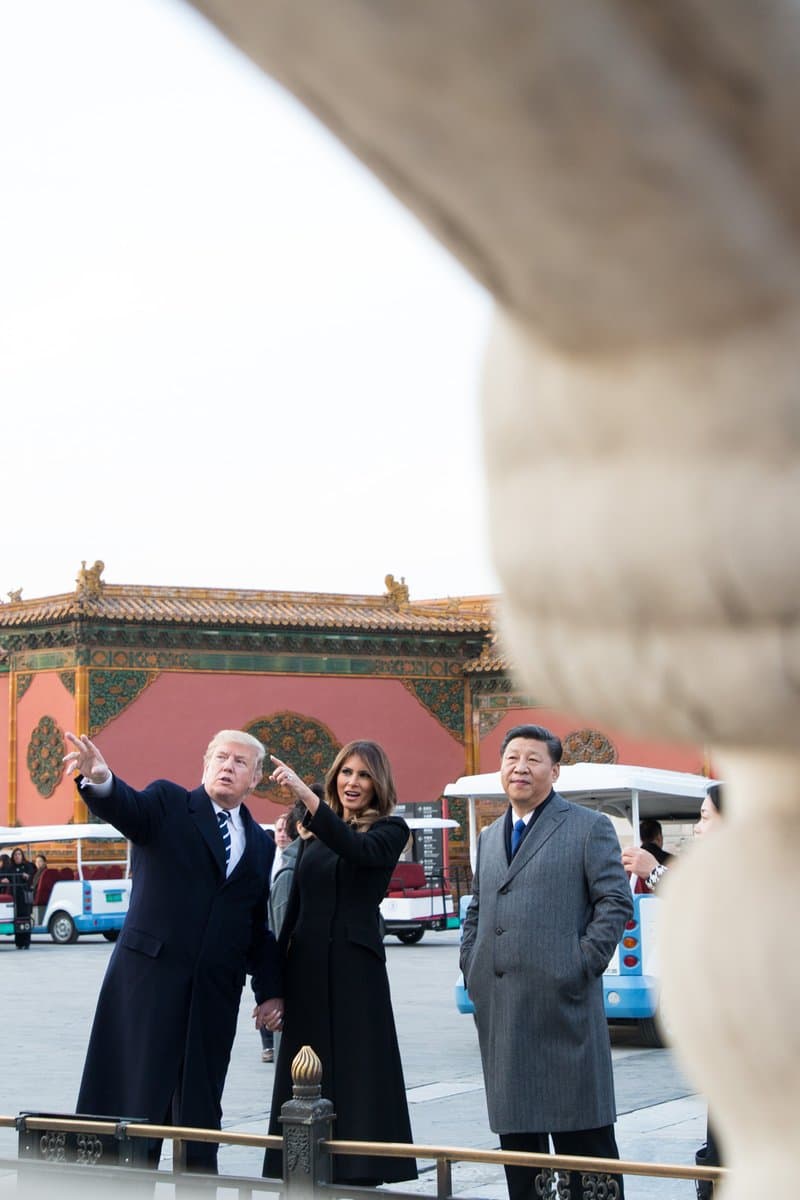
For Trump, the trip is his first to China since 2017 and the first by any U.S. president since then, giving the meeting added weight after his last face-to-face encounter with Xi in South Korea in October, when the two sides reached a trade deal. He is seeking concrete economic gains, including more Chinese purchases of U.S. soybeans, beef and aircraft, while the White House has discussed creating a Board of Trade with China to help manage disputes and preserve the one-year tariff truce reached last October after earlier tariff hikes and Chinese countermeasures involving rare earth minerals.
The diplomatic optics are unfolding against a delicate domestic backdrop for Trump, whose standing has been strained by the Iran war and inflation tied to that conflict. Secretary of State Marco Rubio said the United States wants China to take a more active role in resolving the Iran fight, underscoring how Beijing’s role in the talks now reaches beyond commerce. Xi has said China and the United States should be partners rather than rivals, a line aimed at stabilizing ties between the world’s two largest economies even as both sides maneuver for advantage.
This article was produced by Prism’s automated news system from verified source data, official records, and press releases, then run through automated quality and moderation checks before publishing. The system is built and supervised by the people who set the standards it runs under. Read our full AI policy.
Did this article answer your question?