Trump announces fragile U.S.-Iran ceasefire as Middle East fighting continues
Trump’s Pakistan-mediated truce with Iran lasted hours before new accusations and Israeli strikes in Lebanon exposed how little had changed.
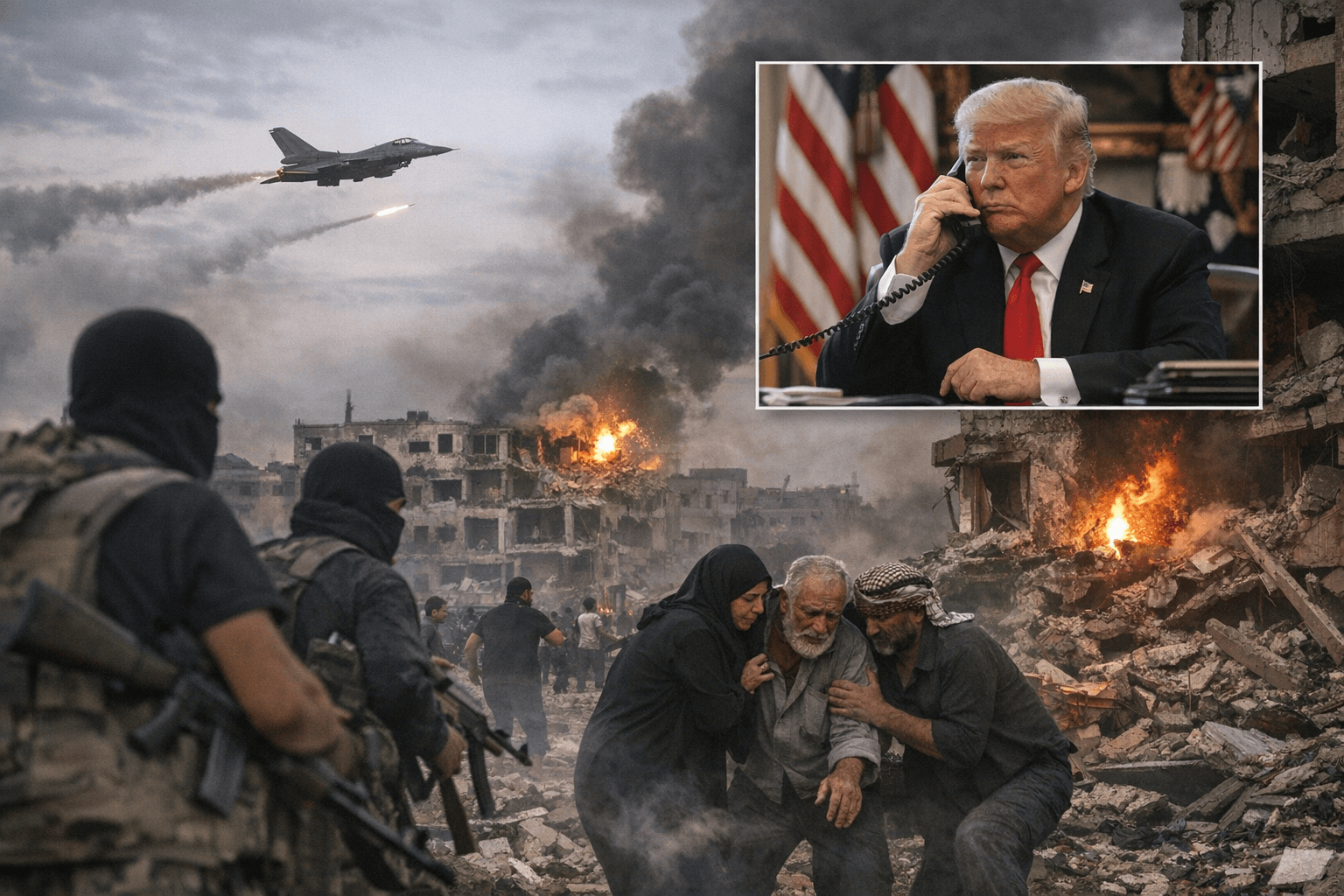
Eight weeks into the widening war, the clearest shift was not peace but shape-shifting conflict. President Donald Trump announced a two-week U.S.-Iran ceasefire on April 7, to begin April 8 in the Middle East, yet by the next day both sides were accusing each other of breaking it and Israeli strikes in Lebanon were still going on. The agreement has looked less like a turning point than a brief pause layered over a fight that now reaches from Iran to Lebanon and keeps dragging U.S. diplomacy, military posture and economic risk deeper into the region.
Trump said Pakistan mediated the deal and that Iran had sent a ten-point proposal to form the basis of talks scheduled for Islamabad on April 10. But the timing of attacks on and by Iran on April 8, along with escalated Israeli strikes in Lebanon on April 9, showed how little strategic drift the ceasefire had created. UN News described the war as having entered nearly 40 days of intense hostilities across the Middle East, with rising civilian casualties and damage to critical infrastructure still mounting beneath the ceasefire language.
The limits of the arrangement were obvious from the start. Trump told PBS News that Lebanon was not part of the ceasefire because of Hezbollah and said the fighting there would “get taken care of.” That carveout mattered. It left one of the region’s most combustible fronts outside the agreement and underscored that the U.S. was trying to freeze only part of a war that had already widened beyond any single battlefield.
For Washington, the cost has been measured less in declared objectives than in exposure. U.S. forces remain tied to a confrontation that began with Israel’s direct strikes on Iran on June 13, 2025, when Iranian nuclear and military sites were hit and Tehran retaliated. Since then, the conflict has drawn in Hezbollah, Lebanon and U.S. forces, forcing American policymakers to manage a crisis with no clean border between deterrence and escalation. Each new exchange with Iran raises the chance of miscalculation, especially near the Strait of Hormuz, where any broader retaliation could endanger shipping and rattle energy markets.
The red lines are visible. A strike that hits U.S. personnel, a direct attack on Israeli territory that kills large numbers of civilians, or any move to choke maritime traffic in the Strait of Hormuz could turn this unstable truce into a wider regional war. For now, the ceasefire has altered the wording of the crisis more than the crisis itself. The fighting continues, the accusations continue, and the region remains one bad strike away from something larger.
This article was produced by Prism’s automated news system from verified source data, official records, and press releases, then run through automated quality and moderation checks before publishing. The system is built and supervised by the people who set the standards it runs under. Read our full AI policy.
Did this article answer your question?


