Trump Announces Major Combat Operations Against Iran, Americans Urged to Leave Iraq
The U.S. Embassy in Baghdad warned Americans to leave Iraq immediately as Iran-aligned militias threatened attacks within 24-48 hours after Trump launched war against Iran.

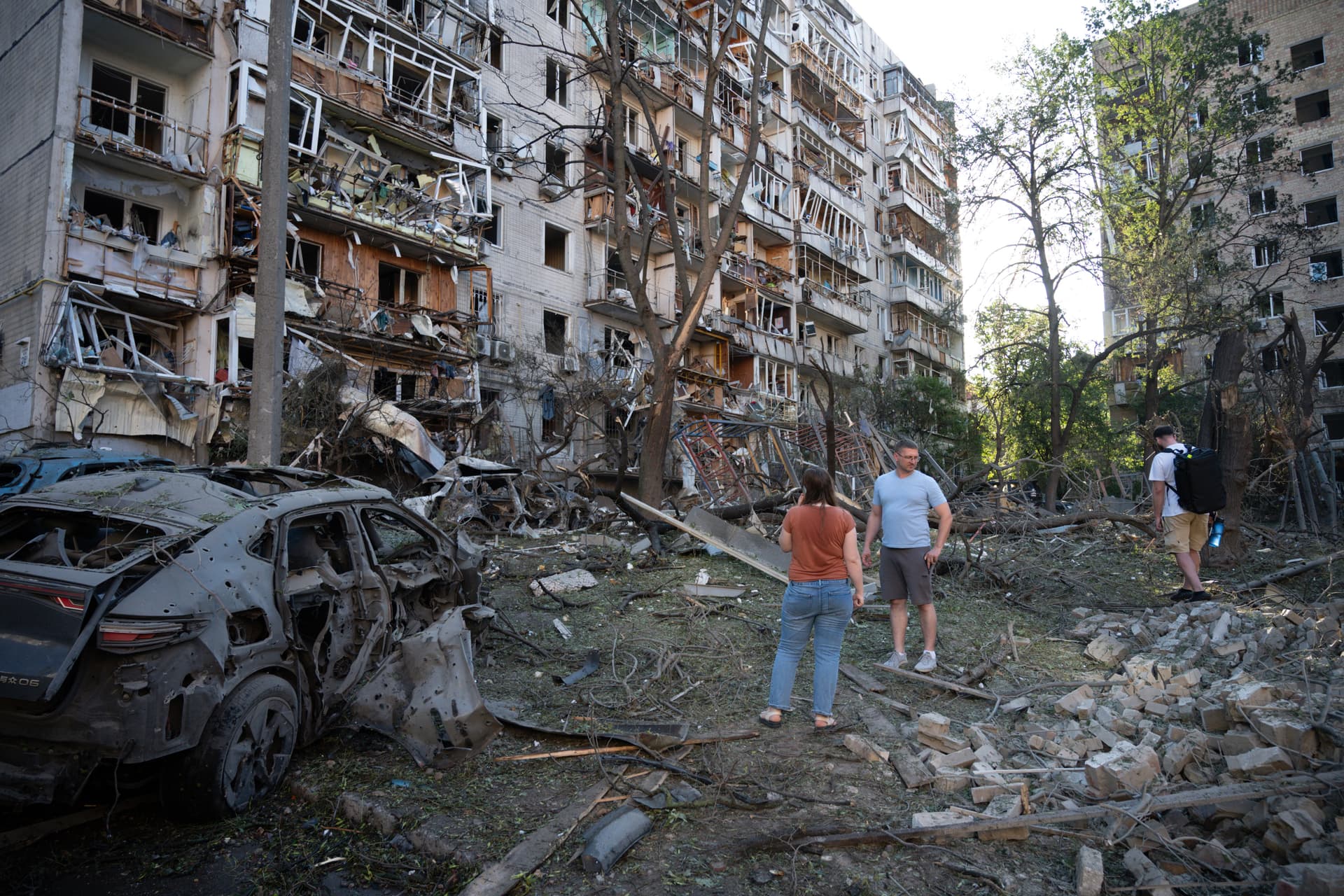
The U.S. Embassy in Baghdad issued a Level 4 security alert Thursday telling all American citizens in Iraq to leave immediately, citing credible threat intelligence that Iran-aligned terrorist militias may intend to conduct attacks in central Baghdad within the next 24 to 48 hours. The alert follows President Donald Trump's announcement of "major combat operations" against Iran on Feb. 28, when joint U.S.-Israeli strikes hit military and government sites across the country, killing Supreme Leader Ayatollah Ali Khamenei on the first day of the campaign.
The embassy alert is not a routine travel advisory. It represents a formal ordered departure posture: non-emergency U.S. government personnel have already been told to leave, and the State Department's highest travel designation, Level 4: Do Not Travel, is now in effect for all of Iraq. Kidnapping is cited as a specific and active threat vector. The militia networks in question are not operating in a vacuum. Some members carry Iraqi government-issued identification, the alert noted, which complicates threat identification on the ground and signals how deeply Iran-aligned groups are embedded within Iraqi security structures.
The threat environment for Americans in Iraq is a direct byproduct of the escalation ladder that began the moment U.S. and Israeli aircraft struck Tehran. Iran-backed militias operating across Iraq, collectively organized under umbrella networks including the Popular Mobilization Forces, have historically treated any U.S. military action against Iran as authorization to strike American personnel and assets in Iraq. The embassy's April 2 alert explicitly warned that potential targets include U.S. citizens, American companies, universities, diplomatic facilities, energy infrastructure, hotels, and airports throughout Iraq and in the Iraqi Kurdistan Region.
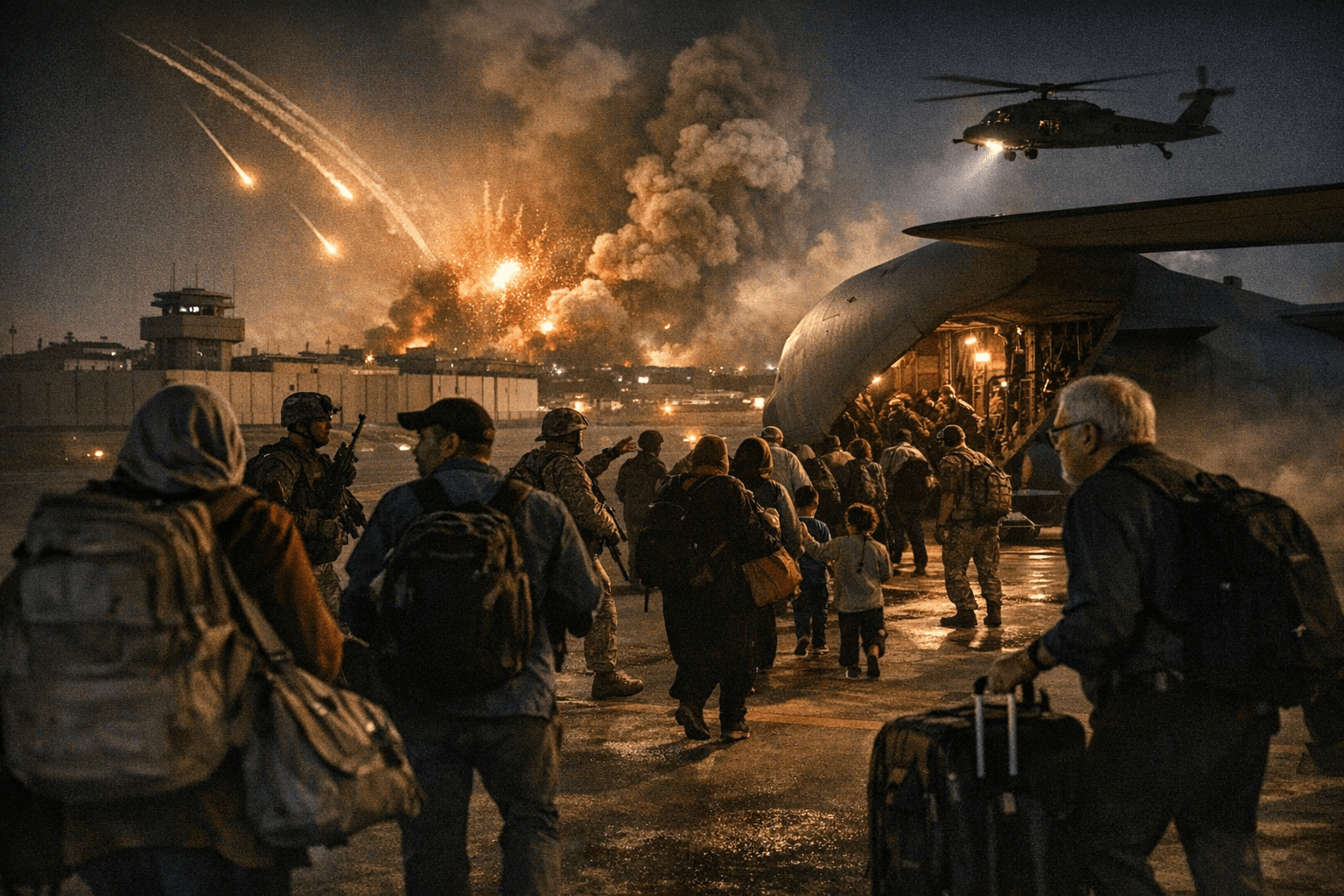
Americans remaining in Iraq were told not to approach either the U.S. Embassy in Baghdad or the Consulate General in Erbil, citing ongoing risks from rockets, drones, and mortars. A ground transport corridor through Jordan remains one of the few viable exit routes, with Royal Jordanian Airlines operating bus connections from Baghdad to Queen Alia International Airport in Amman. Commercial flights out of Kuwait have been suspended due to continuing missile and drone attack threats.
The broader war, now 32 days old by Trump's own count, has expanded well beyond its initial targets. Iran has retaliated with missile and drone attacks against Israel, regional U.S. military bases, and Gulf nations. The United Arab Emirates alone has intercepted 457 ballistic missiles, 19 cruise missiles, and 2,038 drones since Feb. 28. Iran is also attempting to restrict shipping through the Strait of Hormuz, a chokepoint through which roughly 20 percent of global oil trade passes. The U.S. military reports striking more than 1,000 targets inside Iran.
In a White House address on April 1, Trump claimed the campaign had wiped out Iran's navy and air force and diminished its missile capabilities. "These core strategic objectives are nearing completion," he said, while simultaneously warning of intensified strikes over the coming weeks if no negotiated deal emerges. The Iraqi government has not condemned the militia threat activity or moved to prevent attacks against the United States from its territory, according to the embassy alert, a detail that carries its own diplomatic weight as Washington recalibrates its relationship with Baghdad alongside its war against Tehran.
This article was produced by Prism’s automated news system from verified source data, official records, and press releases, then run through automated quality and moderation checks before publishing. The system is built and supervised by the people who set the standards it runs under. Read our full AI policy.
Did this article answer your question?