Trump Avoids Calling Iran Conflict a War, Citing Need for Congressional Approval
Trump said he won't call the Iran conflict a "war" because Congress hasn't authorized force, even as he threatened to "keep bombing our little hearts out" if talks collapse.
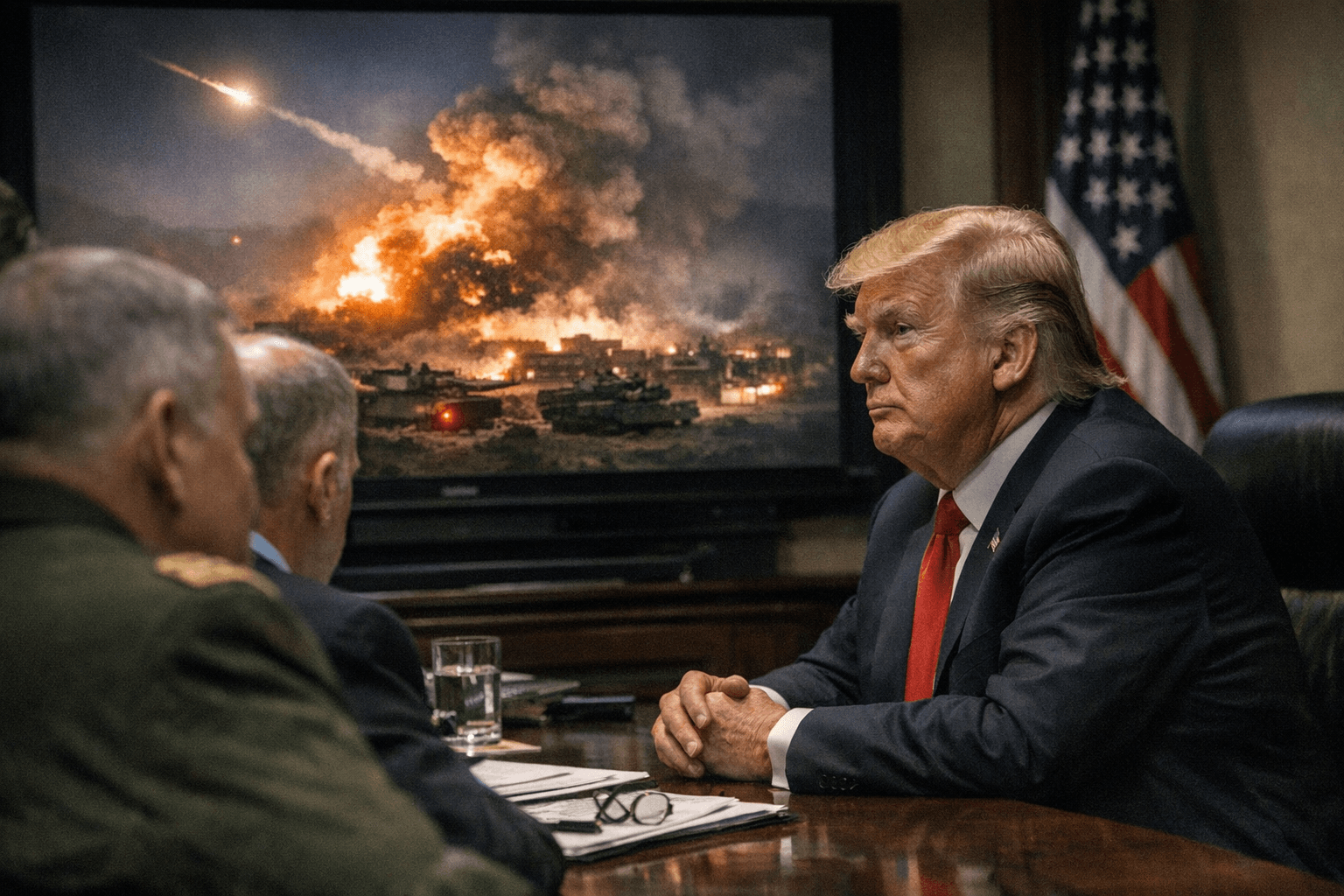
With oil above $100 a barrel and Iran's state media flatly denying any contact with Washington, President Trump stood before reporters at his Doral, Florida resort and said the United States had "won in many ways" in a conflict he still refuses to call a war.
The reason for that linguistic dodge, Trump suggested late Wednesday, is squarely constitutional: the Trump administration has not sought congressional authorization for the war in Iran. The Constitution gives Congress the sole authority to declare war, except in truly exceptional circumstances of defense against an attack or imminent peril. The strikes, which began on February 28, were launched without congressional authorization, and the White House did not seek approval from Congress before carrying them out.
The word game carries real political stakes. The Senate voted 53-47 to block a resolution that would have forced the president to withdraw U.S. troops from operations against Iran unless Congress voted to approve the effort, the third time since the war began that Republicans succeeded in blocking the Democrats' push. Democrats have argued that congressional authorization is needed because they have unanswered questions about the conflict's length and overall goals.
Meanwhile, Trump's public statements have grown increasingly tangled. Days after insisting he didn't want a ceasefire because Iran was being "obliterated," he claimed his administration was having "productive talks" to end the conflict and vowed to "keep bombing our little hearts out" if those talks collapsed. He also floated the possibility of "a very serious form of regime change" in Iran, despite saying earlier that regime change was not one of his objectives.
At the Doral press conference, intended partly to calm rattled global markets, Trump answered a reporter's question about whether the country is at war with characteristic ambiguity. "I think you could say both," he said. "It's the beginning of building a new country." He then added: "We could call it a tremendous success right now or we could go further. And we're going to go further." Senate Democratic leader Chuck Schumer responded with a single line: "One word to sum up Trump's press conference: clueless."
The negotiating picture is no less contradictory. Trump claimed there were about "15 points" of agreement to settle the conflict, with Iran giving up its nuclear weapons listed as "number one, two and three." Asked whether Iran had agreed to those terms, he replied simply: "They've agreed." The Associated Press reported Wednesday that Iran had received Trump's 15-point peace plan, with unnamed officials in Islamabad saying intermediaries had delivered it to the Iranian government via Pakistan. Iran rejected the proposal, according to its state-run broadcaster Press TV, which cited an anonymous official.
Tehran's public posture has been emphatic denial. An unnamed Iranian official told state media: "There is no direct or indirect contact with Trump. He retreated after hearing that our targets would be all power plants in West Asia." Iran's parliament speaker also rejected the suggestion of talks outright, writing on social media: "There has been no negotiation with the United States," and adding that such reports were being circulated "to manipulate financial and oil markets."
The threat against Iran's power infrastructure was not hypothetical, according to Trump's own account. He told reporters the U.S. had been prepared to strike Iran's largest electricity-generating plants, which he said cost "over $10 billion to build," claiming that imminent threat prompted Tehran to reach out: "So they called — I didn't call — they called. They want to make a deal."
On the military side, Trump approved the deployment of more than 1,000 soldiers from the 82nd Airborne Division to the Middle East, though they had not left the U.S. yet and could deploy in the coming days. The administration emphasized that no decision had been made to put boots on the ground in Iran, and White House press secretary Karoline Leavitt suggested congressional authorization may not be needed because the Iran war could wrap up soon, reiterating that the timeline was still four to six weeks.
The Iran war has already cost at least $12 billion, and Defense Secretary Pete Hegseth confirmed the Pentagon had asked the White House to approve a $200 billion request to Congress to fund the conflict. A Middle East-based diplomatic source told The Daily Beast that some Gulf allies were caught off guard by Trump's announcement and viewed it "as a pause intended to bring down oil prices and attract more assets to the region, rather than an exit strategy" — a reading that, if accurate, suggests the White House's carefully chosen vocabulary may be doing more than just sidestepping the Constitution.
This article was produced by Prism’s automated news system from verified source data, official records, and press releases, then run through automated quality and moderation checks before publishing. The system is built and supervised by the people who set the standards it runs under. Read our full AI policy.
Did this article answer your question?

